What Colors Make Red? How to Mix the Perfect Shade
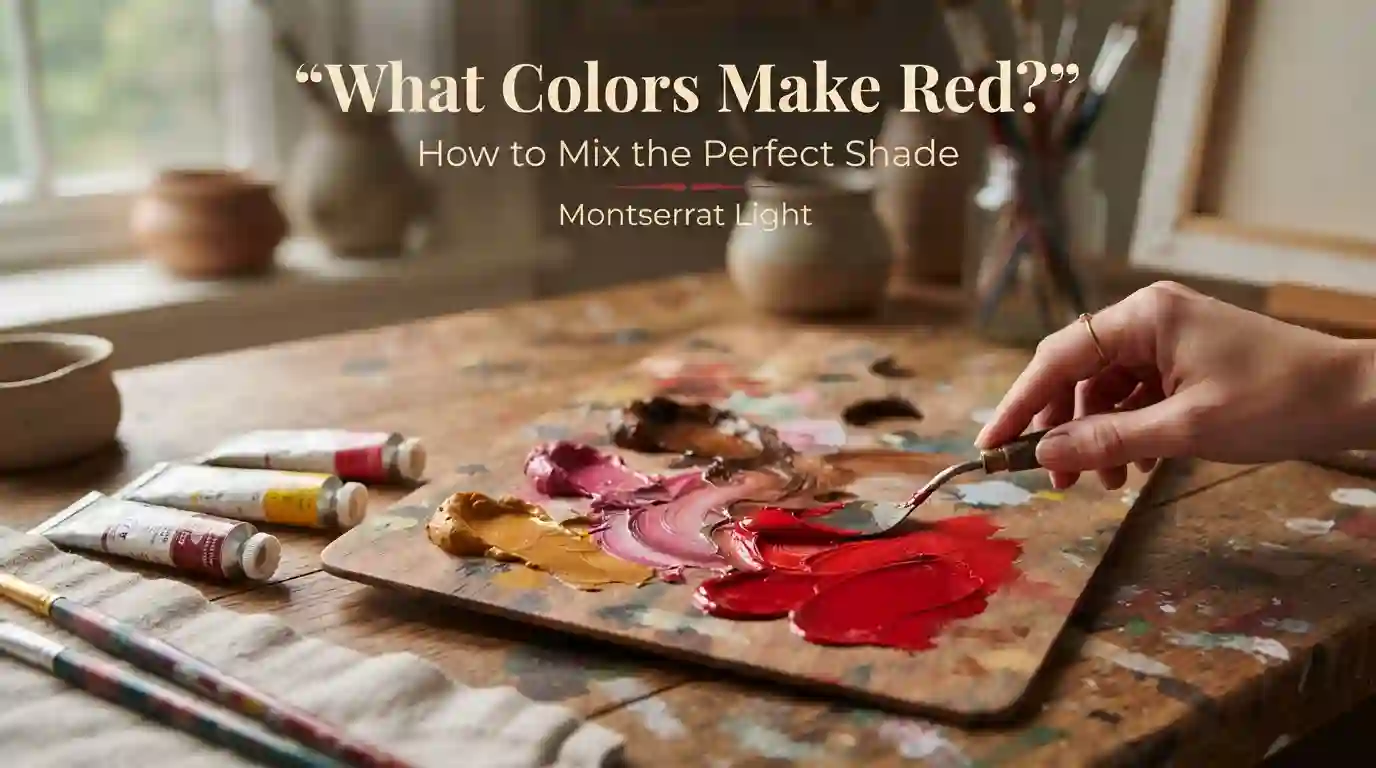
What colors make red? If you’re working with paint or ink, the answer is magenta and yellow. Mix them in equal parts, and you get a true, vibrant red.
Main takeaway: Start with a 1:1 ratio of magenta to yellow. Add more magenta for a deeper, cooler red. Add more yellow for a brighter, warmer red.
Red feels like it should be unmixable, since most people learn it as a “primary color” in school. But that’s only true in one color model. This guide shows you exactly how to make red, why it depends on what system you’re using, and how to adjust the shade until it’s perfect.
What Is Red? Understanding the Color Before You Mix It
Red sits at one end of the visible color spectrum. It’s bold, warm, and one of the most emotionally powerful colors there is, often linked to passion, energy, danger, and love. On the color wheel, red can be either a primary or a secondary color, depending on the model:
- In the traditional RYB model (red, yellow, blue), red is a primary color. It can’t be mixed from anything else.
- In the CMY model (cyan, magenta, yellow), used in paint, printing, and pigment work, red is technically a secondary color made from magenta and yellow.
This is the key to understanding what colors make red: it depends entirely on the system you’re working in.
Image caption: Side-by-side comparison of the RYB and CMY color wheels, showing red’s position in each.
What Colors Make Red? The Core Combination
So, what colors make red in practice? If you’re mixing paint, ink, or pigment, the answer is:
- Magenta + Yellow
This is a secondary color mix in the CMY model. Magenta contributes the cool, pinkish base, while yellow contributes warmth and brightness. Together, they cancel out enough of each other’s undertone to produce true red. A good starting ratio is 1 part magenta to 1 part yellow. From there, you shift the balance to fine-tune the shade.
Image caption: Magenta and yellow paint blending into a swatch of true red.
Beginner Tip 💡
If you already own a tube of red paint, you don’t need to mix it from scratch. But learning how to make red from magenta and yellow gives you far more control over warm and cool variations than any single pre-mixed tube can.
Step-by-Step: How to Make Red in Paint
Here’s exactly how to make red at home, whether you’re working with acrylics, gouache, or craft paint:
- Start with yellow. Place a small amount on your palette first.
- Add magenta slowly. Mix in a little at a time, blending as you go.
- Watch the transition. The mix will move through orange before settling into red.
- Stop at equal parts. A true red usually appears once the ratio is close to 1:1.
- Test the swatch. Dab a sample on paper to check the real color, since wet paint often looks different from dry paint.
- Adjust cooler. Add a touch more magenta for a deeper, blue-leaning red.
- Adjust warmer. Add a touch more yellow for a brighter, orange-leaning red.
- Adjust lighter or darker. Add white to lighten, or a tiny bit of black to deepen the shade.
Go slow with every addition. Red shifts quickly, and it’s much harder to pull a mix back toward true red once it drifts too far toward orange or pink.
Image caption: Step-by-step swatch showing magenta and yellow gradually blending into a true red shade.
Red Mixing Chart: Colors That Make Red in Different Shades
Here’s a quick-reference chart for making red in different intensities and undertones:
| Pigment Mix | Ratio | Resulting Shade | Hex Code |
| Magenta + Yellow | 1: 1 | True Red | #FF0000 |
| Magenta + Yellow | 2 1 | Crimson Red | #DC143C |
| Magenta + Yellow | 1: 2 | Vermilion (Orange-Red) | #E34234 |
| Magenta + Yellow + White | 1: 1: touch | Tomato Red | #FF6347 |
| Magenta + Yellow + Black | 1: 1: touch | Brick Red | #B22222 |
| Red + Yellow | 1: small | Scarlet | #FF2400 |
| Red + Blue | 1 small | Ruby Red | #9B111E |
| Red + Black | 1: small | Maroon | #800000 |
| Red + Brown | 1 small | Oxblood Red | #6B0D0D |
These ratios are starting points, not exact formulas. Pigment strength varies by brand, so always test a small swatch before mixing a full batch.
How to Make Red With Different Starting Colors
No magenta on hand? Here’s how to make red color using other common paints:
- Pink + Orange: Produces a warm, slightly muted red. Works well when you only have tints available.
- Crimson + Scarlet: Blending two reds that lean in opposite directions (cool and warm) balances out into a true, neutral red.
- Purple + Orange: An unconventional path, but mixing these in a careful ratio can approximate red, since they sit on either side of it on an extended color wheel.
Image caption: Three alternate paint swatches comparing red made from pink-and-orange, crimson-and-scarlet, and purple-and-orange combinations.
Each path produces a slightly different personality. Crimson-and-scarlet gives the cleanest true red, while pink-and-orange leans softer and warmer.
How to Make Red Digitally (RGB/Hex)
Digitally, red doesn’t need to be mixed at all, since it’s one of the three primary colors in the RGB (screen) model.
- Hex Code: #FF0000
- RGB Values: 255, 0, 0
In Photoshop or Procreate: Open the color picker and type FF0000 into the hex field, or enter 255 red, 0 green, 0 blue manually.
In CSS:
css
color: #FF0000;
/* or */
color: rgb(255, 0, 0);
This is an important distinction when learning what colors make red: on a screen, red is a light primary and stands alone. In paint or print, it’s built from magenta and yellow.
Common Mistakes When Mixing Red (And How to Fix Them)
Even with the right ratio, red mixes can go wrong. Here’s why:
Red turns out too orange.
This happens when there’s too much yellow in the mix. Fix it by adding small amounts of magenta until the orange tint fades.
Red turns out too pink or purple.
This happens when there’s too much magenta, or when a bit of blue has crept in. Fix it by adding a touch more yellow to warm the mix back up.
Red turns out dull or brownish.
This usually means your magenta or yellow isn’t a clean, pure pigment, or you’ve added too much black. Fix it by starting fresh with high-quality pigments.
Red looks streaky after mixing.
This is a blending issue, not a color issue. Mix longer and more thoroughly, scraping the sides of your palette as you go.
Image caption: Comparison of a muddy, brownish red mix next to a clean, properly balanced true red.
Tips for Making Red Consistently Vivid
A few habits make a noticeable difference when mixing red:
- Use quality pigments. Budget paints often contain fillers that dull the final red.
- Test in small batches first. Confirm the shade before committing to a large mix.
- Dry-test your swatch. Red can shift slightly as it dries, especially with wall or craft paint.
- Write down ratios you like. If you land on a great red, record it so you can recreate it exactly.
- Mix a little extra. Running out mid-project and remixing rarely produces an identical match.
Mixing red is a bit like seasoning a dish. A pinch too much of one ingredient, and the whole balance shifts. Small, careful additions almost always beat big, careless ones.
Real-Life Uses of Red in Design and Branding
Red shows up across nearly every creative field, and each one uses it a little differently:
- Fashion: Red ranges from deep, formal crimson to bold, energetic scarlet in everyday wear.
- Interior Design: Brick red and oxblood tones add warmth to accent walls, while brighter reds work well in small doses as statement pieces.
- Branding: Red is one of the most common brand colors, often chosen to signal energy, urgency, or confidence.
If you’re testing red paint for a wall or product, view it under both natural and artificial light. Red is one of the shades most affected by lighting shifts.
Shades and Variations of Red You Can Mix
| Shade Name | Hex Code | Best Used For |
| Crimson | #DC143C | Bold accents, fashion, formal design |
| Scarlet | #FF2400 | Branding, attention-grabbing details |
| Maroon | #800000 | Neutral, muted interiors |
| Vermilion | #E34234 | Warm, earthy color palettes |
Image caption: Four paint swatches showing crimson, scarlet, maroon, and vermilion side by side.
Where Red Sits on the Color Wheel
Red holds a central position on the color wheel, whether it’s treated as primary or secondary.
- Complementary color: Green (directly opposite red on the wheel).
- Analogous colors: Red-orange on one side, red-violet (magenta-leaning) on the other.
- Tertiary relationship: Red-orange and red-violet are the two tertiary hues closest to pure red.
Knowing this helps with pairing. Green creates the strongest possible contrast with red, while red-orange or red-violet creates a softer, more blended look.
Conclusion:
To sum up: what colors make red? In paint and print, magenta and yellow mixed at roughly a 1:1 ratio give you a true red. On a screen, red stands alone as one of the three RGB primaries.
The best way to get confident mixing red is to simply practice. Try different ratios of magenta and yellow, keep notes on what works, and don’t be afraid to experiment with alternate starting colors.
FAQs
What two colors make red?
Magenta and yellow make red when mixed in roughly equal parts. This works in the CMY color model used for paint, ink, and print.
Is red really a primary color?
It depends on the model. In the classic RYB model, red is primary and can’t be mixed. In the CMY model, it’s a secondary color made from magenta and yellow.
How do you make red color darker?
Add more magenta to deepen red, or mix in a very small amount of black or brown for a darker, muted red tone.
Can you make red without magenta?
Yes. Mixing pink and orange, or blending a cool red with a warm red, can approximate true red if magenta isn’t available.
Why does my red look orange instead of true red?
This usually means too much yellow is in the mix. Add small amounts of magenta gradually until the orange tone disappears.
What color do you mix with red to make it warmer?
Add a small amount of yellow or orange to shift red toward a warmer, brighter tone.
What color do you mix with red to make it cooler?
Add a small amount of blue or magenta to shift red toward a cooler, more purple-leaning tone.