What Colors Make Purple? Easy Color Mixing Guide
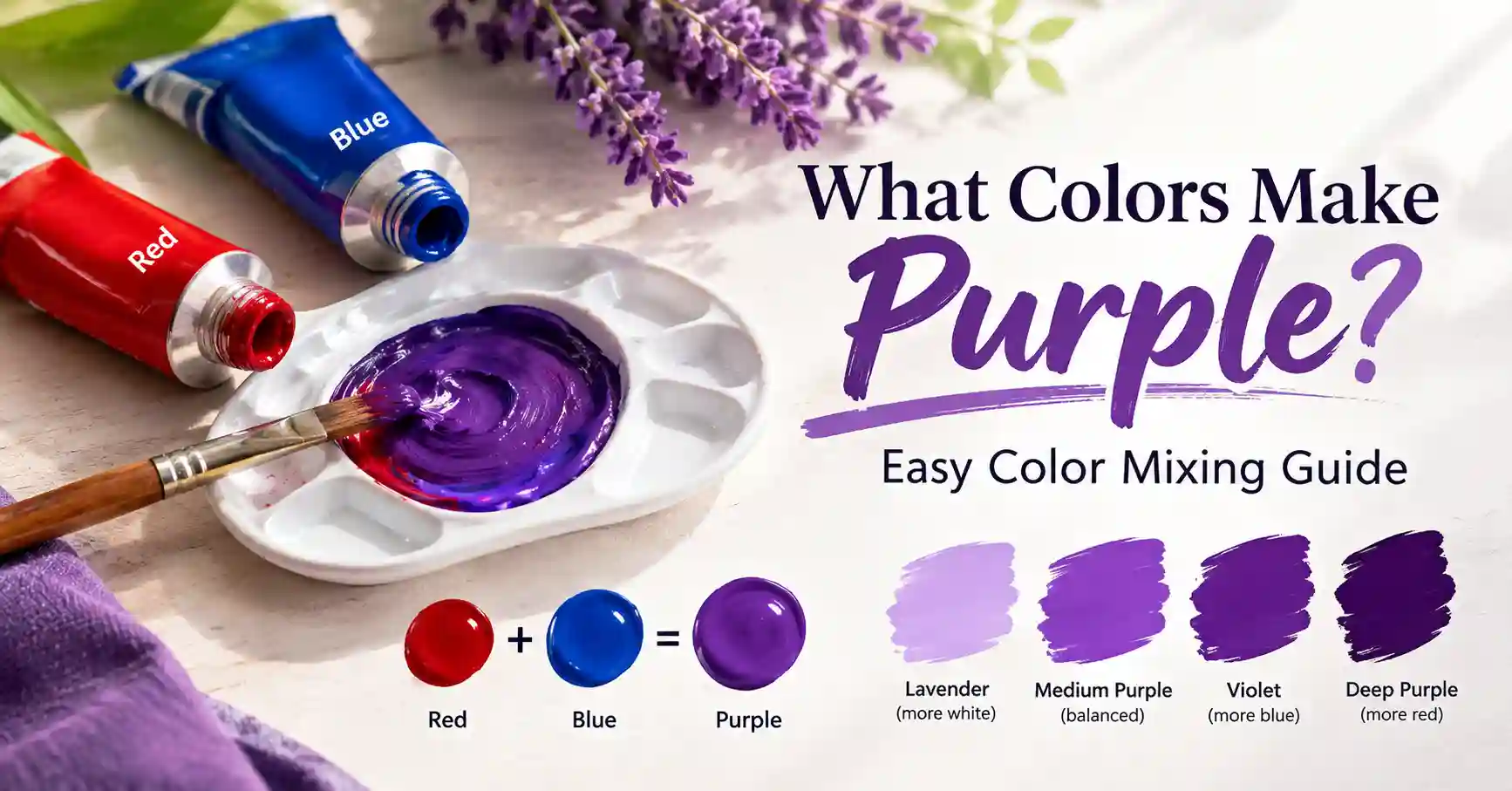
Have you ever looked at your paint tray and asked, what colors make purple? You are not alone. It is one of the most common questions in color mixing, and the answer is simple.
Main takeaway: Mix red and blue paint in a 1:1 ratio to make purple. Add white to make it lighter. Add a little more blue, or a touch of black, to make it deeper.
That is the core secret, but the details matter. Some reds and blues give a bright, rich purple. Others give a dull, muddy one. This guide shows you how to make purple the easy way, with clear steps, a shade chart, hex codes, and fixes for common problems.
Image caption: A red blob and a blue blob on a white palette, swirling together into a rich purple.
What Is Purple?
Purple is a secondary color. It is made by mixing two primary colors, red and blue. On the color wheel, it sits right between them.
Is Purple a Warm or Cool Color?
Purple is a balanced color. It sits between warm red and cool blue, so it can lean either way. More blue makes a cooler purple. More red makes a warmer one.
What Purple Means and Where We See It
Purple has a long and rich history. Long ago, purple dye was rare and costly. Kings and queens wore it, so purple became a symbol of royalty and luxury.
Today, purple also stands for creativity, imagination, calm, mystery, and spirituality. You will see it in art, fashion, home décor, and brand logos.
Image caption: A color wheel with purple highlighted between red and blue, showing its warm and cool sides.
What Colors Make Purple?
The direct answer to what colors make purple in paint is red plus blue. Use about one part red to one part blue. This is your starting point for every shade of purple.
The Basic Purple Ratio
Small changes in ratio give very different results. Use this table as a quick guide.
| Mix | Ratio | Result |
| Red + Blue | 1:1 | Classic purple |
| Red + Blue | 2:1 | Warm, reddish purple |
| Red + Blue | 1:2 | Cool, bluish purple |
| Purple + White | 1:1 | Soft lilac |
Why Your Choice of Red and Blue Matters
Not all reds and blues are the same. Every paint leans a little warm or a little cool. This is the main reason beginners get muddy results.
Cool Reds and Cool Blues
A cool red leans slightly pink or blue, like magenta or crimson. A cool blue leans slightly red, like ultramarine. Together they make the brightest purple, because neither one hides a trace of yellow.
Warm Reds and Warm Blues
A warm red leans slightly orange, like cadmium red. A warm blue leans slightly green, like phthalo blue. These carry hidden yellow, and yellow dulls purple. That is why warm pairs often turn gray or brown.
Image caption: Four swatches showing cool red, warm red, cool blue, and warm blue, with arrows pointing to the pairs that make the brightest purple.
Step-by-Step: How to Mix Purple in Paint
Ready to try making purple yourself? Follow the steps below. You only need a few basic supplies.
What You Will Need
- A cool red, such as magenta or crimson
- A cool blue, such as ultramarine
- White paint
- A palette or plate
- A palette knife or old brush
- Scrap paper for testing
The Mixing Steps
- Squeeze out equal amounts. Place a small blob of red and a small blob of blue on your palette. Keep them slightly apart.
- Combine them. Pull a little of each together to start a 1:1 ratio.
- Mix well. Press and fold with your knife until no streaks remain.
- Test the color. Brush a stroke on scrap paper and check the result.
- Adjust as needed. Use the tips below to shift the shade.
- Let it dry. Paint often changes as it dries, so check again before you use it.
How to Adjust Your Purple
Once you have a base purple, you can shift it in any direction. Add small amounts and test often.
Make It Lighter
Add white a little at a time. White is very strong, so a tiny amount goes a long way.
Make It Darker
Add a bit more blue to deepen the color. You can also add a tiny touch of black. Go slowly, because black takes over fast.
Make It Warmer or Cooler
For a warmer purple, add a little red. For a cooler purple, add a little blue.
Make It Brighter
Use cleaner, more vivid pigments. Avoid adding extra colors, because each one can dull the mix.
Image caption: Step-by-step swatch strip showing red and blue mixing into purple, then branching into lighter, darker, warmer, and cooler versions.
💡 Beginner Tip: Add the stronger color to the weaker one in tiny amounts. Blue is often stronger than red, so add it slowly. You can always add more, but you cannot take it out.
Mixing purple is like stirring milk into coffee. A small splash changes the color. Too much, and there is no going back.
Purple Mixing Chart: Pigment Combinations and Resulting Shades
This chart shows how different pigment pairs create different purples. The hex codes are close digital matches. Real paint will vary a little by brand.
| # | Pigment Combination | Ratio | Resulting Shade | Hex Code |
| 1 | Quinacridone magenta + ultramarine blue | 1:1 | Classic Purple | #800080 |
| 2 | Quinacridone magenta + ultramarine blue | 2:1 | Plum | #8E4585 |
| 3 | Quinacridone magenta + ultramarine blue | 1:2 | Royal Purple | #7851A9 |
| 4 | Alizarin crimson + ultramarine blue | 1:1 | Eggplant | #614051 |
| 5 | Cadmium red + ultramarine blue | 1:1 | Dusty Purple | #7A5A7A |
| 6 | Cadmium red + phthalo blue | 1:1 | Indigo | #4B0082 |
| 7 | Classic purple + white | 1:1 | Lilac | #C8A2C8 |
| 8 | Classic purple + white | 1:3 | Lavender | #E6E6FA |
| 9 | Classic purple + a touch of black | 10:1 | Dark Purple | #301934 |
| 10 | Blue + white + a drop of magenta | 2:2:0.5 | Periwinkle | #CCCCFF |
Notice the pattern in the chart. Magenta gives the cleanest purple. Cadmium red gives a duller one. Phthalo blue makes the mix very dark and strong.
Image caption: A ten-swatch mixing chart showing each pigment pair and the purple it produces, from lavender to deep indigo.
How to Make Purple with Different Starting Colors
You may not have a perfect red and blue on hand. That is fine, because there are several other paths to purple.
Mix Magenta and Cyan
Magenta and cyan are the base colors in CMYK printing. Mixed, they give a clean and bright purple. This is one of the best ways to get a vivid result.
Mix Pink and Blue
Pink is simply a lighter red. When you mix it with blue, you get a soft, light purple. This works well for pastel projects.
Add White to Red and Blue
Start with the classic red and blue mix. Then add white a little at a time. This is the easiest way to make lilac and lavender.
Use a Ready-Made Purple Tube
Many paint sets include a ready-made purple. Dioxazine purple is a popular choice, and it is deep and strong. Mix it with white for lighter tones.
Layer Colors in Watercolor
In watercolor, paint blue first and let it dry. Then glaze red over the top. Your eye blends the two layers into purple. This method is called optical mixing.
What If You Only Have a Warm Red?
Warm red plus blue can look muddy. To fix this, add a tiny touch of pink or magenta. This pulls the mix back toward a true purple.
Image caption: Four mini swatches showing alternate paths: magenta and cyan, pink and blue, red-blue-white, and a ready-made purple tube.
How to Make Purple Digitally (RGB/Hex)
On a screen, color works differently than it does on paper. Screens use light, not paint. In light, red and blue combine to make purple, and green stays at zero.
Purple Color Values
Here are the standard digital values for classic purple.
| Format | Value |
| Hex | #800080 |
| RGB | 128, 0, 128 |
| HSL | 300°, 100%, 25% |
Want a brighter, electric purple? Try the hex code #A020F0.
How to Enter Purple in Your Software
Each program has a spot where you can type the hex code. Here is where to find it.
Photoshop
Click the foreground color box to open the Color Picker. Find the # field and type 800080. Then click OK.
Procreate
Tap the color circle in the top corner. Open the Value tab. Type 800080 in the Hex box.
CSS
Use any of these three formats on your website.
css
color: #800080;
/* or */
color: rgb(128, 0, 128);
/* or simply */
color: purple;
Image caption: A Photoshop color picker window with the hex code #800080 entered and the purple swatch displayed.
Common Mistakes and How to Fix Them
Even experienced painters get a bad purple sometimes. Here are the most common problems and their fixes.
Why Does My Purple Look Gray or Brown?
Why It Happens
Your red or blue probably leans warm. Hidden yellow dulls the mix. A dirty brush can cause the same problem.
How to Fix It
Switch to a cool red and a cool blue. Clean your brush well. Add a tiny drop of magenta to bring back the glow.
Why Does My Purple Look Too Blue?
Why It Happens
Blue is often the stronger pigment. It can take over the mix quickly.
How to Fix It
Add red a little at a time. Magenta or crimson works best.
Why Does My Purple Look Too Pink?
Why It Happens
There is too much red or magenta in the mix.
How to Fix It
Add a small touch of blue. Stir well and test again.
Why Does My Purple Look Chalky?
Why It Happens
You added too much white. White can wash out the pigment.
How to Fix It
Add more of your base purple instead of more white. This brings the color back.
Why Did My Purple Dry Darker?
Why It Happens
Acrylic paint often dries a shade darker than it looks wet.
How to Fix It
Mix a little lighter than your target color. Always test a dry swatch first.
Image caption: Three swatches labeled “too gray,” “too blue,” and “too pink,” each with a small arrow pointing to the fixed purple.
Tips for Getting a Consistent, Vivid Purple
Want the same purple every time? A few good habits make a big difference.
Choose Quality Pigments
Artist-grade paints hold more pigment than cheap student paints. They give richer, cleaner purples. This is the single biggest upgrade for your color mixing.
Test Before You Paint
Always test your mix on a palette or scrap paper first. Never mix straight onto your artwork. Paint a small square and let it dry before you decide.
Mix Small Batches and Keep Notes
Small batches are easier to control. Still, mix enough to finish the job, because matching a color later is hard. Write down your ratios so you can repeat your best purple.
Keep Your Tools Clean
Even a tiny bit of leftover yellow can dull your purple. Wash your brushes and palette knife between mixes. Use a white background to judge the true color.
Real-Life Uses of Purple
Purple shows up everywhere. Once you know how to make purple, you can use it with confidence in many projects.
Fashion
Purple adds richness to any outfit. Deep plum looks elegant in fall. Soft lavender feels fresh in spring.
Interior Design
Light lilac walls feel calm and airy. Broad purple accents add drama. Try it on a cushion, a rug, or one feature wall.
Branding
Many brands use purple to feel creative, premium, or fun. Cadbury, Twitch, and Yahoo are well-known examples.
Art and Craft
Purple is great for sunsets, flowers, and shadows. Many artists use it instead of black for softer shadows.
Image caption: A mood board showing a lavender bedroom wall, a plum scarf, and a purple logo design.
Want to test your mixes before you commit? Painting a few small swatch cards is a cheap and easy way to preview a color in your own light.
Shades and Variations of Purple
Purple is a big color family. Here are four popular shades, with hex codes and ideas for using them.
| Shade | Hex Code | Best Use |
| Lavender | #E6E6FA | Soft backgrounds, nurseries, spring designs |
| Amethyst | #9966CC | Jewelry, accent walls, creative branding |
| Indigo | #4B0082 | Night skies, bold fashion, deep shadows |
| Mauve | #E0B0FF | Wedding palettes, soft décor, pastel art |
Image caption: Four large swatches in a row labeled Lavender, Amethyst, Indigo, and Mauve, each with its hex code.
Where Purple Sits on the Color Wheel
Purple is a secondary color. It sits between red and blue on the traditional color wheel. Knowing its neighbors helps you mix and pair colors with confidence.
Complementary Color
The complementary color of purple is yellow. It sits directly across from purple on the wheel. Placed side by side, the two make each other pop.
Complements also work as color killers. A tiny touch of yellow in purple makes it softer and grayer. Use this trick when you want a muted tone on purpose.
Analogous Colors
Analogous colors sit next to purple on the wheel. These are blue, blue-violet, red-violet, and red. They blend smoothly and make calm, harmonious palettes.
Is Purple a Tertiary Color?
Purple itself is not tertiary. Tertiary colors are made by mixing a primary and a secondary color. The two tertiary colors beside purple are red-violet and blue-violet.
Image caption: A 12-part color wheel with purple marked, yellow shown opposite it, and red-violet and blue-violet labeled beside it.
Conclusion
So, what colors make purple? Mix red and blue in a 1:1 ratio. Use a cool red and a cool blue for the brightest result. Add white to lighten it, and add a little more blue to deepen it.
Do not worry about getting it perfect on your first try. Mix small batches, test on scrap paper, and write down what works. The more you practice making purple, the faster you will learn how each pigment behaves. Soon you will mix any shade you want, from soft lavender to deep indigo.
Now it is your turn. Grab your red and blue, and see what you can create.
FAQs
What colors make purple in paint?
Red and blue make purple. Mix them in about a 1:1 ratio, then adjust to taste. A cool red and a cool blue give the brightest purple.
What two colors make purple?
Red and blue are the two main colors. In printing, magenta and cyan also make purple. Both pairs give good results.
How do you make purple without red or blue?
You can use pink and blue, or start with a ready-made purple tube. Pink works like a light red. Both routes give clean results.
How do you make light purple?
Mix red and blue to get purple first. Then add white a little at a time. Stop when you reach the shade you want, like lilac or lavender.
How do you make dark purple?
Add a little more blue to your purple mix. You can also add a tiny touch of black. Go slowly, because dark colors take over fast.
Why does my purple look muddy?
Your red or blue probably leans warm, which hides a bit of yellow in the mix. That yellow dulls the color. Use a cool red and a cool blue, and keep your brushes clean.
What is the hex code for purple?
The standard hex code for purple is #800080. Its RGB values are 128, 0, 128. For a brighter purple, try #A020F0.