Purple and Black Make What Color? Dark Purple Mixing Guide
If you’ve ever wondered ‘[purple and black make what color],’ you’re not alone. It’s a question that comes up constantly whether you’re trying to mix dark acrylic paints on a plastic palette, choosing the right fabrics for a winter wardrobe, or selecting a dramatic new paint color for your home.
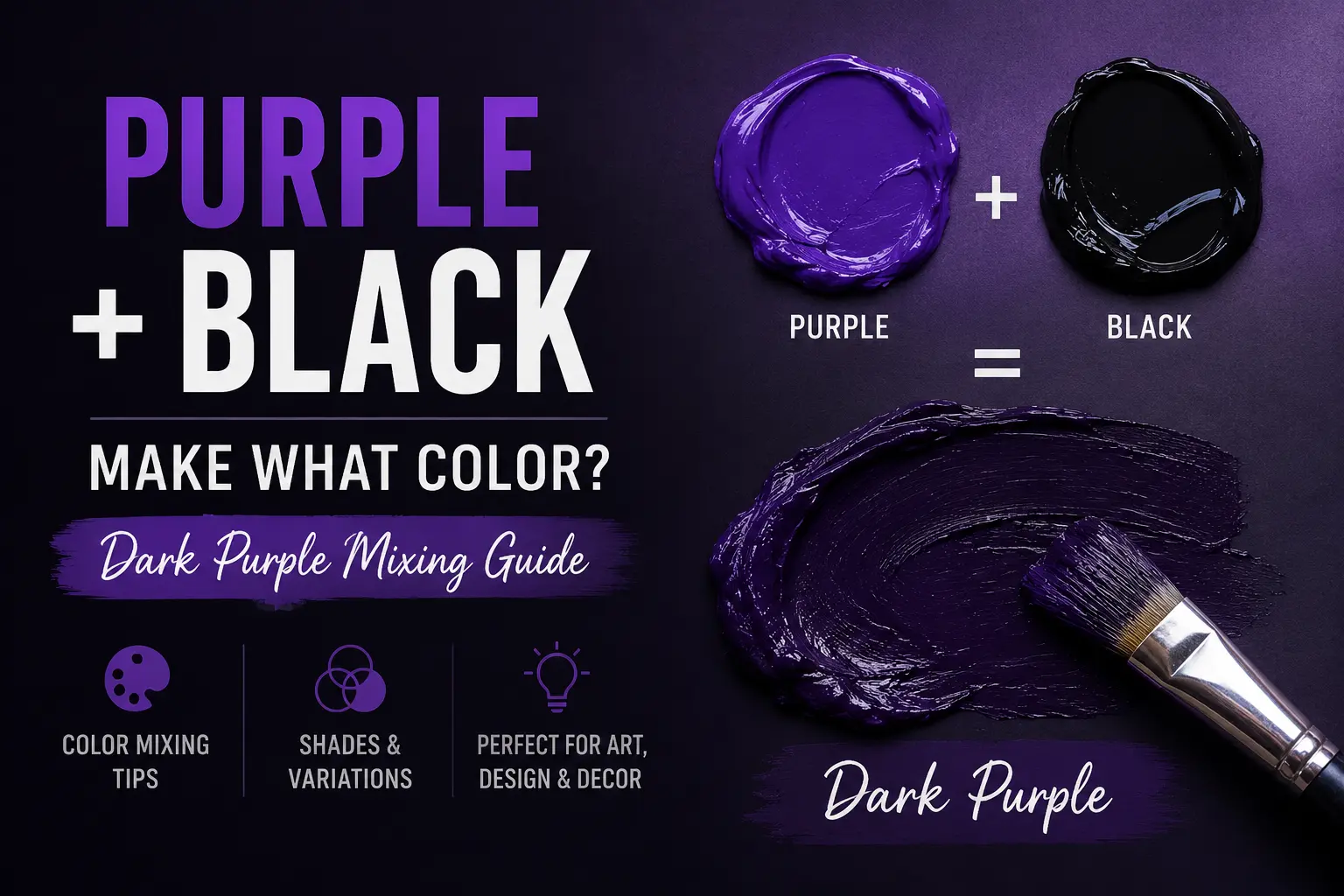
The direct answer is simple: purple and black make dark purple.
However, the final result isn’t always identical. The exact shade you get depends entirely on the type of purple you start with and the amount of black you introduce into the blend. You could easily end up with a rich eggplant, a warm plum, or a dramatic deep violet. Understanding how these two pigments interact will completely change how you use them in your next creative project.
Main Takeaway:
Base Purple + Black Pigment = Dark Purple (depending on the purple’s original undertones and your mixing ratios).
Quick Answer: What Color Do Purple and Black Make?
When you mix purple and black together, you create a deeper tone of the original purple. In art terminology, adding black to any base color is known as creating a “shade.” Because black absorbs light, it reduces the brightness of your purple without altering its actual position on the traditional color wheel.
Why does this happen? The dark pigment lowers the color’s value, which means it limits the amount of light bouncing off the surface and back to your eyes.
If you add just a tiny dot of black to a vibrant violet, it transforms into a sophisticated berry tone. If you keep adding more black, the mixture continues to darken until you get a heavy, dark hue that is barely distinguishable from pure black. The transition happens incredibly fast, so a tiny bit of dark pigment goes a long way.
The Science Behind Mixing Purple and Black
Color reacts differently depending on whether you’re holding a wet paintbrush or adjusting settings on a digital monitor. This happens because physical mediums and digital screens handle light waves in opposite ways.
Subtractive Color Mixing (Paint & Pigments)
When working with physical paints, inks, or textile dyes, you are using subtractive color mixing. Physical pigments reflect certain wavelengths of light while absorbing the rest. Purple paint looks purple because it reflects blue and red wavelengths while soaking up yellow light.
When you introduce black paint, it acts like a sponge for all visible light waves. This leaves very little clean color to reflect back to you, which is why your purple quickly loses its bright energy and turns into a heavy, deep purple.
Additive Color Mixing (Digital / Light)
Digital screens rely on additive color mixing, where colored lights combine to build every shade you see. On a monitor, your primary channels are Red, Green, and Blue (RGB). Black isn’t a physical pigment here—it’s simply the complete absence of light.
If you want to create a dark purple on a computer screen, you don’t add black light. Instead, you turn down the intensity percentages of your red and blue channels equally. For example, a bright digital violet might have an RGB value of (128, 0, 255). To drop it into a deep midnight zone, you lower those values to something like (50, 0, 100).
Common Shades Created When Mixing Purple and Black
Changing your mixing proportions or swapping out your base purple yields distinct, beautiful results. Here are the most common colors you can create with this mix.
1. Deep Purple
Deep purple is a rich, regal color that retains a very clear, highly saturated purple identity even after being darkened. It feels heavy, classic, and expensive.
This color happens because a vivid, balanced purple is mixed with a very tiny drop of black. Think of a velvet royal cloak or a fresh piece of carbon paper.
Quick Tip: If you want a clean deep purple, avoid using a black paint that has a strong green undertone, as it will dull your purple down into a muddy gray.
2. Blackish Purple
Blackish purple is an ultra-dark shade that looks almost entirely black at first glance. It only reveals its true purple nature when direct light hits its surface.
This shade occurs when the proportion of black to purple is incredibly high. Imagine the color of an old typewriter ribbon or a piece of dark obsidian rock. Artists frequently use this blend to paint deep folds in clothing because it feels much more natural than flat, pure black paint.
3. Plum
Plum is a warm, cozy shade of dark purple that features a very strong, distinct red or reddish-brown undertone. It feels organic, earthy, and welcoming.
This tone comes forward when you mix black into a purple that contains more red pigment than blue. Think of the skin of a ripe plum or a glass of dry red wine. Interior designers love this color for dining rooms because it creates a warm, intimate atmosphere.
4. Charcoal Purple
Charcoal purple is a smoky, desaturated hue that bridges the gap between deep charcoal gray and dark violet. It lacks the intense saturation of other shades, making it very soft on the eyes.
This look happens because your base purple is mixed with a carbon-heavy black or a black paint that already contains a slight white filler. Imagine heavy smoke rising from a wood fire at dusk. It’s a fantastic background color for digital art because it won’t distract from brighter foreground elements.
5. Midnight Purple
Midnight purple is a freezing, sleek tone with a heavy blue bias. It looks incredibly deep, modern, and mysterious.
This unique shade comes from mixing black with a blue-heavy purple, such as an indigo or violet. Think of the absolute highest point of the night sky away from city lights. Car enthusiasts often use this color for custom paint jobs because it looks black in the shade but explodes into blue-purple under direct sunlight.
6. Dark Violet
Dark violet is a high-contrast, electric dark shade that looks crisp and cool. It manages to retain a sharp, clean color profile despite being deeply shaded.
This occurs when you use a bright, single-pigment violet base and darken it with a very clean, pure black pigment like ivory black. It’s a favorite choice in modern branding because it feels premium, artistic, and futuristic.
Shades of Purple and Black
To make mixing easier, it helps to see how different ratios of these two pigments shift the final color result. Here is a handy reference chart for your next project:
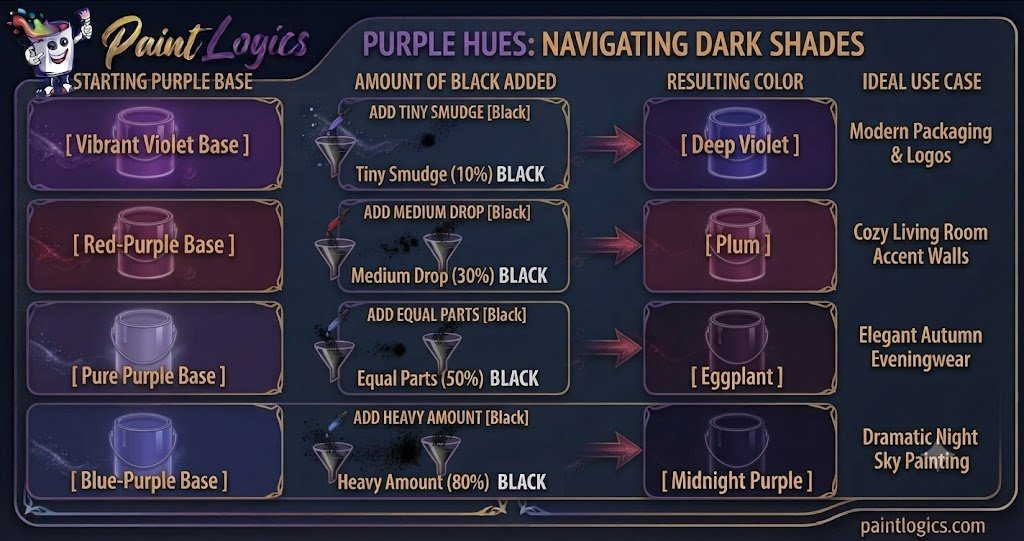
| Starting Purple Base | Amount of Black Added | Resulting Color | Ideal Use Case |
| Vibrant Violet | Tiny Smudge (10%) | Deep Violet | Modern Packaging & Logos |
| Red-Purple | Medium Drop (30%) | Plum | Cozy Living Room Accent Walls |
| Pure Purple | Equal Parts (50%) | Eggplant | Elegant Autumn Eveningwear |
| Blue-Purple | Heavy Amount (80%) | Midnight Purple | Dramatic Night Sky Painting |
What Happens When You Mix Purple and Black with Other Colors?
Once you have your basic purple and black mixture, tossing a third color into the pot will completely shift the mood. This is how professional designers build complex palettes.
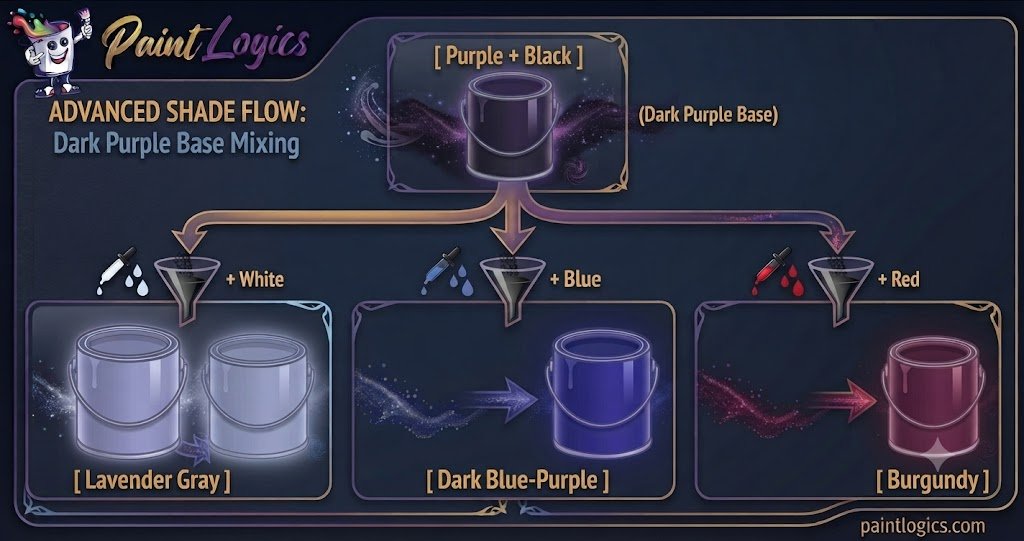
1. Purple + Black + White = Lavender Gray
Adding white to your dark purple base lifts the overall value but doesn’t restore the original brightness. Instead, it turns the mix into a dusty, sophisticated lavender gray.
The white breaks up the heavy weight of the black while locking in the cool, muted undertone. You will see this color used heavily in modern minimalist decor because it feels peaceful and clean.
2. Purple + Black + Blue = Dark Blue-Purple
When you drop blue into the mix, the temperature drops instantly. The color moves away from a red berry feel and becomes a deep, oceanic blue-purple.
The blue stretches the depth of the shadow, making it look cool and interstellar. Think of deep space nebulas or heavy oceanside cliffs.
3. Purple + Black + Red = Burgundy
If your mix feels a bit too cold, adding a splash of red will instantly pull it into a rich, luxurious burgundy or deep maroon shade.
That’s where many beginners get confused. They assume adding red will make a bright violet. Instead, the existing black anchors the red, transforming it into a heavy, expensive-looking wine tone.
4. Purple + Black + Yellow = Dark Olive
Tossing yellow into your dark purple mixture will instantly dull the color down, shifting it toward a deep, earthy dark olive or warm brown.
Why does this happen? Purple and yellow are complements on the color wheel, meaning they cancel each other out. When you add black into that cancellation, you get a beautiful, highly realistic shadow tone found all over natural forest landscapes.
5. Purple + Black + Green = Dark Olive Purple
Green and purple are a highly unusual combination. When mixed with black, they create a strange, beautiful dark olive purple or murky slate tone.
The green fights the red tones inside the purple, resulting in a dark, atmospheric color that works perfectly for rendering mossy stone steps or ancient castle walls in fantasy illustrations.
6. Purple + Black + Pink = Mauve Brown
If you introduce a warm pink to your purple-black base, you will create a soft, dusty mauve brown or a deep, smoky rose color.
The white and red pigments inside the pink soften the heavy black, leaving you with a highly vintage, nostalgic hue that works wonderfully in retro design schemes.
7. Purple + Black + Gray = Dusty Lavender
Adding standard gray to your dark purple base creates a beautiful dusty lavender that is incredibly stable and easy on the eyes.
The gray reduces the saturation without making the color lighter or darker than it already is, which makes it an excellent choice for textured background surfaces.
Using Purple and Black in Design
Purple and black aren’t just for mixing on a plastic palette. Together, they form a classic, high-contrast combination used heavily across multiple creative industries.
Fashion
In clothing design, purple and black are synonymous with evening elegance and alternative subcultures. A deep eggplant silk dress or a dark violet tie paired with a matte black suit looks deliberate, dramatic, and incredibly high-end. The secret to styling them is ensuring the purple is distinct enough from the black so it doesn’t look like you accidentally got dressed in the dark.
Interior Design
Interior designers use this combination to introduce mood, luxury, and intimacy to a space.
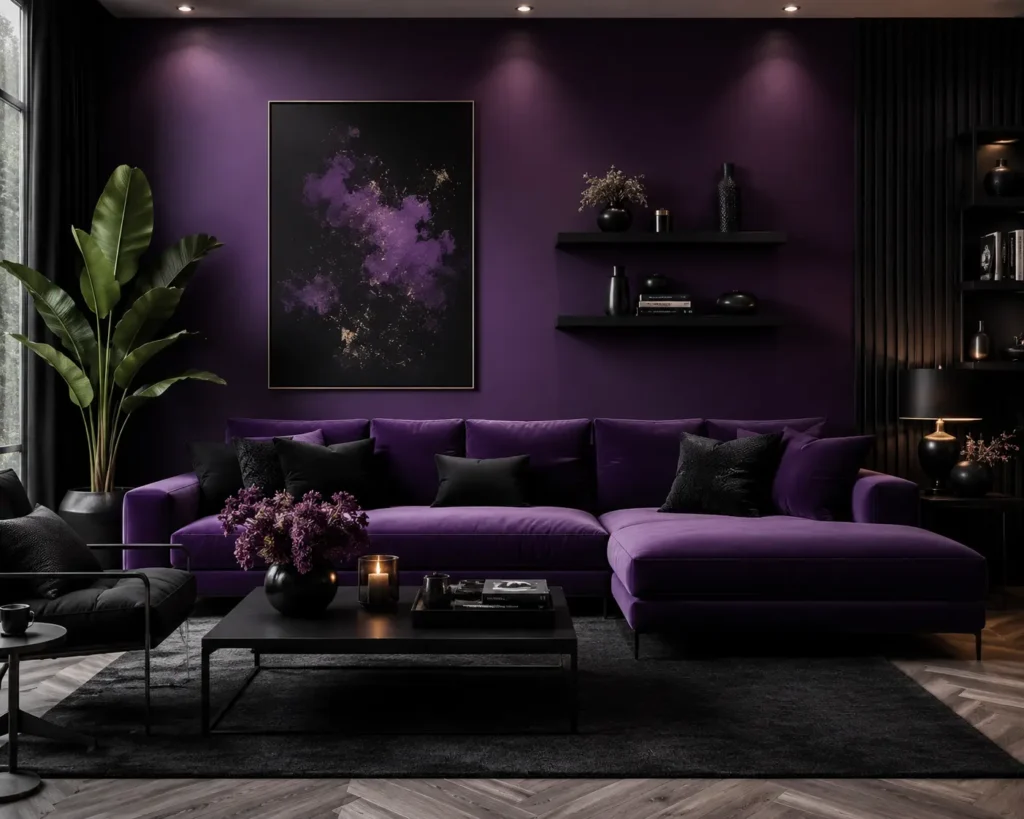
A bedroom featuring an eggplant accent wall paired with black metal light fixtures and dark wood furniture feels incredibly grounded, warm, and comforting. It’s an effective way to make a large, cold room feel cozy and secure.
Branding & Packaging
Look at high-end cosmetics, luxury confectionery, and premium tech products, and you’ll spot this pair everywhere. Black signals authority, power, and high price points, while purple communicates creativity, luxury, and mystery. Together, they tell consumers that a brand is exclusive and premium.
Tips for Mixing Purple and Black in Paint or Digital Art
If you’re ready to start mixing your own custom shades, keep these practical tips in mind to keep your colors crisp.
- Start Small: Always add your black paint to your purple paint, never the reverse. Black is an incredibly dominant pigment, and a massive puddle of purple can be swallowed up by a single heavy drop of black.
- Adjust with White or Black: If your mix gets too dark, don’t try to save it by dumping in cups of expensive purple paint. Use a tiny speck of white or a brighter magenta to pull the color value back into range.
- Test Under Different Lighting Conditions: A deep violet might look beautifully purple under your bright studio lamps but turn completely black when placed in a dimly lit hallway. Always check your dried swatch where it will actually live.
- Use High-Quality Materials: Cheap student paints contain heavy fillers that quickly turn muddy when mixed. Using artist-grade paints with single-pigment listings ensures your dark purple stays rich and clean.
Real-Life Examples of Blue and Black in Design, Art & Fashion
Seeing how these dark colors function in daily life can give you instant inspiration for your next project.
Fashion
Think of a classic autumn look: an oversized knit sweater in a rich plum tone paired with sleek black skinny jeans and leather boots. The warmth of the plum breaks up the solid black, creating an effortless everyday look.
Interior Design
Imagine a contemporary powder room with matte black plumbing fixtures, a black marble sink, and rich velvet purple wallpaper. The dark purple walls prevent the small bathroom from feeling clinical, adding an unexpected layer of luxury.
Art & Illustration
Consider comic book artists and fantasy illustrators painting mysterious night scenes or magical energy. They almost never use plain black lines for shadows. Instead, they use deep blackish purple to give their illustrations an otherworldly, glowing quality.
Common Mistakes to Avoid When Mixing Purple and Black
Mixing these two dark colors is simple, but it is incredibly easy to make a mess of your working palette if you aren’t paying attention.
1. Using Too Much Black
This is the number one blunder. Because black is so intense, dumping equal parts purple and black together will leave you with a color that just looks like dirty black paint.
How to avoid it: Treat black paint like an incredibly strong spice. Mix it in tiny crumbs using the edge of your palette knife until you hit your sweet spot.
2. Not Testing the Mix
Acrylic and oil paints shift color as they dry. Acrylics, in particular, always dry a full shade darker than they look when wet.
How to avoid it: Paint a quick test stroke on a scrap piece of paper and dry it with a hair dryer to see its true final color before painting your main project surface.
3. Forgetting Undertones
Not all purple paints are made the same way. A blue-toned violet will react very differently to black than a red-toned magenta. If you ignore these natural undertones, your final dark purple might look muddier or colder than you wanted.
How to avoid it: Smear a paper thin layer of your pure purple paint onto a white background to see its true undertone hiding beneath the surface before you mix in your black.
4. Ignoring Proportions
If you don’t track your mixing amounts, you will never be able to recreate that exact beautiful shade of eggplant if you run out halfway through your canvas or room wall.
How to avoid it: Use precise drops, parts, or measuring spoons to note down your recipe so you can duplicate the color flawlessly down the road.
Conclusion
To wrap things up, purple and black make dark purple. Depending on your mixing choices, that dark purple can manifest as an elegant eggplant, a warm plum, or a cool midnight purple.
The whole secret to mastering this color match lies entirely in your ratios. Treat black paint as a highly dominant force, introduce it slowly, and always respect the natural undertones of your base purple. Whether you are building an outfit, painting a fresh canvas, or redesigning a room, utilizing this moody pair adds instant maturity and mystery to your work.
Love To Read More
#1 What Color Does Blue and Gray Make When Mixed?
#2 What Color Does Red and White Make When Mixed? Complete Guide
FAQs
What color do purple and black make when mixed?
They make a rich, deep dark purple. The precise hue depends on your mixing ratios, yielding shades like eggplant, plum, or midnight purple.
Can purple and black make a neutral color?
No, on their own they will always create a cool or warm shade of dark purple. To turn it into a true neutral, you would need to introduce a complementary color like yellow or gray.
How do I make purple and black mix more vibrant?
Black naturally absorbs light and reduces vibrancy. To keep the mix as alive as possible, start with a highly saturated violet base and use the absolute smallest smudge of black pigment.
Does purple and black result in a dark color?
Yes, absolutely. Because black absorbs almost all visible light waves, any color you mix it with will immediately drop significantly in value and turn dark.
Can I lighten the purple and black mix?
Yes, you can. Adding a small touch of white paint will break up the heavy darkness, transforming the mixture into a beautiful, smoky lavender gray.
What color do I get if I mix purple, black, and blue?
You will create a cold, deep midnight purple or dark blue-purple tone. The blue cools down the mix, mimicking the look of deep cosmic space.
What happens when I mix purple, black, and red?
The red warms up the mixture, transforming the dark purple base into a rich, sophisticated burgundy, maroon, or deep wine shade.
Can purple and black make a cool tone?
Yes, they can. If you start with a blue-heavy purple base like indigo or violet, the resulting mix will have a distinctly chilly, cool-toned midnight appearance.
Is purple and black used in interior design?
Yes, it’s highly popular for creating dramatic, luxurious spaces. Painting walls a deep eggplant color and accenting them with black hardware makes a room feel incredibly cozy and high-end.
What color is best for eveningwear with purple and black?
A rich eggplant or deep plum is sensational for eveningwear. It catches lighting beautifully, offering a sophisticated alternative to a standard plain black dress or suit.
Does purple and black mix well in branding?
Yes, particularly for luxury and creative industries. Purple signals imagination and luxury, while black commands authority and premium value, making them a perfect corporate pair.
Can purple and black be used in fashion for casual wear?
Absolutely. A perfect real-life example is wearing a cozy, plum-colored knit sweater with a pair of casual black denim jeans for a comfortable autumn look.