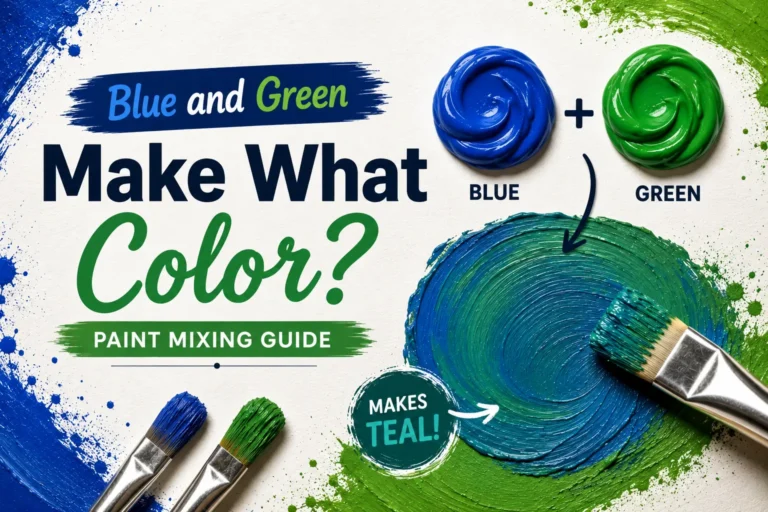
What Colors Make Green? Easy Color Mixing Guide for Every Shade
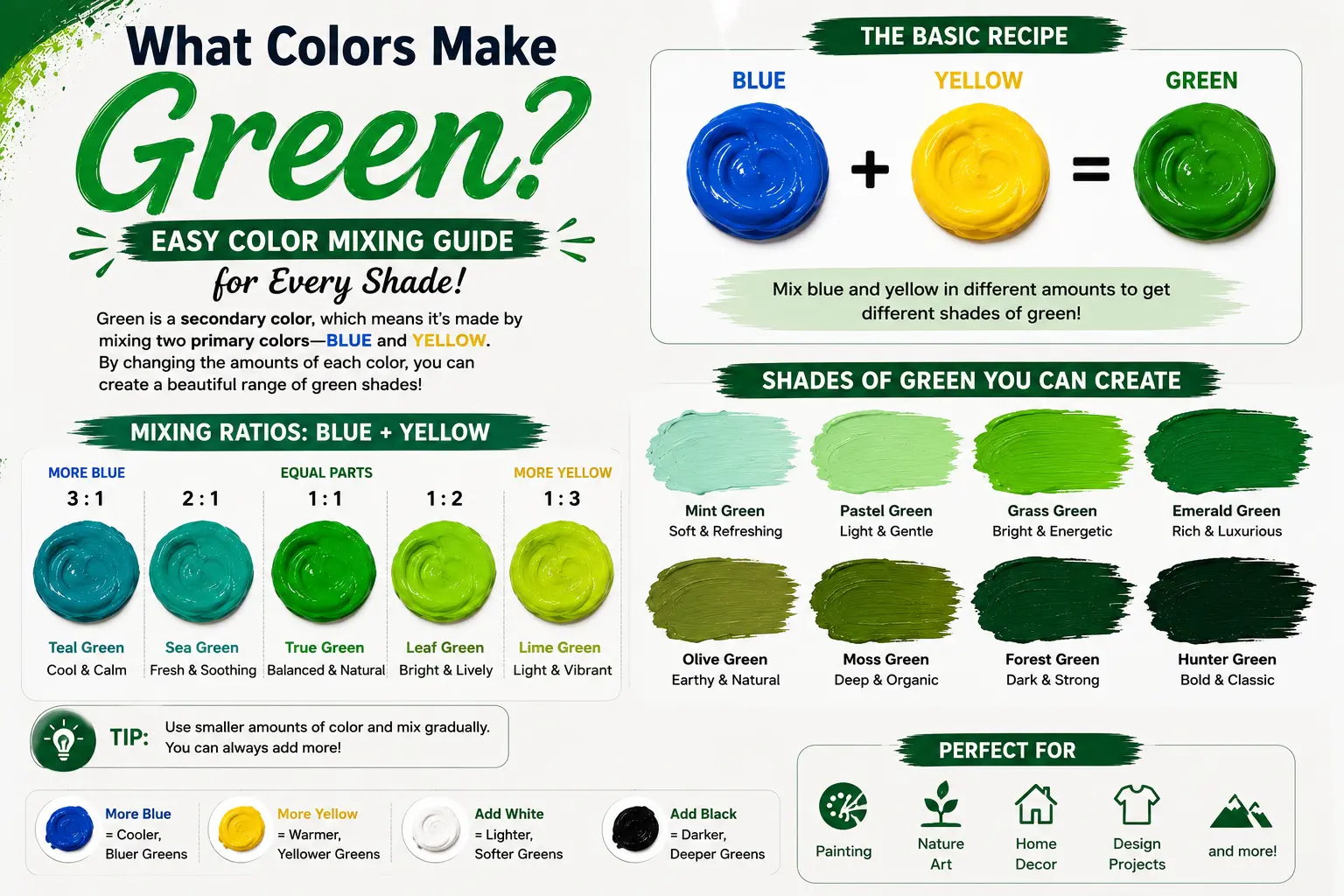
If you’ve ever wondered what colors make green, you’re not alone. The straightforward answer is that mixing blue and yellow creates green. But if you have ever sat down with a palette of paint, you know that the results aren’t always that simple. Sometimes you end up with a vibrant lime, and other times you get a dull, muddy brown.
Creating the perfect shade requires understanding how different tones interact. In this guide, you’ll learn how to mix everything from bright mint to deep olive, adjust color temperatures, and work across different mediums like paint and digital screens.
Main Takeaway: Yellow (Primary) + Blue (Primary) = Green (Secondary), depending entirely on the bias of your starting pigments.
What Two Colors Make Green?
The basic formula for green is one of the first things we learn in art class. You take a bit of yellow, add a splash of blue, and watch the new color appear.
This happens because of how pigments absorb and reflect light. Yellow paint reflects yellow, green, and red light while absorbing blue. Blue paint reflects blue, green, and purple light while absorbing yellow. When you mix them, green is the only color of light that both pigments reflect, which is why your eyes perceive it.
Here’s a good example. If you mix a clean lemon yellow with a bright sky blue, you get a classic, crisp grass green.
Beginner Tip: Always add your darker color (blue) into your lighter color (yellow) in small amounts. Blue easily overpowers yellow, and it’s much harder to lighten a dark mix than it is to darken a light one.
Now let’s look at how this fits into standard color theory.
What Makes Green — Primary or Secondary?
Green is classified as a secondary color. In traditional color theory, the three primary colors are red, yellow, and blue. You cannot create primary colors by mixing other colors together.
Secondary colors are the direct result of mixing two primary colors in equal parts. Because green requires a combination of yellow blue mixtures, it sits firmly in the secondary category alongside orange and purple.
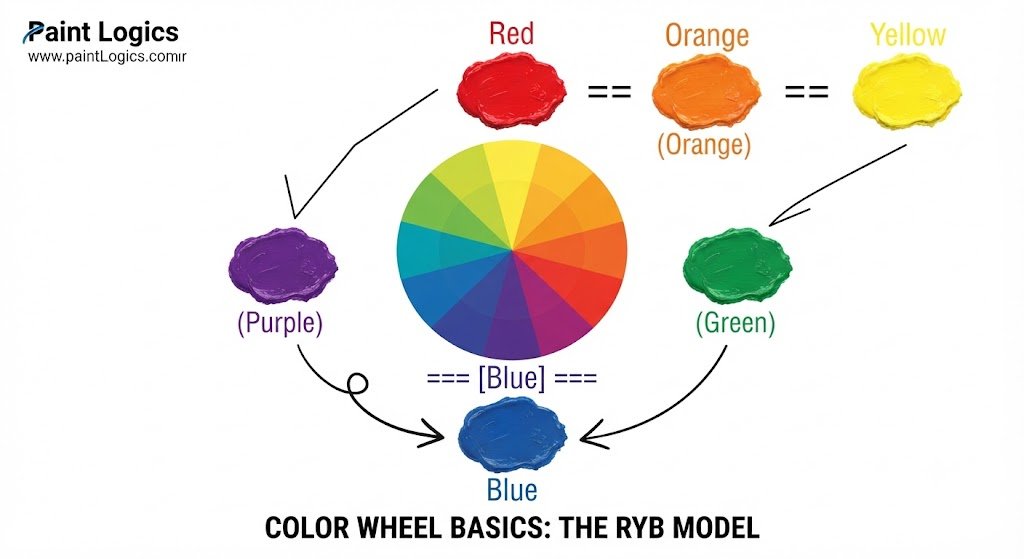
Understanding this classification helps you predict how green will behave when mixed with other colors. For instance, knowing it’s made of yellow and blue tells you exactly why adding more of either primary shifts the final hue.
How to Mix Different Shades of Green
You don’t have to limit yourself to a single tube of standard green. By shifting the ratio of your base ingredients, you can create an infinite variety of green shades.
The reason for this variety lies in the balance of your mix. Adding more yellow pulls the color toward a bright, energetic tone. Adding more blue pushes it toward a deep, cool tone.
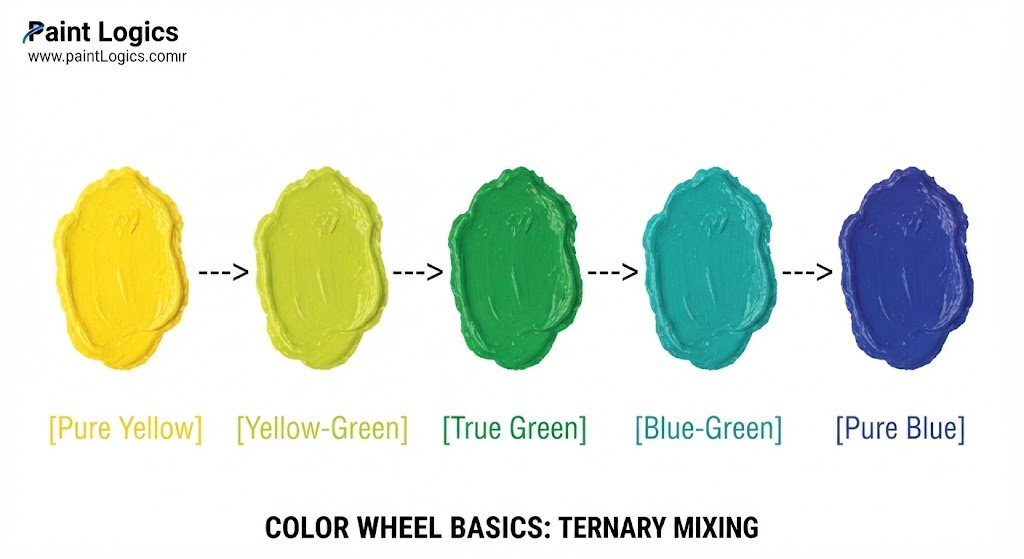
To see this in action, set out three small piles of yellow paint. Add a tiny dot of blue to the first, a medium dot to the second, and a large dollop to the third. You’ll instantly see three distinct versions of the color.
| Desired Shade | Base Color | Adjusting Color | Expected Result |
| Yellow-Green | High Yellow | Low Blue | Lime, Chartreuse, Peridot |
| True Green | Equal Yellow | Equal Blue | Grass Green, Kelly Green |
| Blue-Green | Low Yellow | High Blue | Teal, Turquoise, Seafoam |
That’s where many beginners get confused—they expect every yellow and blue mixture to look identical. Now compare that with what happens when you introduce a third color to create specific light shades.
How to Make Light Green (Mint, Lime, Pistachio)?
Making a light green isn’t just about watering down your paint or throwing random colors together. It requires a deliberate choice of base tones and lighteners to keep the color clean.
The secret to light greens is tinting, which means adding white or a very light yellow to your mix. White raises the value of the color, making it look softer and paler, while yellow keeps it looking bright.
How to make mint green?
Mint green is a cool, soft shade that feels fresh and clean. This happens because it has a stronger blue undertone quieted down by a heavy dose of white. To mix it, start with a pale sky blue and a tiny touch of light yellow, then blend in a large amount of titanium white until it looks pastel. It’s a great choice for vintage designs or calming interior spaces.
How to make lime green?
Lime green is a high-energy, vibrant shade that leans heavily toward yellow. The reason it looks so bright is that it contains very little blue to dull it down. Take a bright lemon yellow and add a microscopic dot of phthalo blue. A common mistake is adding too much blue right away, which turns it into grass green instead of a sharp lime.
How to make pistachio green?
Pistachio is a muted, milky green with a slight earthy undertone. This tone comes from adding a tiny hint of warmth to a light green mix to take away the neon edge. Mix a soft yellow and a touch of blue, add white to lighten it, and then add a pinprick of yellow ochre or raw umber. This soft shade is highly popular in modern kitchen decor and ceramics.
How to Make Dark Green (Forest, Hunter, Olive)
When you want to create a rich, dark green, your first instinct might be to reach for black paint. However, black can quickly make your colors look dead and flat.
Instead, the best way to darken green is to use deep blue pigments or complementary colors. This adds depth and keeps the color looking alive.
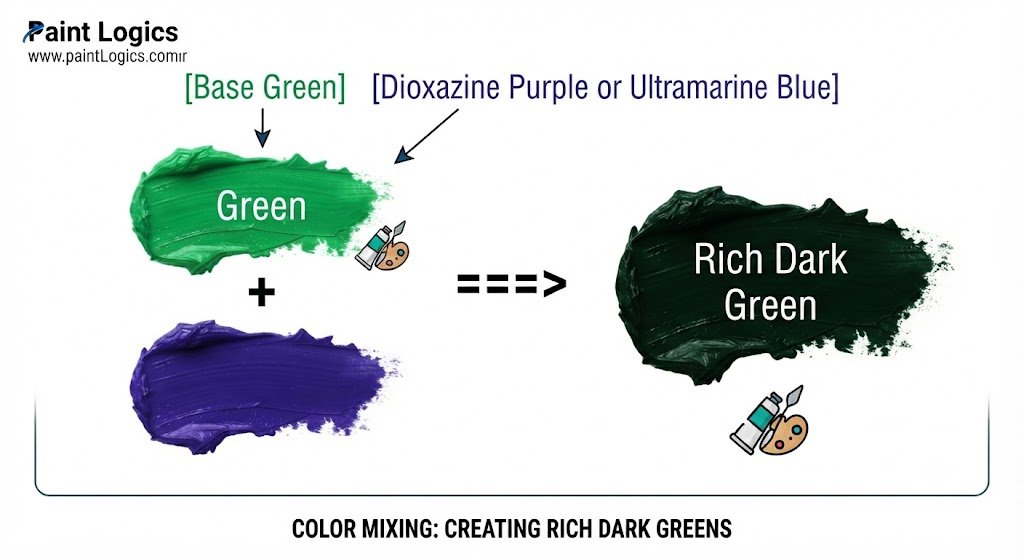
How to make the forest green?
Forest green is a deep, majestic shade that mimics dense pine trees. It relies heavily on a strong, dark blue base to achieve its depth. To mix it, combine a rich yellow with a deep blue like Ultramarine, then add a tiny touch of black or dark purple to pull it down into the shadows. Artists frequently use this for painting deep landscapes and twilight scenes.
Pro Tip: If your dark green looks too chalky, stop using white entirely in your mixing process. Use transparency or deep glazing liquids instead to let the dark pigments show their natural depth.
How to make hunter green?
Hunter green is a classic, dark color that is slightly deeper and cooler than forest green. The reason it looks so dark is its high concentration of cool blue-gray tones. Start with a deep thalo green or a mix of phthalo blue and yellow, then introduce a tiny touch of a deep red or burnt umber to desaturate it safely. It’s a staple color for traditional home libraries and autumn apparel.
How to make olive green?
Olive green is a warm, earthy dark green with a strong yellow-brown undertone. This happens because olive lives on the border between green and orange-yellow. Mix a warm yellow with a touch of blue, then add a tiny bit of red or raw umber to dull the brightness. This creates that classic army-green or Mediterranean olive tone used widely in fashion.
How to Make Warm and Cool Greens
Colors have temperatures, and understanding the difference between warm and cool greens will completely change how you mix them.
COOL SHADES WARM SHADES
[Mint] — [Teal] — [True Green] — [Lime] — [Olive]
This temperature shift depends on which side of the color wheel your green leans toward. Greens that lean toward yellow feel warm, while greens that lean toward blue feel cool.
How to make a warm green?
A warm green feels sunlit, cozy, and vibrant. This effect comes from using warm yellow bases that contain a hint of red or orange light. Mix a warm yellow, like Cadmium Yellow, with a tiny touch of a warm blue like Ultramarine. This works perfectly for painting sunny fields, bright leaves, or creating a welcoming kitchen space.
How to make a cool green?
A cool green feels icy, shadow-like, and distant. This happens because the mix is dominated by blue tones that carry a hint of green or purple light. Combine a cool blue, like Phthalo Blue, with a cool yellow like Lemon Yellow. This combination is ideal for deep water, winter pine needles, or modern, minimalist graphic designs.
Unexpected Ways to Make Green
Did you know you can make green without using standard blue paint at all? This sounds impossible based on basic color rules, but pigment chemistry offers some fascinating workarounds.
The reason this works is that certain black and brown pigments actually contain strong blue undertones that are hidden until they are mixed with yellow.
Here’s a good example. If you mix Ivory Black with Cadmium Yellow, you won’t get gray—you’ll get a beautiful, soft olive green.
[Ivory Black (Secret Blue Undertone)] + [Cadmium Yellow] ===> Olive Green
Another classic artist trick is mixing Raw Umber with Lemon Yellow. The cool, dark brown balances the bright yellow to create a gorgeous, natural sage green that looks exactly like real foliage.
Best Color Combinations for Custom Greens
To get total control over your palette, you need to look closely at the specific tubes of paint you are using. Not all blues and yellows are created equal.
Phthalo Blue vs. Ultramarine Blue
Phthalo Blue is a cool, green-biased blue. When you mix it with yellow, it creates incredibly bright, vibrant greens. Ultramarine Blue is a warm, red-biased blue. Because it contains a tiny hint of red, mixing it with yellow will produce a much more muted, earthy green.
Cadmium Yellow vs. Lemon Yellow
Cadmium Yellow is a warm, orange-biased yellow. It creates rich, natural, warm greens. Lemon Yellow is a cool, green-biased yellow. It produces incredibly sharp, electric, high-vis greens.
Adjusting with White, Black, and Gray
White softens your green into pastels. Black darkens it but can cause muddiness if used too heavily. Gray creates a smoky, sophisticated sage green that works beautifully in modern home decor.
Adding Red or Burnt Sienna
Red is the direct complement of green. Adding a microscopic dot of red or a warm brown like Burnt Sienna won’t ruin your green; instead, it tones down the unnatural brightness, making it look like a shade you would find in nature.
Green Mixing Tips for Different Mediums
The physical rules of mixing change slightly depending on whether you are working with wet paint, layering transparent washes, or adjusting pixels on a monitor.
![PAINTS (Subtractive) DIGITAL SCREENS (Additive)
[Yellow] + [Blue] [Red] + [Green]
\ / \ /
[Green] [Yellow]](https://paintlogics.com/wp-content/uploads/2026/07/Mixing.jpg)
What Color Makes Green in Acrylic and Oil Paint?
Acrylics and oils rely on heavy physical pigments. You simply mix physical yellow blue paints directly on your palette. Because oils dry slowly, you can blend these colors directly on the canvas, whereas fast-drying acrylics require you to mix your shades completely beforehand.
What Color Makes Green in Watercolor?
Watercolor relies on transparency. Instead of mixing heavy layers, you can create green by painting a thin, transparent wash of yellow, letting it dry, and then glazing a thin layer of blue right over it. The light passing through both layers creates a glowing green.
What Color Makes Green in Digital Art?
Digital art operates on a completely different system. On a screen, green is actually a primary color of light. You don’t mix blue and yellow to get green digitally; instead, you turn up the “G” value in your RGB settings.
Green in Different Color Models: RYB, CMYK, and RGB
To master color across all industries, you need to understand the three primary color models used by artists, printers, and designers.
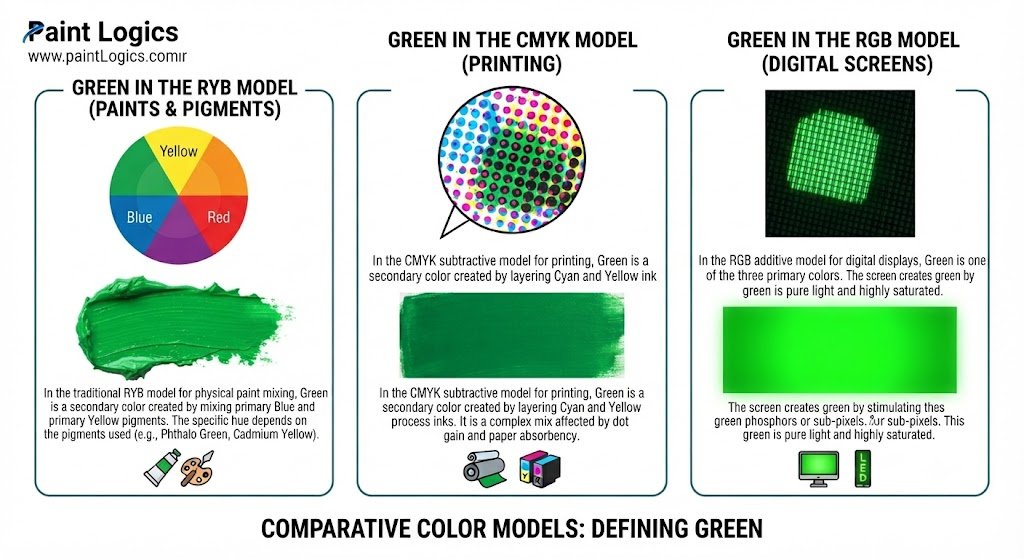
- RYB (Red, Yellow, Blue): This is the traditional art model used for paints. Green is a secondary color created by mixing yellow and blue.
- CMYK (Cyan, Magenta, Yellow, Key/Black): This is the model used by commercial printing presses. Green is made by mixing Cyan (a specific greenish-blue) and Yellow.
- RGB (Red, Green, Blue): This is the additive model used by digital screens. Green is a primary color of light.
| Color Model | Role of Green | How It’s Created | Primary Use Case |
| RYB | Secondary | Yellow + Blue | Fine Art, Painting |
| CMYK | Secondary | Cyan + Yellow | Ink Printing, Magazines |
| RGB | Primary | Pure Light Source | Monitors, Phones, TV |
Common Mistakes When Mixing Green — and How to Fix Them
We’ve all ended up with a pile of ugly brown paint when trying to mix a nice green. Understanding why this happens makes it easy to fix.
- The Green Looks Like Mud: This happens because you introduced a third primary color (red) into the mix. Check your blues and yellows—if you used a reddish-blue like Ultramarine and a warm yellow, you accidentally created a three-way primary mix. The Fix: Switch to a cool blue like Phthalo Blue and a cool yellow like Lemon Yellow.
- The Green Is Too Neon: Your mix looks like a highlighter and doesn’t look natural. The Fix: Add a tiny pinprick of red paint or a warm brown like Burnt Sienna to instantly ground the color.
- The Green Turned Too Dark Too Fast: You added a huge glob of blue directly into your yellow. The Fix: Start over with a pile of pure yellow and feed microscopic dots of blue into it until you reach the target shade.
How Artists Use Different Shades of Green
Great artists rarely use green straight out of a pre-made tube. They use specific green shades to create depth, emotion, and realism in their work.
Landscape painters use warm, yellow-greens for the areas of a tree hit directly by the sun, while using deep blue-greens mixed with purple for the underside shadows. This contrast makes the foliage look three-dimensional.
![[Sunlight]
│
▼
╭─────────────╮
│ Warm Yellow-│ <--- Lit side of the tree
│ Greens │
├─────────────┤
│ Deep Blue- │ <--- Shadow side of the tree
│ Greens │
╰─────────────╯](https://paintlogics.com/wp-content/uploads/2026/07/A-diagram-comparing-green-in-the-RYB-paint-model-CMYK-print-model-and-RGB-digital-screen-model.jpg)
Interior designers often use muted greens like sage or olive to make living rooms feel calm and grounded. Because these shades contain hints of gray and brown, they act as neutrals that match easily with wood furniture and cream fabrics.
You May Also Like
- Orange and Green Make What Color? Complete Mixing Guide
- What Color Do Green and Black Make? Complete Mixing Guide
- Green and Gray Make What Color? Complete Color Mixing Guide
Conclusion – Unlocking the Power of Green
Mastering green gives you the power to bring realism and vibrancy to your creative projects. By moving beyond basic formulas, you can mix custom shades that perfectly capture the natural world.
“So, What Colors Make Green in the End?”
At its simplest level, yellow and blue make green. But remember that the specific pigments you choose—and the tiny adjustments you make with white, black, or red—are what turn a basic secondary color into a stunning palette of custom shades. Keep experimenting, pay attention to color temperatures, and enjoy the process of mixing your own unique greens.
FAQs
Can I make green without blue?
Yes. You can create excellent olive and sage greens by mixing Ivory Black or Raw Umber with a bright yellow pigment. This works because those specific dark pigments have natural blue undertones.
Why does my green look brown or muddy?
Your green looks muddy because red light entered the mix. If your blue or yellow pigments lean toward red or orange, you are accidentally mixing all three primary colors together, which naturally creates brown.
Can I mix green from pink?
No. Pink is a tint of red, which is the complementary opposite of green. Mixing pink with any yellow or blue will pull the color toward a muted purple, orange, or muddy brown rather than a clean green.
What color cancels out green?
Red cancels out green. Because they sit directly opposite each other on the color wheel, mixing them together neutralizes the chroma, turning the mix gray or brown. In color correction, red concealer cancels out green skin blemishes.
How do I make dark green?
To make dark green, mix your yellow base with a deep, cool blue like Phthalo Blue, then add a tiny touch of purple, raw umber, or black to deepen the value without flattening the tone.
How do I make light green?
To make light green, start with a base of yellow and a tiny touch of blue, then gradually mix in titanium white or a very pale zinc yellow until you reach your desired brightness.
What’s the best green for trees and landscapes?
There is no single best green, but a mix of Sap Green adjusted with Cadmium Yellow for highlights and Ultramarine Blue for shadows creates the most realistic look for natural trees and landscapes.
How do I make green look more natural?
To make green look natural, add a tiny drop of its complementary color, red, or an earthy brown like Burnt Sienna. This tones down the synthetic brightness and mimics shades found in nature.
Can I use food or plants to dye green?
Yes. Spinach leaves, matcha powder, and spirulina are excellent natural sources for creating vibrant green dyes for food, fabrics, or homemade watercolors.
Is green a warm or cool color?
Green is traditionally considered a cool color, but it can be either. A yellow-heavy green like lime is warm, while a blue-heavy green like mint or teal is cool.
What is the hex code for digital green?
The standard pure hex code for green in the digital RGB model is #00FF00.
How Do I Make Natural Green Darker?
To make a natural green darker without losing its organic feel, add a deep brown like Raw Umber or a deep purple like Dioxazine Violet instead of using pure black paint.