Colors That Start With A: The Complete List With Hex Codes
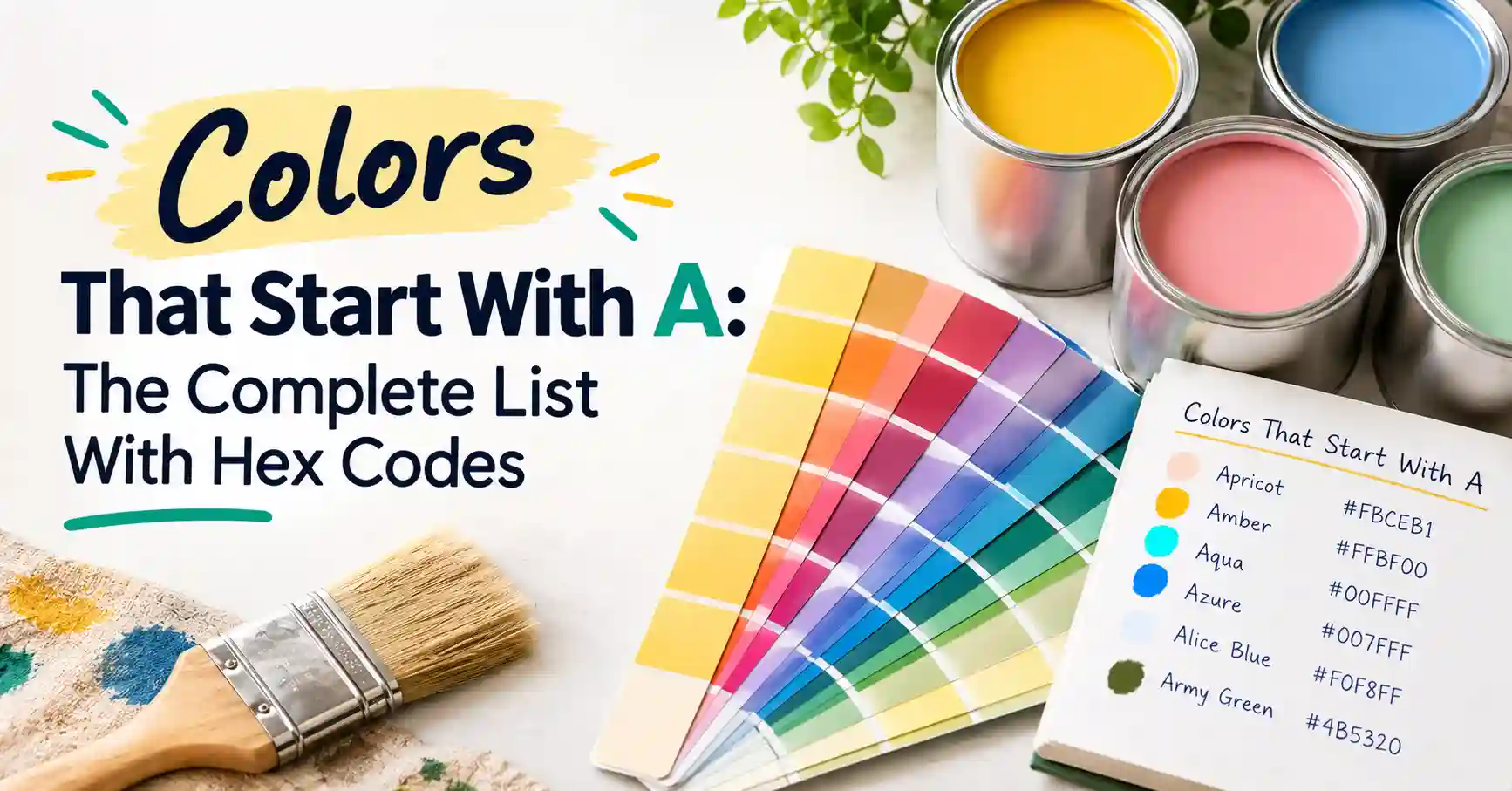
Colors that start with A cover more ground than most letters. You get warm ambers, cool azures, deep purples, and even a shade named after a flower. This guide pulls together the names with real, stable hex codes, not invented shades from a single paint brand.
The list is organized three ways. First, colors sit in family groups, so blues stay with blues and purples stay with purples. Next comes a sort by use case, such as branding or fashion. Last is a full alphabetical list with three tables, for a fast lookup once you know the name.
People reach for a list like this for different reasons. A designer needs an exact code for a logo. A painter wants one shared name for a wall color. Parents sometimes browse lists like this for a baby name or a pet name. Trivia fans just enjoy the odd facts, like a color named after a Jupiter-linked heraldic term.
This list stays shorter than some others online, and that is on purpose. Many “A” color lists pad their count with single-brand paint names. Their hex codes shift from maker to maker, so we left those out unless a second source backed the same value. When two sources disagreed, that gets flagged directly.
Quick Answer: The Standout A Colors
Start with Amber (#FFBF00), a warm honey-orange used everywhere from alerts to jewelry. Azure has two faces: the web standard (#F0FFFF) is a near-white mist, while the traditional sky-blue azure (#007FFF) is bold and vivid. Amethyst (#9966CC) brings a soft purple tied to the gemstone. Auburn (#A52A2A) is the classic reddish-brown hair color.
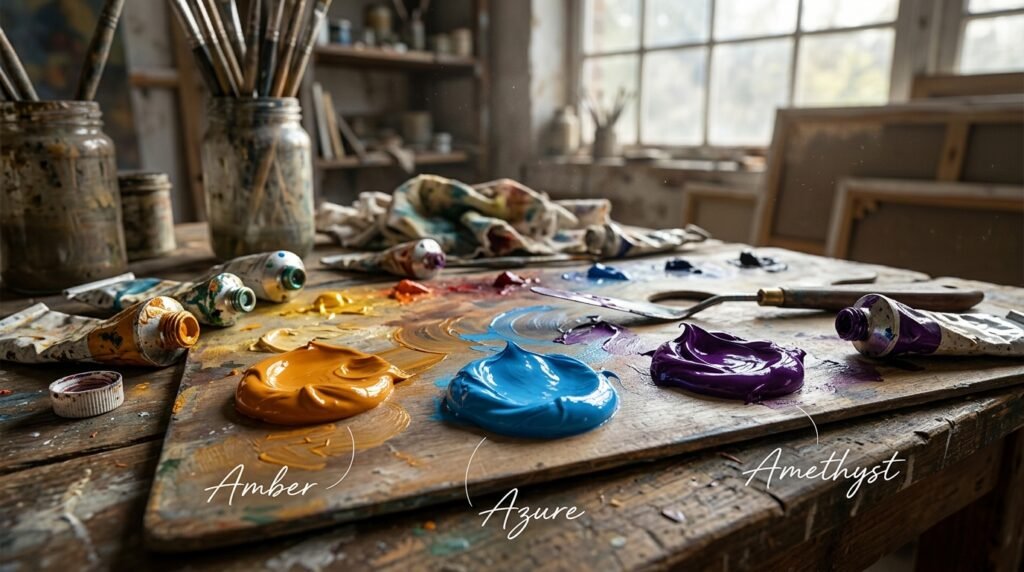
Caption: Nine standout A colors, from warm Amber to the two faces of Azure.
For nature-leaning picks, Avocado (#568203) and Apricot (#FBCEB1) both come straight from fruit. Aquamarine (#7FFFD4) and Alice Blue (#F0F8FF) cover the pale, cool end. Amaranth (#E52B50) adds a bold reddish-pink, and Ash Gray (#B2BEB5) rounds things out as a dependable neutral.
What A CoColor Means and Evokes
Amber carries a dual meaning. It glows like warm honey, so it feels inviting. But traffic lights also use amber for “slow down,” so the same color can mean caution. That double meaning is rare, and it makes Amber useful in both cozy and alert-driven design.
Azure leans fully positive. It is named for a clear sky, and most people link it with calm, openness, and trust. In heraldry, azure represents Jupiter and sapphires, giving it a regal weight that plain blue does not carry. Amethyst draws on the same gemstone logic. Purple already signals luxury, and naming the shade after a crystal adds a touch of mysticism.
Auburn sits in a more intimate space. It describes hair color more than anything else, so it reads as personal and warm rather than corporate. Avocado tells a different story. In the 1970s, it became the default shade for kitchen appliances, so it still carries a slightly dated, nostalgic feel even in fresh branding.
A. Colors Grouped by Family
Blues and cyans. Alice Blue (#F0F8FF), Aqua (#00FFFF), Aquamarine (#7FFFD4), and the two Azures (#F0FFFF and #007FFF) all sit here. They range from barely-there pale tints to a fully saturated sky blue. This is the most crowded family in the A list, which fits, since blue dominates calm, trustworthy branding.
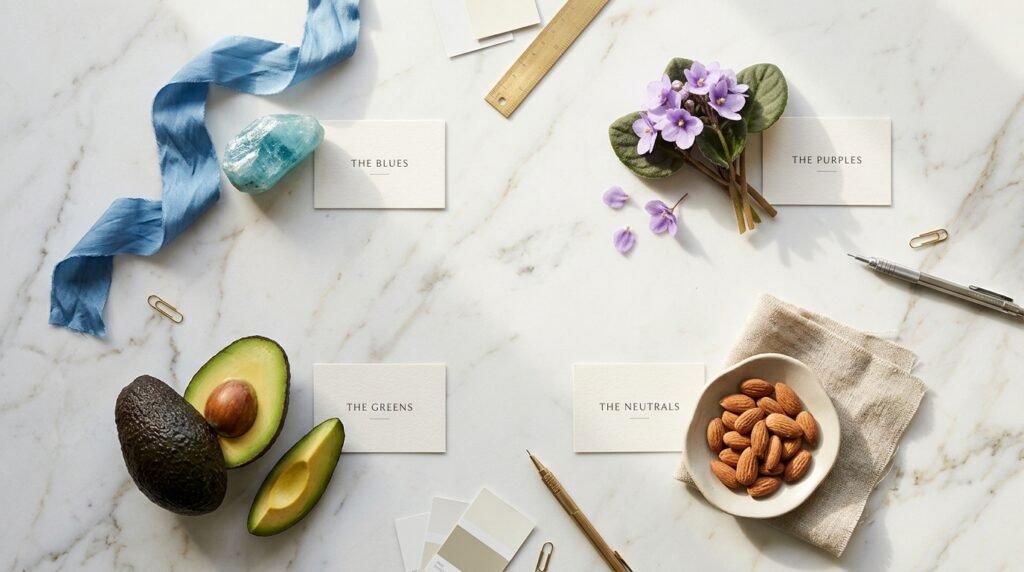
Caption: A color split into six families, from pale blues to earthy greens.
Purples. Amethyst (#9966CC), African Violet (#B284BE), and Aubergine (#614051) make up this group. Amethyst and African Violet both lean soft and floral. Aubergine goes the other way, dark enough to read as a near-black purple used in food and fashion names.
Warm oranges and ambers. Amber (#FFBF00), Apricot (#FBCEB1), Auburn (#A52A2A), Atomic Tangerine (#FFA474), and Alloy Orange (#C46210) share red–yellow undertones. They range from a pale fruit tone to a bold, almost metallic orange.
Greens. Avocado (#568203), Army Green (#4B5320), and Artichoke (#4B6F44) form a muted, earthy trio. All three skew dark and yellow-leaning rather than bright, which is why they show up in military, outdoor, and food branding more than in playful design.
Reds and pinks. Amaranth (#E52B50) stands alone here, a bold reddish-rose named directly after a flower.
Neutrals. Antique White (#FAEBD7), Almond (#EED9C4), and Ash Gray (#B2BEB5) close out the list. These are the colors designers lean on for backgrounds, since they add warmth or coolness without competing with the main palette.
Design and Branding Favorites Among Shades of a Color
Amber shows up constantly in interface design, since its warning-and-warmth double meaning makes it perfect for badges, alerts, and loyalty tiers. Azure, in its vivid #007FFF form, has become a familiar name in tech branding, largely because it signals clarity and openness without the heaviness of navy. Aubergine does the opposite work. Its near-black purple reads as premium, so beauty and fashion brands reach for it when they want richness without using plain black.
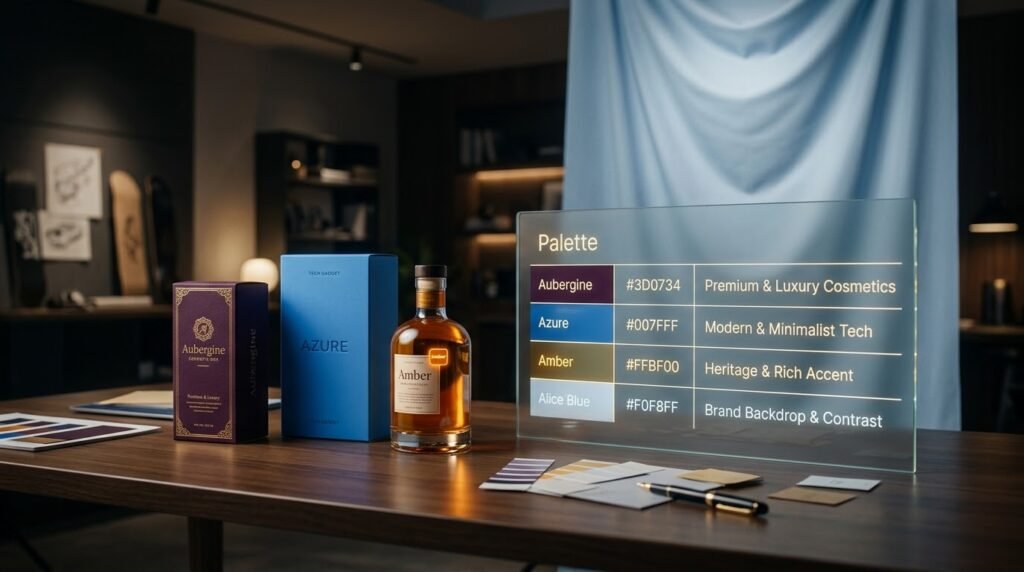
The table below lists four A colors that come up often in branding work, along with a typical use for each.
| Color | Hex | Typical Use |
| Amber | #FFBF00 | Alerts, badges, warm accent branding |
| Azure (traditional) | #007FFF | Tech logos, clean and trustworthy branding |
| Aubergine | #614051 | Beauty, fashion, premium packaging |
| Alice Blue | #F0F8FF | Soft backgrounds, healthcare, baby brands |
Of these four, Azure does the most versatile work, since it reads as modern in tech and calm in healthcare at the same time. Aubergine is the opposite case: a narrow but strong fit, almost always tied to luxury or beauty.
Fashion and Beauty Shades With A Color Name
Fashion pulls hard from the A list. Auburn is the most familiar, since it describes a specific, warm red-brown hair shade that stylists name directly. Amethyst and Aubergine both do double duty in makeup and clothing, one light and floral, the other deep and dramatic. Apricot softens things further, a pale peach-orange that flatters a wide range of skin tones in blush and lip products.
- Auburn (#A52A2A): the classic reddish-brown hair color
- Amethyst (#9966CC): a soft, gem-inspired purple for eyeshadow and accents
- Aubergine (#614051): a deep, near-black purple for premium pieces
- Apricot (#FBCEB1): a gentle peach-orange for blush and soft knitwear
Notice how Auburn and Apricot share warm undertones but sit at opposite ends of intensity. Pairing the two in one collection gives a cohesive, skin-friendly autumn palette without the colors competing.
Nature-Inspired Color Names
Several colors trace straight back to something you could hold in your hand. Apricot takes its name from the fruit, and the color has been used as a name since 1851, long before synthetic pigments existed. Avocado followed the same pattern a century later, and the color still carries that specific 1970s association with kitchen appliances and shag carpet, even when used in a modern context. Amber goes back furthest of all. It describes fossilized tree resin, prized since Neolithic times for its warm orange-brown glow.
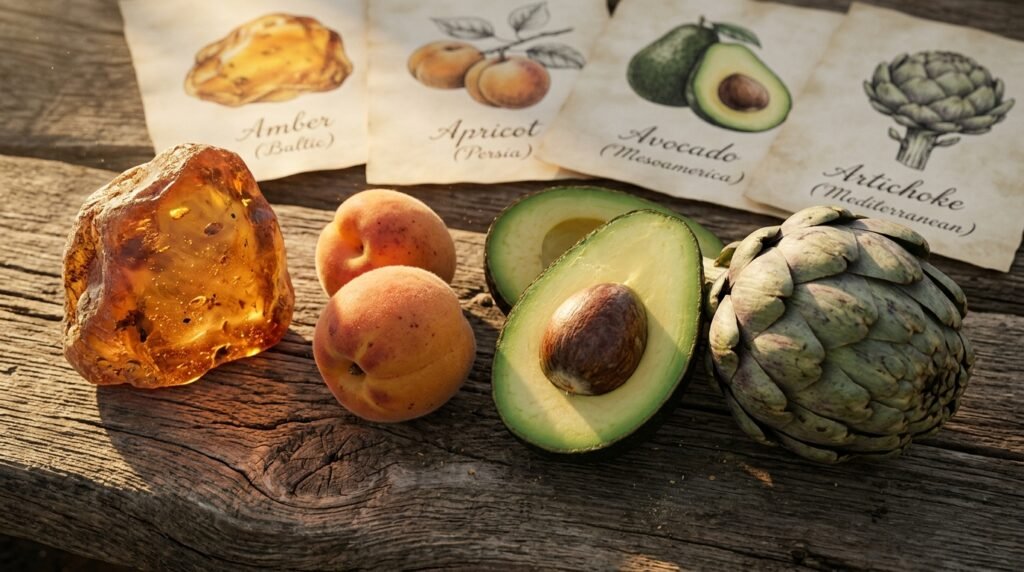
Artichoke rounds out the group with a more muted story. It is a Pantone name taken from the vegetable’s grayish-green leaves rather than its interior, which is why the color reads more khaki than bright green.
Rare or Unusual Color Names
A few A names rarely show up outside design reference guides. African Violet is a Pantone name taken from the houseplant of the same name, a soft purple-pink that is more commonly seen on seed packets than on moodboards. Arylide Yellow sounds chemical because it is. It is named after the arylide pigment class used in paint manufacturing, and the resulting color is a warm, slightly muted yellow rather than a pure one.
Atomic Tangerine has a far less serious backstory. Crayola coined the name during the Space Age, pairing “atomic” with a bright orange-peach shade to sound futuristic rather than scientific. Alloy Orange, another Crayola name, leans the opposite way: a rust-toned orange meant to suggest metal rather than fruit or fire.
- African Violet (#B284BE): a Pantone name from the houseplant
- Arylide Yellow (#E9D66B): named after a pigment class, not a plant or object
- Atomic Tangerine (#FFA474): a Space Age Crayola name
- Alloy Orange (#C46210): a rust-toned Crayola shade meant to suggest metal
Between these four, Arylide Yellow is the most purely technical name on the whole A list, since it comes from chemistry rather than nature, mythology, or a place.
A Colors That Are Easily Confused
A has one standout case of confusion: Azure. The web standard Azure (#F0FFFF) is barely a color at all, a near-white cyan mist. The traditional, heraldic Azure (#007FFF) is a bold, saturated sky blue. Someone asking for “azure” in a brief could mean either one, so always confirm which version before you start work. Beyond Azure, Amber and Apricot get mixed up often, since both sit in a similar warm-orange zone, even though Amber is noticeably more saturated.
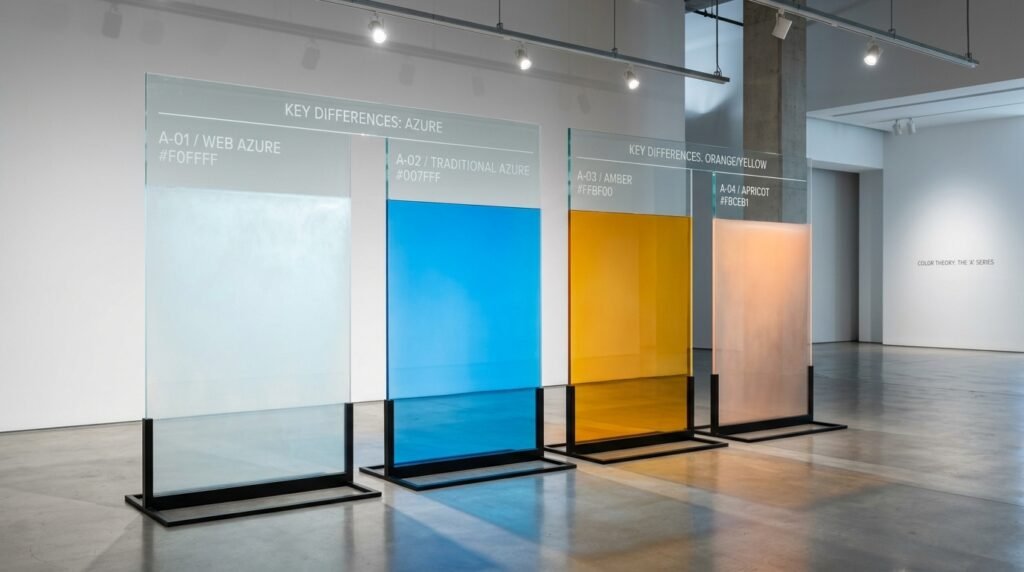
The table below lists the pairs most likely to confuse, along with the key difference to check.
| Name | Hex | Easily Confused With | Key Difference |
| Azure (web/CSS) | #F0FFFF | Azure (traditional) | Nearly white, barely blue |
| Azure (traditional) | #007FFF | Azure (web/CSS) | Bold, fully saturated sky blue |
| Amber | #FFBF00 | Apricot | Darker and more saturated |
| Apricot | #FBCEB1 | Amber | Pale, closer to peach |
| Amethyst | #9966CC | African Violet | More saturated, less pink |
| African Violet | #B284BE | Amethyst | Softer, more pink-leaning |
| Aqua | #00FFFF | Aquamarine | Pure cyan, no green |
| Aquamarine | #7FFFD4 | Aqua | Lighter, with a green tint |
If a client sends a screenshot and asks for “that blue” or “that purple,” check the hex code rather than guessing from the screen. These pairs look nearly identical in a small swatch but separate clearly once placed side by side.
Master Alphabetical List of A Colors
The list below puts every color in this guide in alphabetical order. Standard web colors are marked as CSS/X11, while the rest come from Pantone, Crayola, or well-documented traditional sources. Brand-only paint names are left out, since their codes shift by manufacturer.
- African Violet — #B284BE (Pantone)
- Alice Blue — #F0F8FF (CSS/X11 standard)
- Alloy Orange — #C46210 (Crayola)
- Almond — #EED9C4 (Crayola)
- Amaranth — #E52B50 (traditional, named after the flower)
- Amber — #FFBF00 (traditional, RGB color model)
- Amethyst — #9966CC (traditional)
- Antique White — #FAEBD7 (CSS/X11 standard)
- Apricot — #FBCEB1 (traditional, in use since 1851)
- Aqua — #00FFFF (CSS/X11 standard)
- Aquamarine — #7FFFD4 (CSS/X11 standard)
- Army Green — #4B5320 (traditional military name)
- Artichoke — #4B6F44 (Pantone)
- Ash Gray — #B2BEB5 (traditional)
- Atomic Tangerine — #FFA474 (Crayola)
- Aubergine — #614051 (traditional, British term for eggplant)
- Auburn — #A52A2A (traditional, hair-color standard)
- Avocado — #568203 (traditional)
- Azure (traditional) — #007FFF (heraldic/color-wheel definition)
- Azure (web/CSS) — #F0FFFF (CSS/X11 standard)
Seven of these are true CSS keywords: Alice Blue, Antique White, Aqua, Aquamarine, and Azure (the web version). The rest need a manual hex code in any design tool.
Hex and RGB Crosswalk for Color Names With Hex Codes
Exact codes matter because color names alone are vague. “Azure” alone could mean two very different blues, as shown above, so the hex code is what actually locks the shade in place. Web and app tools like Figma or CSS usually want a hex code, while some print and video software default to RGB sliders. Keeping both on hand avoids a manual conversion mid-project.

| Color | Hex | RGB |
| Alice Blue | #F0F8FF | 240, 248, 255 |
| Antique White | #FAEBD7 | 250, 235, 215 |
| Aqua | #00FFFF | 0, 255, 255 |
| Aquamarine | #7FFFD4 | 127, 255, 212 |
| Azure (web) | #F0FFFF | 240, 255, 255 |
| Azure (traditional) | #007FFF | 0, 127, 255 |
| Amber | #FFBF00 | 255, 191, 0 |
| Amethyst | #9966CC | 153, 102, 204 |
| African Violet | #B284BE | 178, 132, 190 |
| Aubergine | #614051 | 97, 64, 81 |
| Apricot | #FBCEB1 | 251, 206, 177 |
| Auburn | #A52A2A | 165, 42, 42 |
| Atomic Tangerine | #FFA474 | 255, 164, 116 |
| Alloy Orange | #C46210 | 196, 98, 16 |
| Avocado | #568203 | 86, 130, 3 |
| Army Green | #4B5320 | 75, 83, 32 |
| Artichoke | #4B6F44 | 75, 111, 68 |
| Amaranth | #E52B50 | 229, 43, 80 |
| Almond | #EED9C4 | 238, 217, 196 |
| Ash Gray | #B2BEB5 | 178, 190, 181 |
Look at the two Azure rows closely. Their blue values are nearly identical, 255 versus 255, but the red and green values swing from 240 down to 0. That gap is the entire difference between a near-white mist and a bold sky blue.
Full Comparison Table of A Colors
This table brings everything together: each color’s name, hex, RGB, family, and a common use. Treat it as a working reference when you need to justify a choice or double-check a value before sending a file to print.
| Color | Hex | RGB | Family | Common Use |
| Alice Blue | #F0F8FF | 240,248,255 | Blue | Soft backgrounds, healthcare branding |
| Aqua | #00FFFF | 0,255,255 | Blue/Cyan | Web highlights, pools, tech accents |
| Aquamarine | #7FFFD4 | 127,255,212 | Blue/Green | Jewelry, coastal themes |
| Azure (web) | #F0FFFF | 240,255,255 | Blue/White | Light backgrounds, subtle UI tints |
| Azure (traditional) | #007FFF | 0,127,255 | Blue | Tech logos, sky and water themes |
| Amethyst | #9966CC | 153,102,204 | Purple | Beauty, wellness branding |
| African Violet | #B284BE | 178,132,190 | Purple | Floral and garden themes |
| Aubergine | #614051 | 97,64,81 | Dark Purple | Premium fashion, beauty packaging |
| Amber | #FFBF00 | 255,191,0 | Orange | Alerts, badges, warm branding |
| Apricot | #FBCEB1 | 251,206,177 | Pale Orange | Blush, soft knitwear, nurseries |
| Auburn | #A52A2A | 165,42,42 | Red/Brown | Hair color, autumn themes |
| Atomic Tangerine | #FFA474 | 255,164,116 | Orange | Retro branding, playful accents |
| Alloy Orange | #C46210 | 196,98,16 | Burnt Orange | Industrial and rustic design |
| Avocado | #568203 | 86,130,3 | Green | Food branding, retro kitchens |
| Army Green | #4B5320 | 75,83,32 | Green | Military, outdoor gear |
| Artichoke | #4B6F44 | 75,111,68 | Muted Green | Food packaging, earthy interiors |
| Amaranth | #E52B50 | 229,43,80 | Red/Pink | Bold accents, floral branding |
| Antique White | #FAEBD7 | 250,235,215 | Neutral | Wedding palettes, warm backgrounds |
| Almond | #EED9C4 | 238,217,196 | Neutral | Interiors, skin-tone palettes |
| Ash Gray | #B2BEB5 | 178,190,181 | Neutral Gray | Industrial design, minimalist branding |
A few rows stand out. The two Azures do the most interesting work, since they show how one name can split into completely different colors depending on the source. Amber punches above its weight too, useful in both alert systems and warm, cozy branding. And Amaranth is the only true red-pink in the whole list, so it carries more visual weight than its single entry suggests.
Which A Color Should You Pick? A Decision Guide
Use the table below to match a project type to a fitting color. Start with your project in the left column, then check the suggested shade and the reason before you lock in a final hex code.
| Project | Suggested Color | Why It Works |
| Tech logo or app icon | Azure, traditional (#007FFF) | Clean, modern, instantly reads as trustworthy |
| Alert, badge, or notification | Amber (#FFBF00) | Warm but urgent, widely recognized |
| Beauty or luxury packaging | Aubergine (#614051) | Deep, premium, reads as high-end |
| Nursery or baby shower | Alice Blue (#F0F8FF) or Almond (#EED9C4) | Soft, calm, gender-neutral |
| Wedding in a vintage theme | Antique White (#FAEBD7) + Amaranth (#E52B50) | Warm neutral paired with a bold accent |
| Outdoor or military-style gear | Army Green (#4B5320) | Natural, rugged, utilitarian |
| Food or kitchen branding | Avocado (#568203) or Artichoke (#4B6F44) | Earthy, appetizing, natural |
For wall paint, always test a real sample before committing. Screens shift colors depending on the display, so morning and evening light will tell you more than any hex code alone.
Conclusion
From warm, double-meaning Amber to the split identity of Azure, colors that start with A cover an unusually wide range for one letter. You now have verified hex codes, clear family groups, and a guide for telling near-identical shades apart. Save the comparison table if you expect to come back and check a code later, since it is the fastest way from a color name to a working value.
FAQ
What are the most common colors that start with A?
The most recognized are Amber, Azure, Amethyst, Auburn, Aqua, and Avocado. Amber and Auburn in particular show up constantly outside of design work, in everyday descriptions of light and hair color.
Is Azure one color or two?
Effectively two. The CSS/web standard Azure is #F0FFFF, a near-white mist. The traditional, heraldic Azure is #007FFF, a bold sky blue. Always confirm which one a brief means before starting work.
What is the hex code for Amber?
Amber’s hex code is #FFBF00, which is 255, 191, 0 in RGB. It sits between yellow and orange on the color wheel.
Why does Amber mean both “warm” and “caution”?
Amber describes fossilized tree resin, which gives it a warm, honey-like association. Traffic signals also use amber for “slow down,” so the same color carries two different meanings depending on context.
What is the difference between Amethyst and African Violet?
Amethyst (#9966CC) is more saturated and closer to true purple. African Violet (#B284BE) is softer and leans more pink, matching the houseplant it is named after.
Is Auburn a shade of red or brown?
Auburn (#A52A2A) is technically a reddish-brown. It is best known as a human hair color, a variety of red hair.
What color is Aubergine?
Aubergine (#614051) is a deep, near-black purple, named after the British English word for eggplant. It reads as premium and is common in beauty and fashion branding.
What is Amaranth named after?
Amaranth (#E52B50) is named after the flower of the amaranth plant. The color is a bold reddish-rose, similar to a deep pink or light crimson.
Are Aqua and Aquamarine the same color?
No. Aqua (#00FFFF) is a pure cyan with no green tint. Aquamarine (#7FFFD4) is lighter and carries a visible green undertone, closer to the gemstone it is named after.
What is a good A color for a tech brand?
Azure in its traditional form (#007FFF) is the strongest pick. It reads as clean and modern without the weight of a full navy blue.
Can I use these A colors directly in CSS?
Alice Blue, Antique White, Aqua, Aquamarine, and the web version of Azure are all CSS keywords, so they work as-is in code. Every other name needs a manual hex code.
What are the best colors that start with A for a nursery?
Alice Blue (#F0F8FF) and Almond (#EED9C4) both work well as soft, gender-neutral backgrounds. Always test a real paint sample, since screens render color differently than walls.
What is the most unusual color name?
Arylide Yellow is the most unusual, since it is named after a pigment class used in paint manufacturing rather than a plant, place, or object.