Orange and Black Make What Color? Easy Color Mixing Guide
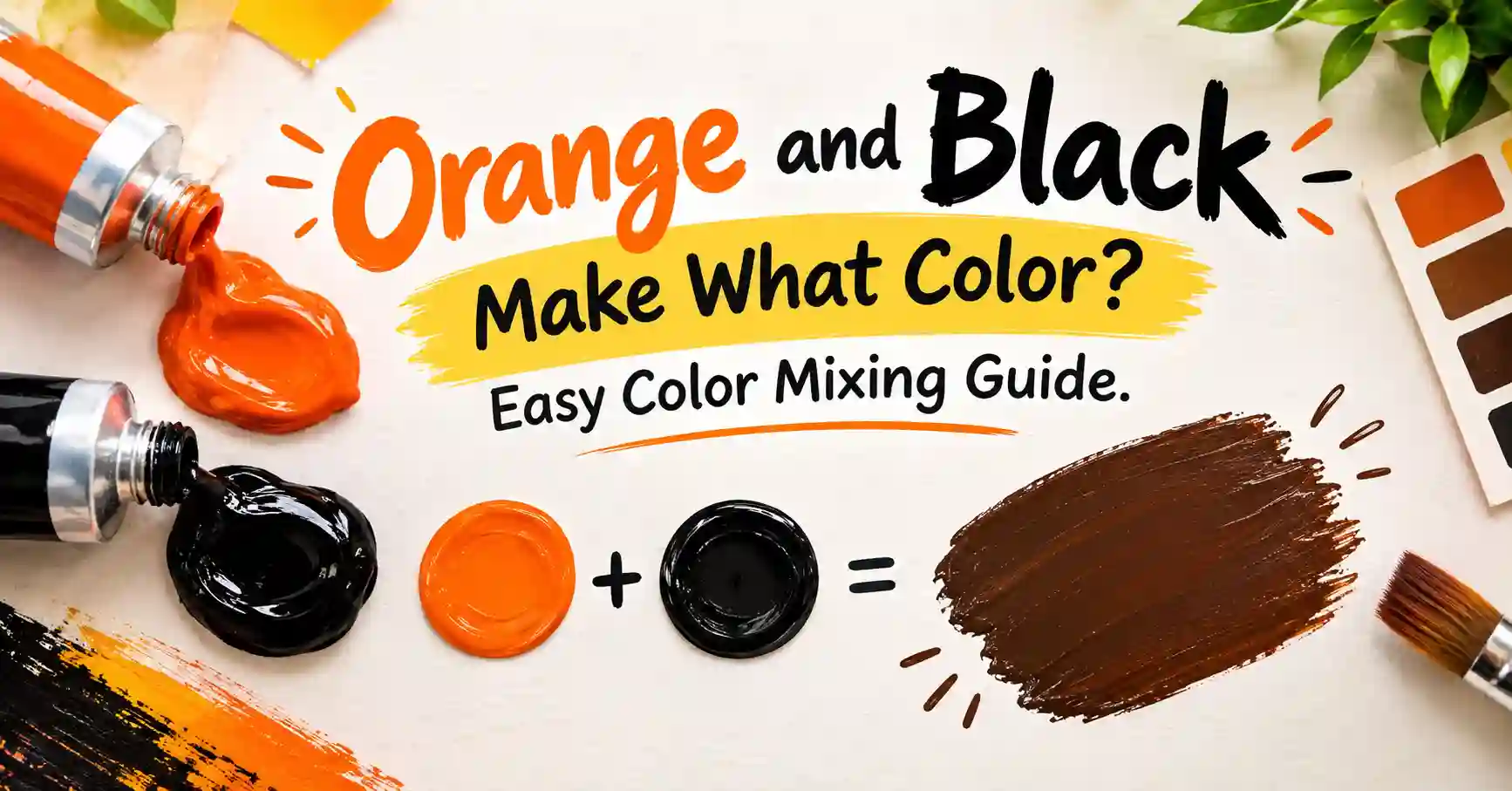
Staring at a Halloween-ready palette and wondering orange and black make what color once they actually combine? The paint answer surprises a lot of beginners, and the light answer surprises them even more.
Main takeaway: In paint, Orange and Black make a deep, burnt brown, ranging from rich rust to nearly black depending on how much black you add. In light, something unexpected happens: Orange and Black light combine to make… still Orange. Black contributes nothing in additive mixing, since it’s the total absence of light.
This guide covers both answers in full, plus exact ratios, a complete mixing chart, and how to stop your orange-and-black mix from going flat and lifeless.
Understanding Orange and Black as Colors
Orange is a secondary color, built from red and yellow, and it sits firmly on the warm, energetic end of the color wheel. Black isn’t a hue at all. It has no position on the color wheel, since it represents the total absence of reflected light rather than a specific color family.
That distinction matters enormously here. When you mix orange with a true hue like blue or green, you’re blending two colors with their own identity. When you mix orange with black, you’re not blending two hues; you’re darkening one hue using a neutral. In color theory terms, this process is called “shading,” and it behaves differently than blending two true colors.
Understanding this difference explains why the paint and light answers to orange and black make what color diverge so sharply. Paint treats black as a real, physical pigment that absorbs light. Light treats black as nothing at all, the literal absence of anything to add.
What Color Do You Get When You Mix Orange and Black Paint?
So here’s the direct answer to what color orange and black make in paint: a deep, burnt brown. The exact shade depends heavily on the ratio, so let’s look at three common starting points.

1:1 ratio (equal parts Orange and Black): This produces a rich, dark Umber Brown, close to hex #4A2E1D. It reads as earthy and grounded, useful for shadow work, tree bark, or deep autumn tones.
2:1 ratio (Orange-heavy): More orange keeps the result warmer and lighter, landing on a Burnt Sienna Brown, close to hex #8B4513. This shade works well for leather tones, rustic branding, or warm wood finishes.
1:2 ratio (Black-heavy): More black pushes the mix toward a Near-Black Umber, close to hex #2B1B0E. This deep, almost-black brown suits dramatic shadows or moody, gothic-leaning design work.
Full Mixing Chart: Orange and Black Pigment Combinations
Different orange pigments darken in slightly different ways when black enters the mix, since some oranges carry more red and others carry more yellow. The chart below covers ten combinations worth knowing.
Treat this chart as a practical reference, since paint brand and pigment strength can shift the exact result slightly.
| Pigment Combination | Ratio | Resulting Color | Approx. Hex |
| Cadmium Orange + Ivory Black | 1:1 | Rich umber brown | #4A2E1D |
| Cadmium Orange + Ivory Black | 2:1 | Warm burnt sienna | #8B4513 |
| Cadmium Orange + Ivory Black | 1:2 | Near-black umber | #2B1B0E |
| Burnt Orange + Mars Black | 1:1 | Deep chocolate brown | #3D2817 |
| Pumpkin Orange + Lamp Black | 1:1 | Muted rust brown | #52301C |
| Tangerine + Ivory Black | 2:1 | Golden-tinged brown | #6E4525 |
| Cadmium Orange + Payne’s Gray | 1:1 | Cool, muted brown | #453226 |
| Persimmon + Mars Black | 1:1 | Deep terracotta brown | #4A281B |
| Yellow Ochre-Orange Mix + Black | 1:1 | Warm, dusty brown | #5C4327 |
| Vermilion-Orange + Black | 1:2 | Dark mahogany brown | #2E1810 |
Notice how brighter, more saturated oranges like Cadmium Orange tend to hold onto more warmth even after black is added, while duller oranges like Persimmon shift toward a flatter, more neutral brown much faster.
What Color Does Orange and Black Light Make?
Here’s the genuinely surprising part. What color do orange and black make when you’re talking about light instead of paint? The answer is simply Orange, completely unchanged.
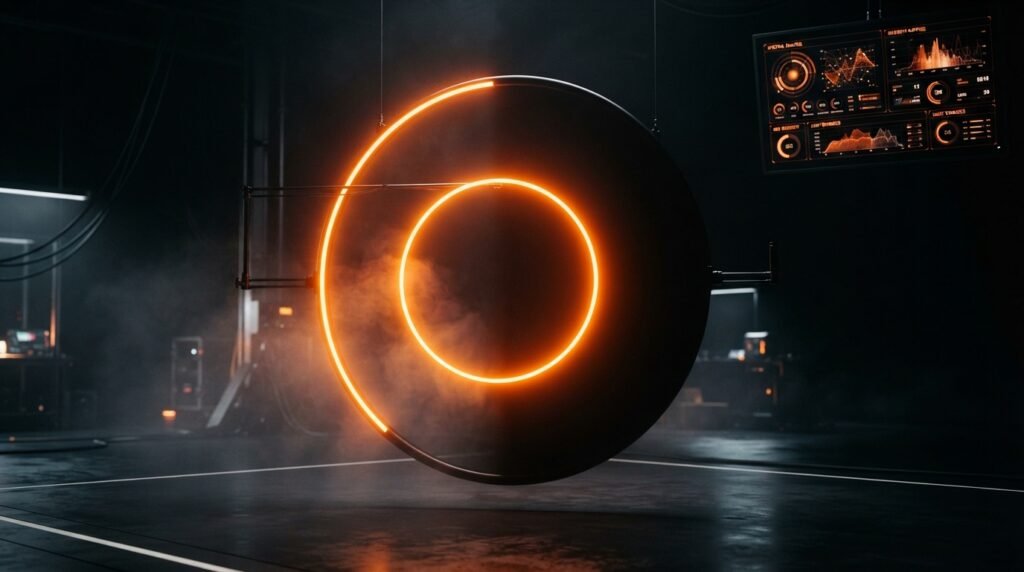
Black in light terms isn’t a color being added; it’s the total absence of light, sitting at RGB (0, 0, 0). Orange light sits around RGB (255, 165, 0). Add zero to every channel, and nothing changes. Orange plus black, in light, is mathematically just orange.
This matters practically on screens and stage lighting. Dimming an orange light doesn’t shift its hue toward brown the way adding black paint would. It just makes the same orange dimmer, staying true to its original color all the way down to nearly invisible.
Subtractive vs. Additive Mixing: Side-by-Side Comparison
This pairing makes the paint-versus-light divide unusually clear, since one medium changes the hue entirely while the other doesn’t touch it at all.
| Feature | Subtractive (Paint) | Additive (Light) |
| Primary colors | Red, Yellow, Blue | Red, Green, Blue |
| Role of black | A physical pigment that absorbs light | The total absence of light |
| Orange + Black result | Deep brown | Orange, unchanged (just dimmer) |
| Common mediums | Paint, ink, dye | Screens, LEDs, stage lights |
| Adding black leads to | A genuine shift in hue | No hue shift, only reduced brightness |
This table is worth remembering any time a “mixing” question involves black specifically, since black behaves like a true ingredient in one medium and like literally nothing in the other.
How Ratio Affects the Final Color
Within paint, where orange and black make a spectrum of browns rather than one fixed shade, ratio does almost all the work in determining the final mood.
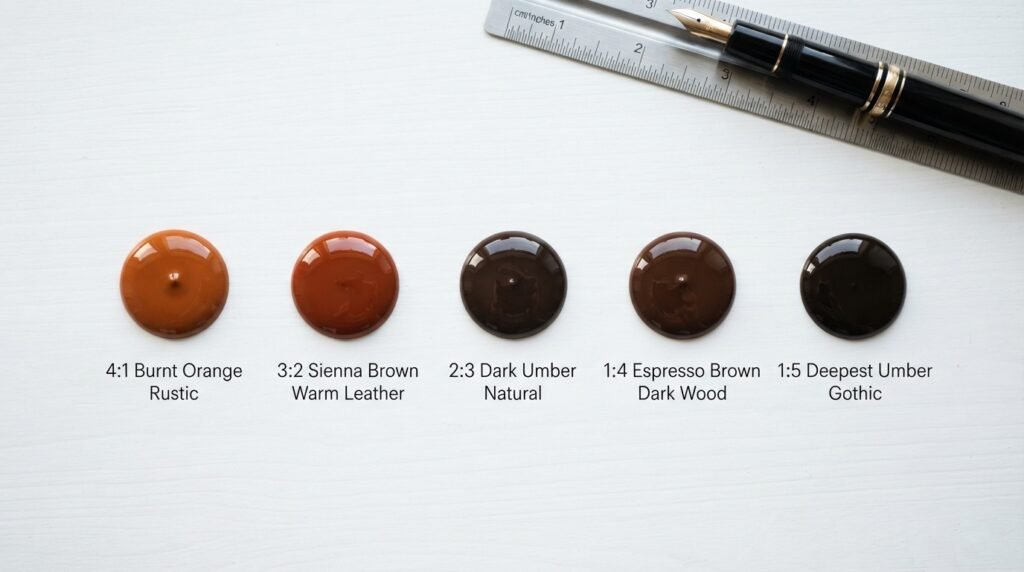
| Ratio (Orange: Black) | Resulting Color | Best Use Case |
| 4:1 | Warm, light burnt orange-brown | Rustic, autumn branding |
| 2:1 | Burnt sienna brown | Leather, wood-tone design |
| 1:1 | Rich umber brown | General shadow and earth tones |
| 1:2 | Deep chocolate brown | Dramatic, moody backgrounds |
| 1:4 | Near-black umber | Gothic, high-contrast design |
Use this table whenever a project calls for a specific depth of brown rather than a generic one. Small shifts in black ratio move the result surprisingly far along the brightness scale while keeping that warm orange character intact.
Why Your Mix Looks Muddy — And How to Fix It
Since orange and black make what is already a controlled darkening process, “muddiness” here usually means the brown turned flat and gray instead of warm and rich.
Using too much black too fast is the most common cause. Black is extremely strong relative to orange, so even a small amount darkens the mix dramatically. Add it in tiny increments, testing after each addition. Overmixing also flattens the result, since excessive blending can dull the orange’s natural warmth. Using a dull, low-quality black like a cheap, chalky student-grade pigment often introduces a grayish cast rather than a clean, deep brown.
Beginner Tip: Add black to orange, never the other way around. Starting with orange and introducing small amounts of black gives you far more control than starting with black and trying to add enough orange to lighten it back up.
Best Pigments to Mix for Clean Results
A “clean” result here means a rich, warm brown rather than a dull, grayish one, since that warmth is what separates a good orange-and-black mix from a disappointing one.
| Orange Pigment | Black Pigment | Result Description |
| Cadmium Orange | Ivory Black | Warm, rich umber brown |
| Burnt Orange | Mars Black | Deep, true chocolate brown |
| Persimmon | Lamp Black | Earthy terracotta-brown |
| Cadmium Orange | Payne’s Gray (as a black substitute) | Cooler, more sophisticated brown |
As a general rule, Ivory Black and Mars Black both pair more warmly with orange than Lamp Black, which tends to introduce a slightly cooler, grayer undertone into the mix.
Real-Life Examples of Orange and Black Making Brown
This exact combination shows up more than people expect once they start looking. In traditional art, painters use orange-and-black mixing constantly for tree bark, aged leather, and warm shadow tones, since a hand-darkened orange holds more richness than a flat tube brown.
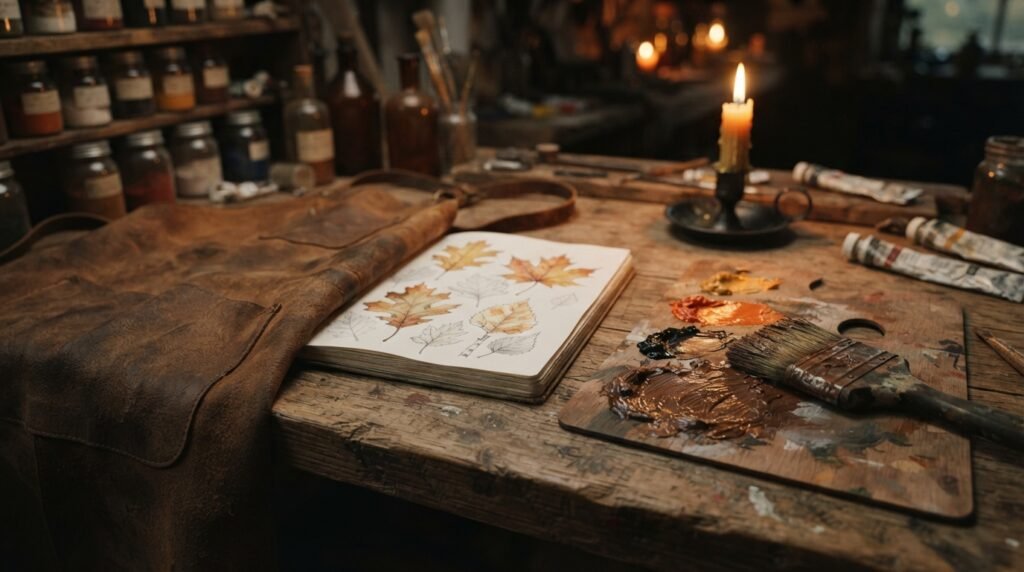
In interior design, deep burnt-brown tones achievable through this mix have become popular in warm, cozy spaces that want depth without going fully black or gray. In digital media, understanding that orange light doesn’t actually darken into brown the way orange paint does helps lighting designers and screen colorists predict results accurately when dimming warm-toned light sources.
What Happens When You Add White, Yellow, or More Black
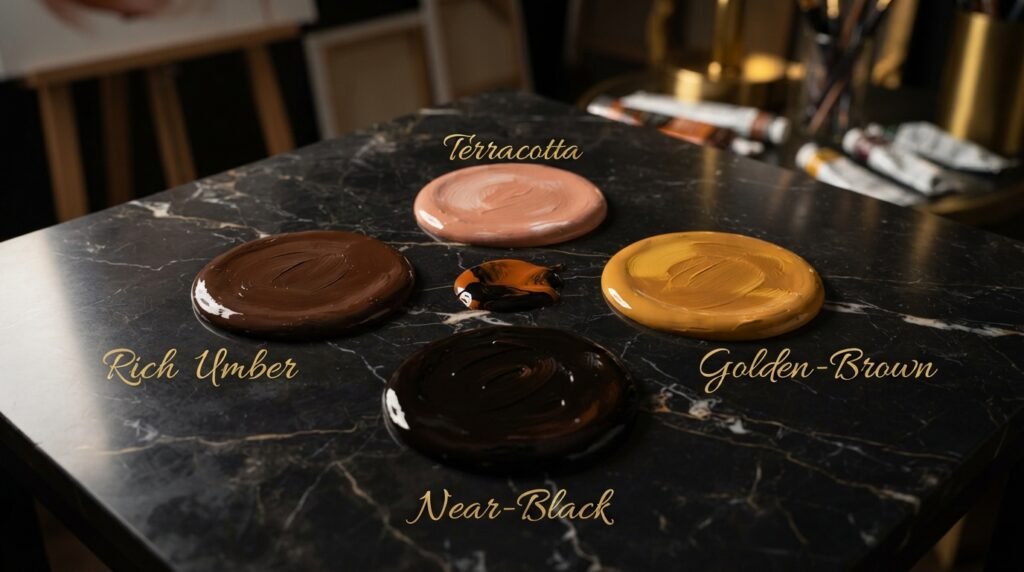
Once you’ve landed on a base orange-and-black brown, a few additions shift it predictably. Adding White lightens the mix into a soft, dusty terracotta, closer to hex #A47B5E, useful for warm, gentle interior palettes. Adding Yellow pulls the brown back toward a warmer, more golden tone near hex #7A5A2E, good for autumn-themed branding. Adding more Black deepens the mix further into a true near-black brown close to hex #1C110A, useful for dramatic, high-contrast design.
Paint vs. Digital Media: A Closer Comparison
This particular pairing makes the paint-versus-light distinction unusually vivid, so it’s worth one more direct comparison. In paint, black is a physical pigment loaded with light-absorbing particles, so mixing it into orange genuinely removes reflected light and shifts the hue toward brown.
In digital media, black isn’t a substance at all, just the absence of emitted light. Combining it with orange light doesn’t remove anything from the orange; it simply means less total light is present if you’re dimming rather than literally adding a black light source, which doesn’t exist. This is exactly why orange and black light stays orange while orange and black paint turns brown, and keeping the distinction straight avoids real confusion when moving between physical and digital design work.
Tips for Artists
A few habits make orange-and-black mixing far more predictable and far less frustrating.
Always add black gradually to orange, never the reverse, since black’s strength can overwhelm an entire batch in seconds. Test on a white palette surface, since judging a dark brown against a colored or wooden palette can distort how deep it actually looks. Build in layers on canvas rather than mixing directly, since layering thin glazes of orange over black, or vice versa, often produces a richer, more luminous brown than a single flat mix.
As one illustrator put it, “adding black to orange is like adding salt to a dish, a little deepens the flavor, but too much and there’s no getting that brightness back.”
Brown in Fashion and Interior Design
The deep, warm brown that results from this exact pairing carries a richness that cooler, grayer browns often lack. In fashion, burnt-orange-leaning browns have shown up consistently in autumn collections, offering warmth that reads as sophisticated rather than purely seasonal.
In interior design, this kind of deep umber or chocolate-brown works beautifully as an accent wall or furniture tone in spaces aiming for cozy, grounded warmth. If you’re considering this shade for a room refresh, testing a hand-mixed sample directly on your wall under your home’s actual lighting is always worth the extra step before committing to a full room.
Where This Result Sits on the Color Wheel
The brown that results from mixing orange and black doesn’t occupy a fixed position on the standard color wheel, since brown functions as a “shade,” a darkened version of orange rather than an entirely new hue. In color theory terms, it stays conceptually tied to orange’s position even as its appearance shifts dramatically.
Orange’s complementary color remains blue, regardless of how much black gets added, since shading a color doesn’t change its underlying hue family. That’s why a deep, orange-black brown still pairs naturally with blue accents in a way a true gray or black never quite manages.
Conclusion
To sum up, orange and black make what color: in paint, you get a deep, warm brown that ranges from burnt sienna to near-black depending on your ratio. In light, the same two “colors” produce an answer that surprises almost everyone: orange stays orange, since black contributes nothing in additive mixing.
Add black to orange slowly and test often, since this is one of the easiest combinations to accidentally overdarken. Once you’ve found the right ratio for your project, you’ll have a brown with real warmth and depth, something a flat, store-bought brown rarely matches.
FAQs
Orange and black make what color in paint?
Orange and black make a deep, warm brown in traditional paint mixing. The exact shade ranges from burnt sienna to near-black depending on how much black is added.
What color do orange and black make when mixed as light?
Orange and black light combine into orange, unchanged. Black has no color value in additive light mixing, since it represents the total absence of light rather than a hue.
Why does adding black to orange create brown instead of just a darker orange?
Black pigment physically absorbs light across the spectrum, pulling the mix away from pure orange and toward a neutral, earthy tone. This process, called shading, changes both the brightness and the perceived warmth of the original color.
What ratio of orange and black makes the best brown?
A 1:1 ratio produces a balanced, rich umber brown suitable for most general uses. More orange keeps the mix warmer and lighter, while more black pushes it toward near-black.
Why does my orange and black mix look gray instead of warm brown?
Using a low-quality, chalky black pigment or overmixing usually introduces an unwanted gray cast. Switching to a warmer black like Ivory Black or Mars Black typically produces a richer result.
What color do orange and black make if you add white?
Adding white to an orange-and-black brown mix produces a soft, dusty terracotta. The more white added, the lighter and more muted the final shade becomes.
Does the type of orange pigment change the resulting brown?
Yes, noticeably. Brighter, more saturated oranges like Cadmium Orange hold onto more warmth after black is added, while duller oranges like Persimmon shift toward a flatter, more neutral brown faster.