13 Colors That Start With K (Names, Hex, RGB, CMYK)
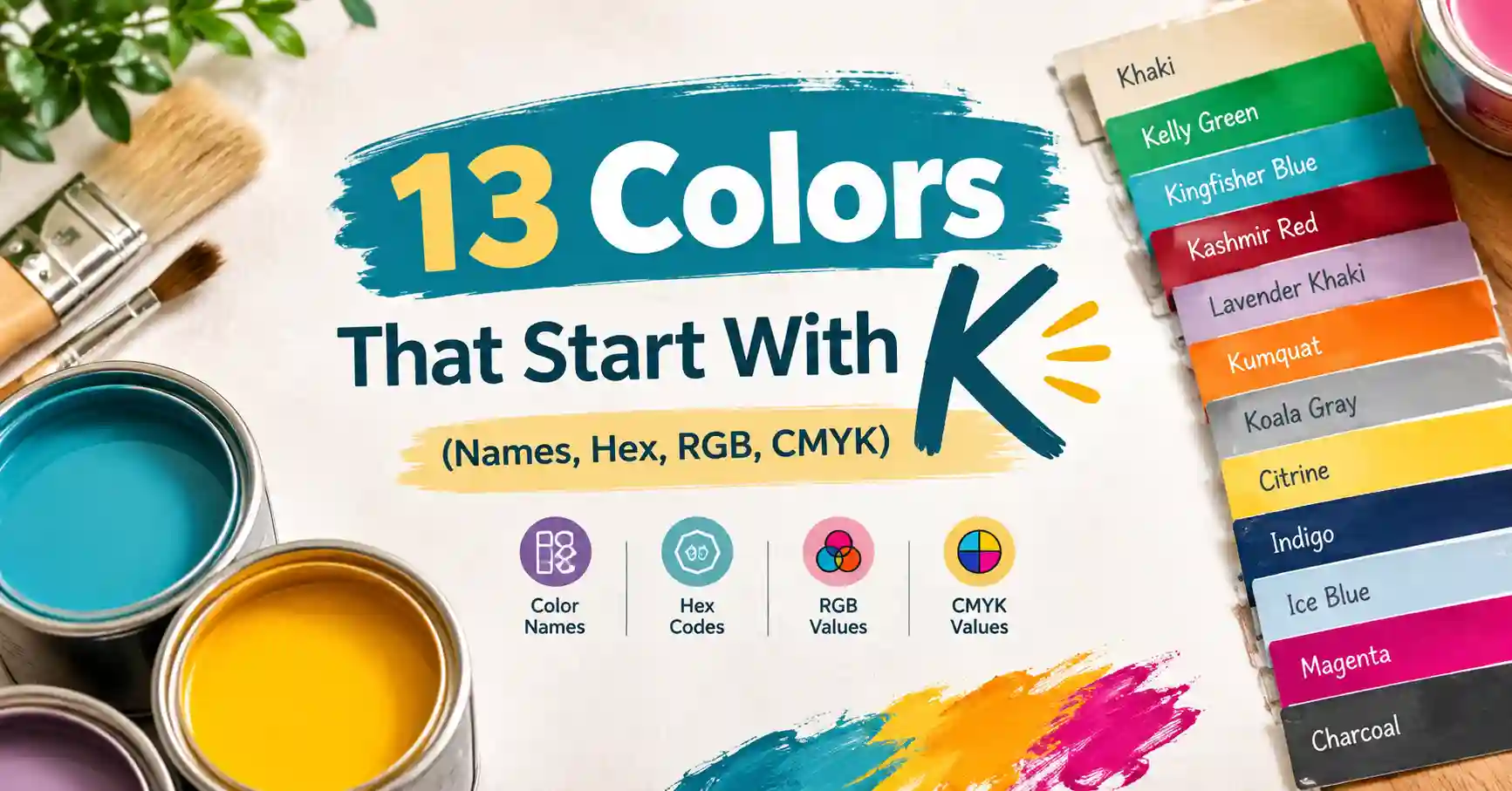
If you’ve ever described a color as “khaki,” “kelly green,” or “key lime” and wondered what exact shade you meant, you’re in the right place. This guide covers colors that start with K, and the list is short on purpose. We found 13 real names with codes that hold steady across at least two sources. Each entry includes the name, Hex, RGB, and CMYK values.
Many longer lists pad their count with names that have no fixed code. We skipped those. Kiwi and Kelp, for example, show up with several different hex values online. A color with three codes isn’t one color yet.
The CMYK numbers are approximate screen-to-print conversions. Use them as a starting point, then check a printed proof.
Quick Jump Guide
These color names that start with K fall into six families: reds, browns and tans, yellows, greens, blues and teals, and pinks and purples. Greens are the biggest group. Reds and browns come second.
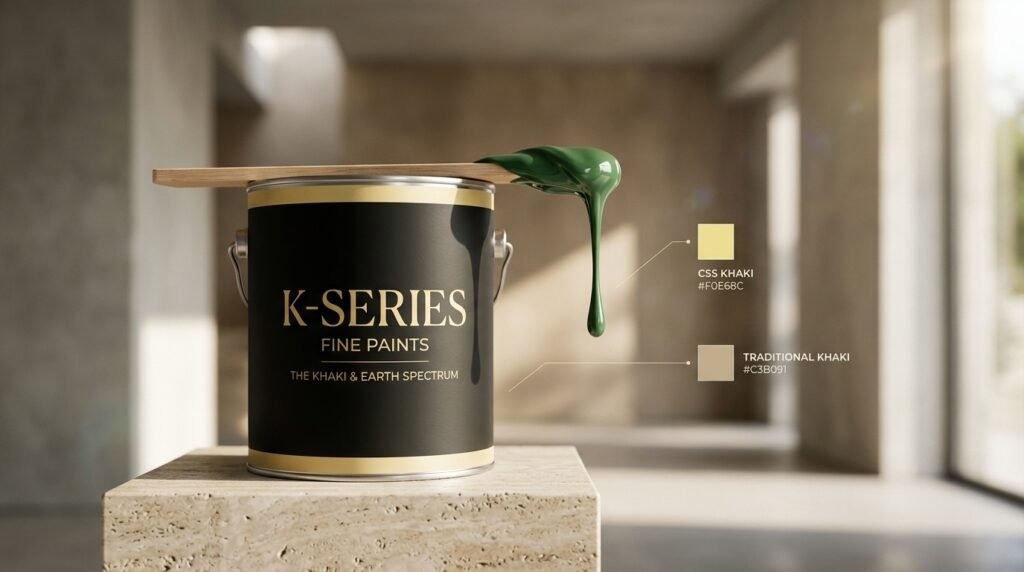
Quick Tip: Khaki has two common codes. The CSS keyword khaki is #F0E68C, a pale yellow. The traditional khaki is #C3B091, a muted tan. Check which one your project needs before you copy a code.
The Full List of Colors That Start With K
Kelly Green
A bright, vivid green with a warm, yellow-leaning edge. It looks fresher and more saturated than Kombu Green, which sits at the dark end of the same family.
Hex: #4CBB17 | RGB: 76, 187, 23 | CMYK: 59, 0, 88, 27
Kenyan Copper
Deep and earthy, this is a dark red-brown with a rusty glow. It runs redder than Kobicha and darker than Kobe.
Hex: #7C1C05 | RGB: 124, 28, 5 | CMYK: 0, 77, 96, 51
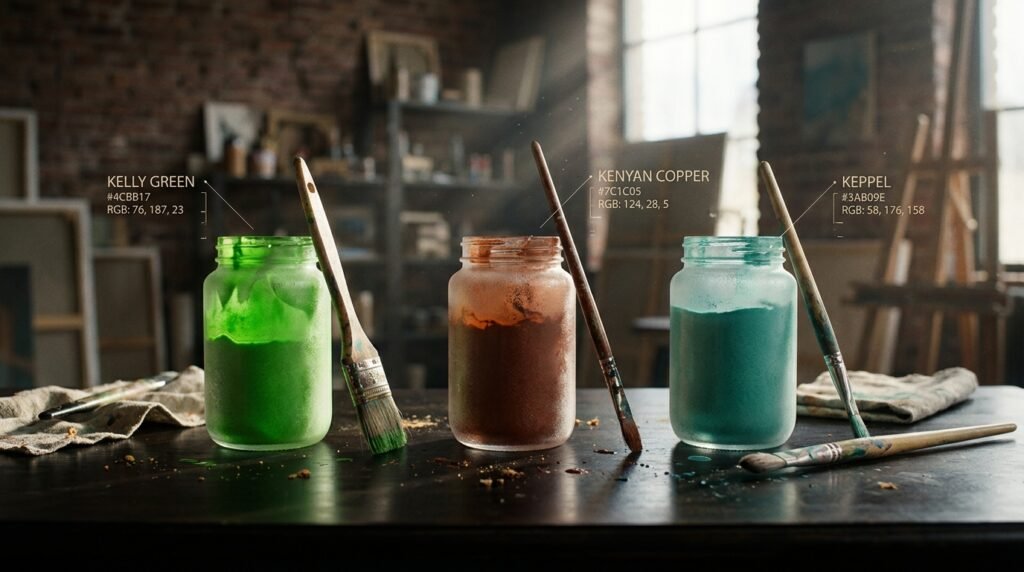
Keppel
A medium teal that leans blue-green. It feels cool and calm, and it is the only teal in this list.
Hex: #3AB09E | RGB: 58, 176, 158 | CMYK: 67, 0, 10, 31
Key Lime
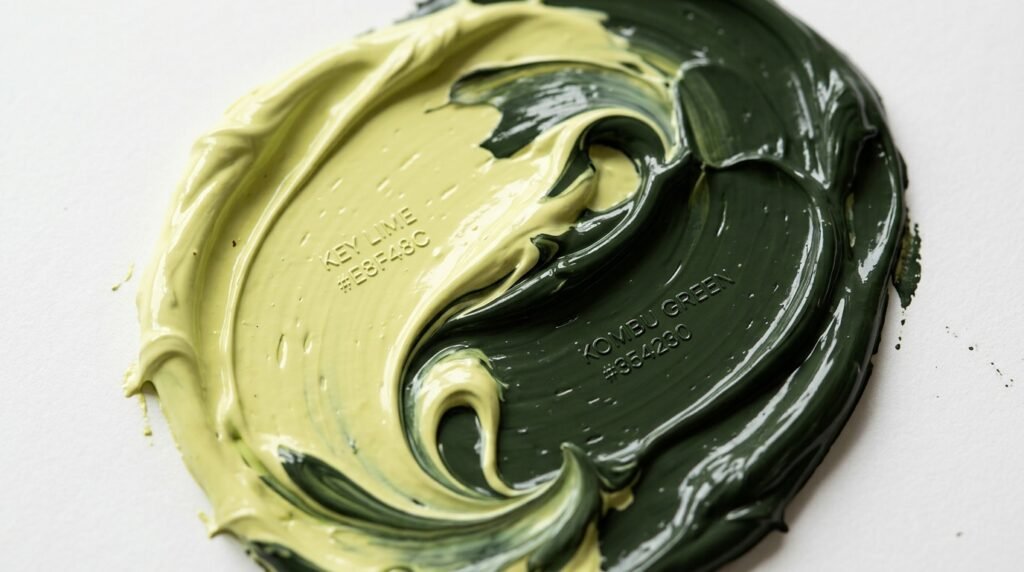
Named after the small citrus fruit, this is a pale, soft yellow-green. It is lighter and creamier than Key Lime Pie, its stronger cousin below.
Hex: #E8F48C | RGB: 232, 244, 140 | CMYK: 5, 0, 43, 4
Key Lime Pie
Punchier than plain Key Lime, this shade is a saturated, zesty yellow-green. It leans a touch toward olive and reads much bolder on screen.
Hex: #BFC921 | RGB: 191, 201, 33 | CMYK: 5, 0, 84, 21
Khaki (CSS)
This is the web keyword version, a pale, soft yellow with a sandy feel. It looks much lighter than the traditional khaki that follows.
Hex: #F0E68C | RGB: 240, 230, 140 | CMYK: 0, 4, 42, 6
Khaki (Traditional)
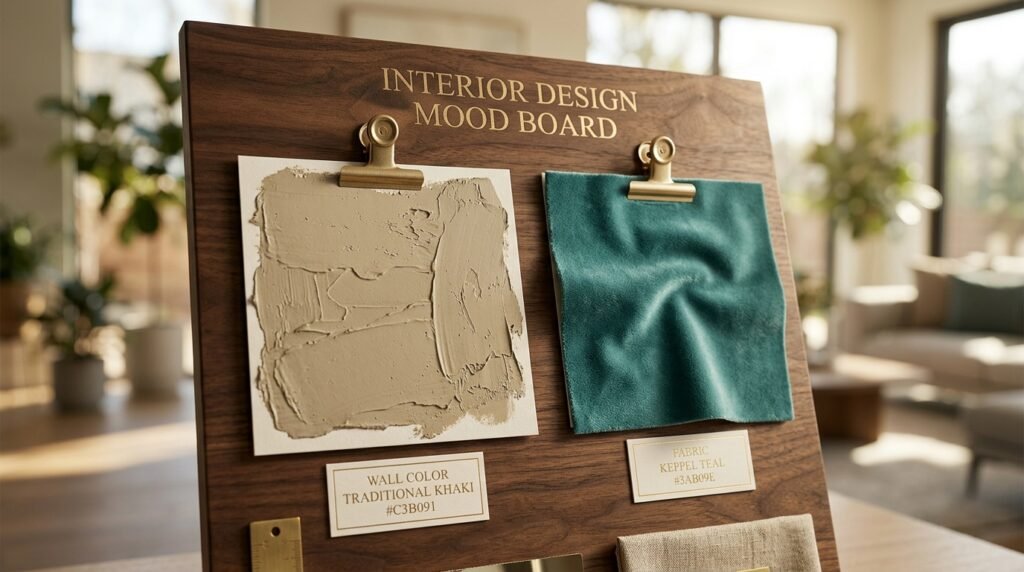
Muted and dusty, this tan carries a faint gray–green undertone. The name traces back to a Persian and Urdu word meaning “dust,” which suits the soft, earthy look.
Hex: #C3B091 | RGB: 195, 176, 145 | CMYK: 0, 10, 26, 24
Kobe
A deep, rusty red-brown with a warm, burnt edge. It sits close to Kenyan Copper but runs slightly lighter and more orange.
Hex: #882D17 | RGB: 136, 45, 23 | CMYK: 0, 67, 83, 47
Kobi
Soft and sweet, this is a light pink with a gentle mauve tint. It is the only pink in the list, and it pairs well with the greens.
Hex: #E79FC4 | RGB: 231, 159, 196 | CMYK: 0, 31, 15, 9
Kobicha
A dark, warm brown with a hint of orange. The name comes from a traditional Japanese color and means “kobi tea.” It is cooler and calmer than Kobe.
Hex: #6B4423 | RGB: 107, 68, 35 | CMYK: 0, 36, 67, 58
Kombu Green
Very dark and muted, this green leans nearly black with a gray-brown undertone. It is named after kombu, the edible kelp, and feels like the opposite of bright Kelly Green.
Hex: #354230 | RGB: 53, 66, 48 | CMYK: 20, 0, 27, 74
KSU Purple
Deep and regal, this violet-purple has a slight blue lean. It is a school color tied to Kansas State University, and it stands alone as the only true purple here.
Hex: #512888 | RGB: 81, 40, 136 | CMYK: 40, 71, 0, 47
KU Crimson
Bold and bright, this is a vivid red with almost no blue in it. The name comes from the University of Kansas brand. It is far more electric than the deep reds above.
Hex: #E8000D | RGB: 232, 0, 13 | CMYK: 0, 100, 94, 9
Colors That Start With K, Grouped by Family
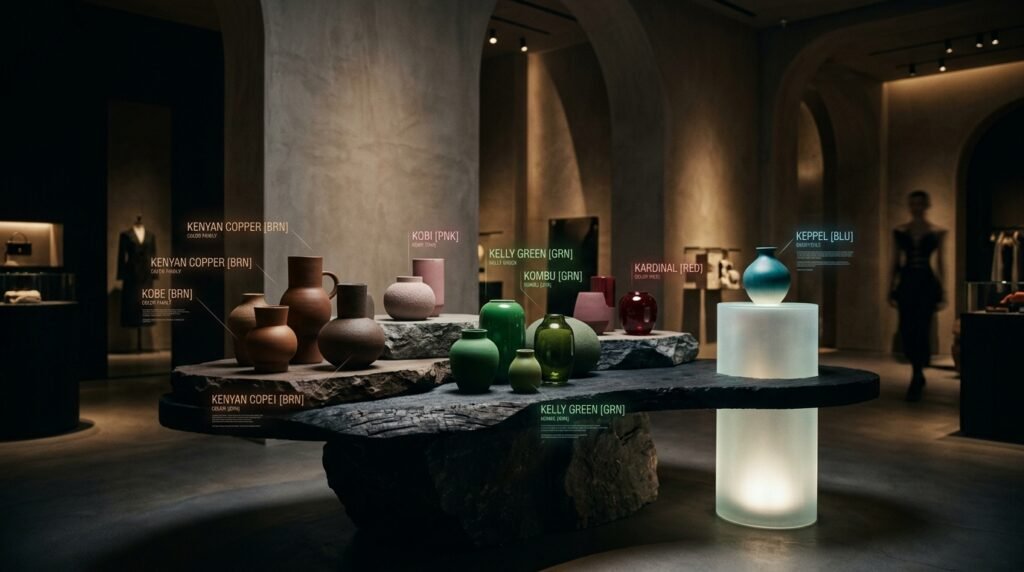
This table sorts every entry into six broad families. Use it when you know the mood you want but not the exact name yet.
| Family | Colors |
| Reds | KU Crimson |
| Browns & Tans | Kenyan Copper, Khaki (Traditional), Kobe, Kobicha |
| Yellows | Key Lime, Khaki (CSS) |
| Greens | Kelly Green, Key Lime Pie, Kombu Green |
| Blues & Teals | Keppel |
| Pinks & Purples | Kobi, KSU Purple |
The table has 13 colors in total. Browns and greens carry most of the weight, with four and three entries each. Blues have just one, which is why Keppel stands out so much.
How to Read Hex, RGB, and CMYK Codes
Hex, RGB, and CMYK describe the same color in three ways. Each one fits a different job.
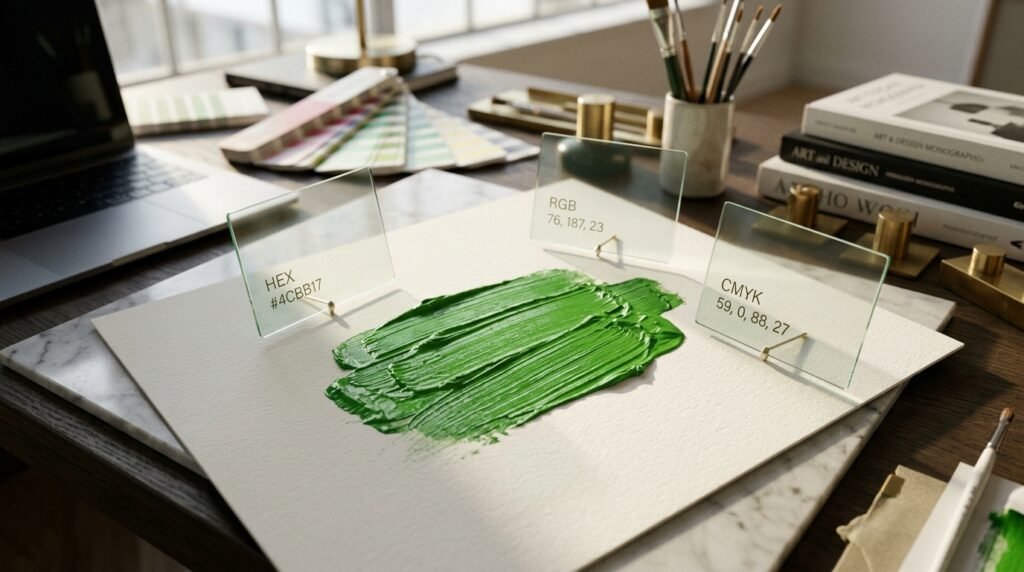
Hex is a six-digit code, like #4CBB17. It is the standard for websites and design apps. Paste it into CSS or Figma, and you’re done.
RGB splits the color into red, green, and blue light. Each value runs from 0 to 255. Use it when a tool gives you sliders instead of a code box.
CMYK describes ink, not light. It stands for cyan, magenta, yellow, and black (K). Printers ask for it. A simple rule helps: screens use Hex or RGB, and print uses CMYK.
How to Use These Colors
Graphic design. Pair Kobicha (#6B4423) with Key Lime (#E8F48C) for a warm, natural poster. The dark brown anchors the page, and the pale green adds air.
Web design. Use Kombu Green (#354230) for text or a footer and Kelly Green (#4CBB17) for buttons. The dark base keeps the bright green easy to read.
Interior design. Try Khaki (Traditional) (#C3B091) on walls with Keppel (#3AB09E) cushions. The tan stays calm, and the teal adds a cool accent.
Fashion. Combine Kobi (#E79FC4) with KSU Purple (#512888) for a soft-meets-bold outfit. Or pair Kobe (#882D17) with Khaki (CSS) (#F0E68C) for an autumn look.
Conclusion
Colors that start with K are few, but they cover a wide range. You get a deep red-brown, a bright lime, a calm teal, and a regal purple. All 13 names here have verified codes you can trust. Explore our color tool to test these shades together before you lock in a palette.
FAQs
What are some colors that start with K?
The best-known are Kelly Green, Khaki, Key Lime, Kobi, and Keppel. Each has a stable hex code, so it renders the same across design tools.
What is the darkest color that starts with K?
Kombu Green (#354230) is the darkest on the list, with a CMYK black value of 74. Kobicha (#6B4423) comes next at 58.
What is the brightest color that starts with K?
KU Crimson (#E8000D) is the most intense, since it has almost no blue and a pure red base. Kelly Green (#4CBB17) is the brightest green.
What is the difference between the two khakis?
CSS Khaki (#F0E68C) is a pale yellow. Traditional Khaki (#C3B091) is a muted, dusty tan. Pick the CSS one for web code and the traditional one when you want the classic military look.
What is the difference between Key Lime and Key Lime Pie?
Key Lime (#E8F48C) is pale and soft. Key Lime Pie (#BFC921) is stronger and more saturated, with a slight olive lean.
Which K color is a good choice for a calm space?
Keppel (#3AB09E) is a cool, soothing teal. Khaki (Traditional) (#C3B091) also works as a quiet, neutral partner.
Why are there so few colors that start with K?
K is a rare starting letter in English color names. Many longer lists add brand-only paint names, but those codes change from maker to maker, so we left them out.