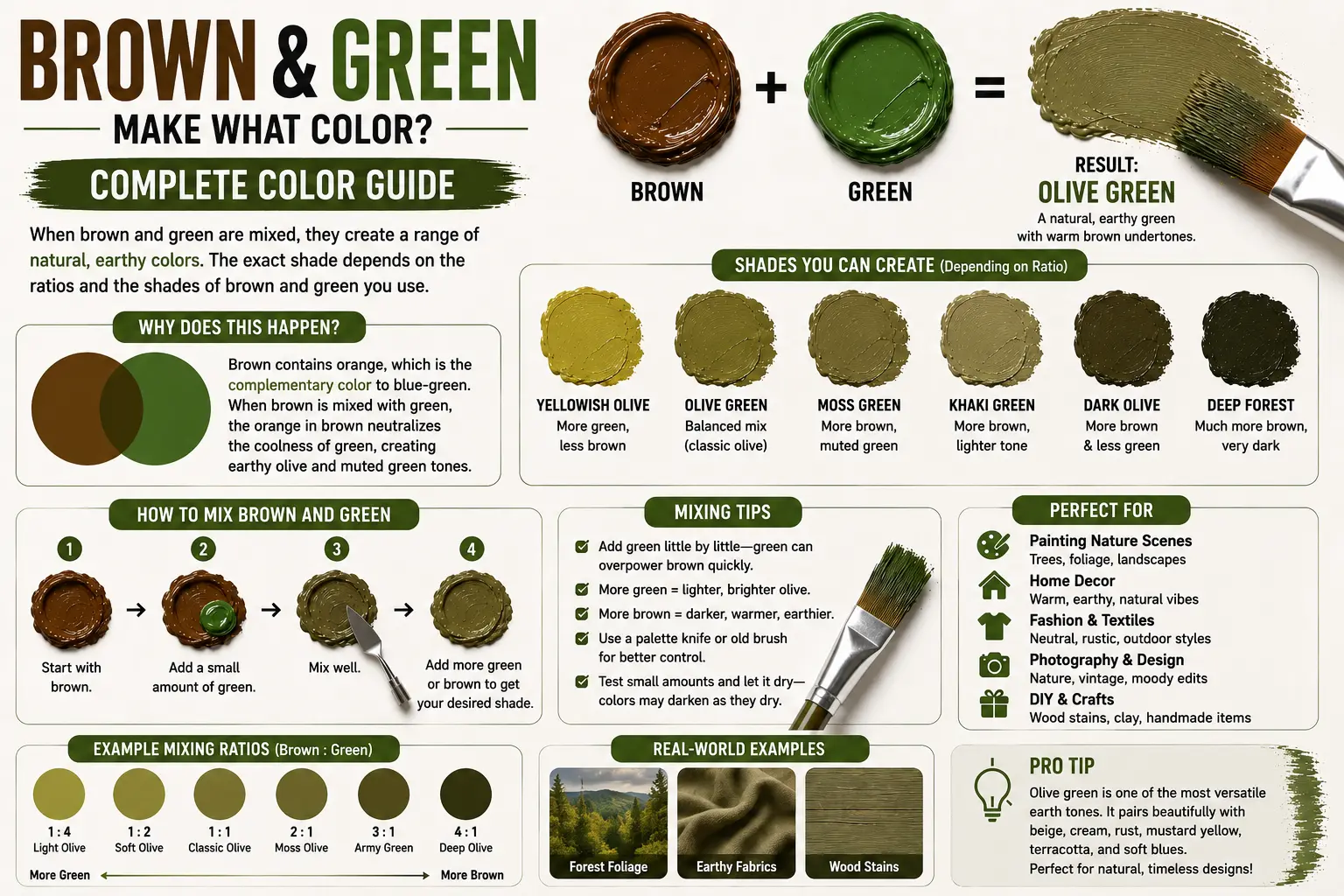
Brown and Green Make What Color? Complete Color Guide
If you’ve ever wondered “brown and green make what color,” you’re not alone. It is a classic experiment on the studio palette, whether you’re trying to paint a dense summer forest, select an organic color scheme for a bedroom, or figure out the genetics behind unique hazel eyes.
The direct answer is simple: when mixed together in physical paint, brown and green combine to make an organic hue like olive, moss green, or a deep forest khaki.
However, the final result isn’t always identical every single time you sweep them together. The exact shade you get depends heavily on the specific undertones of your brown base, whether your green pigment leans cool or warm, and the precise mixing proportions you use. Understanding how these two deep, earthy tones interact will give you complete control over your creative color palettes. In this guide, you’ll learn the exact color theory mechanics behind this blend, how to dial in beautiful secondary tones, and how to utilize these natural colors across various design mediums.
Main Takeaway:
Earthy Brown + Organic Green = Muted Olive / Moss Green (depending on the base undertones and mixing proportions).
What Happens When You Mix Brown and Green?
When you combine brown and green in a physical medium like acrylic, oil, or watercolor paint, you generate a highly complex, deeply desaturated earth tone. Instead of producing a clean, vibrant secondary shade, the mixture leans into a quiet, natural neutral that feels incredibly grounded.
Why does this happen? The reason is simple: both brown and green are already composite colors containing multiple underlying pigments. Because brown is typically made by mixing complementary colors (like red and green, or orange and blue), it naturally contains a heavy dose of desaturating components. When extra green meets this complex base, the two colors blend harmoniously because they already share overlapping chemical roots, instantly lowering the overall brightness of the mixture.
Imagine you’re trying to paint a realistic camouflage pattern or a shadow on a mossy tree trunk. If you take a standard pool of medium brown and slowly fold in an equal splash of grass green, the bright tone softens immediately. It shifts away from a vivid leaf shade and turns into a deep, muddy olive that looks identical to colors found in the wild.
Mixing Light Green and Brown: What Color Does This Make?
Combining a highly vibrant, light green paint with a brown base yields a beautifully muted, medium-valued earth tone.
This happens because the light green reflects a significant amount of yellow or white light waves, which directly fights against the dark absorption of the brown. When they combine, the brown tones down the aggressive brightness of the green without dragging it all the way down into total shadow.
The resulting color is a beautiful, warm moss green or an army khaki tone. Think of fresh moss growing over damp soil, canvas camping tents, or organic sage tea brewing in a porcelain cup.
Mixing Dark Green and Brown: What Color Does This Make?
When you mix a heavy, dark green pigment directly into a brown base, the value drops dramatically, creating an incredibly rich shadow color.
The reason is simple. Both dark green and brown are highly absorbent pigments that swallow up the majority of light waves in a room. When they meet, they double down on this light absorption, keeping the final hue deep, heavy, and quiet.
The outcome is a dense, moody forest shadow or an incredibly deep black-olive shade. Imagine the dark, shaded side of an evergreen pine tree, deep woodland swamps, or expensive dark green leather boots.
The Influence of Different Green Tones on the Mixture
The specific tubes of green paint you pick up from your workbench will entirely dictate the personality of your final mixture. Subtle pigment shifts change everything.
Lime Green and Brown:
Lime green is a high-energy, yellow-dominant shade that looks almost fluorescent out of the tube. When you blend it with a standard brown, it transitions into a rich pistachio or warm, golden olive color.
This happens because the heavy yellow frequencies inside the lime green pull the brown’s hidden orange base forward. It creates an incredibly warm, inviting earth tone. Think of retro mid-century furniture fabrics or the color of ripe green avocados.
Olive Green and Brown:
Olive green is already a desaturated tone that carries a heavy brown bias right out of the factory. Adding more brown to this base simply amplifies its depth, pushing it into a very deep, sophisticated military khaki.
The reason you get this shade is that you are doubling down on the shared warm neutrals inside both tubes. It is an exceptional choice for creating realistic shadows on natural stone or textured fabrics. Imagine old wax-cotton hunting jackets or traditional countryside mudrooms.
Blue-Green and Brown:
Blue-green paint (like Viridian or Phthalo Green) carries a very cool, oceanic undertone. When it collides with a warm brown, it triggers a unique desaturation process that creates a dusty, smoky slate or deep pine green.
This tone comes forward because the blue wavelengths inside the green mix with the red-orange base of the brown, pulling the final color toward a beautiful neutral gray-green. Think of misty pine forests at dawn or old weathered copper roofing.
Summary Table: Mixing Different Shades of Green with Brown
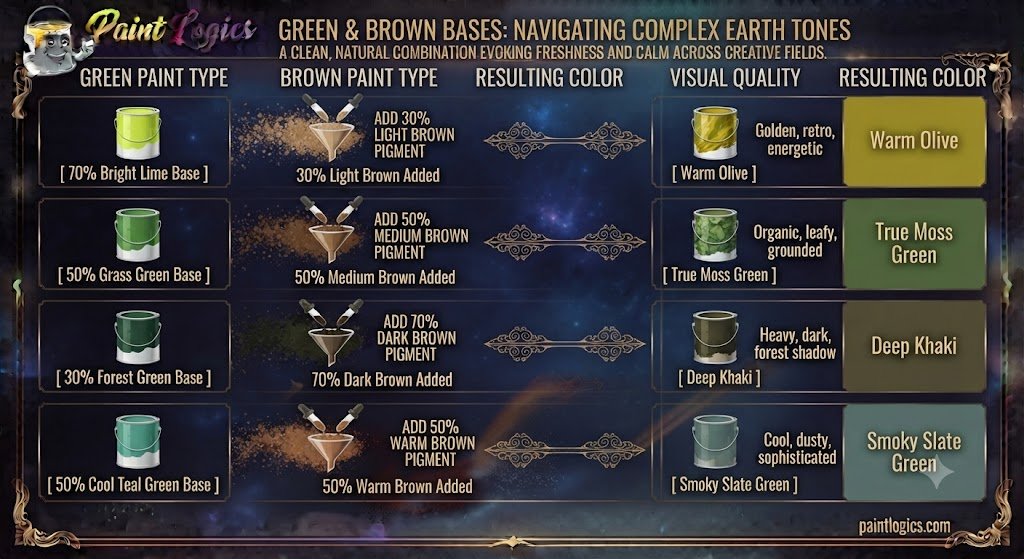
To help you hit your target shade with absolute accuracy, check out this structural pigment breakdown table:
| Green Paint Type | Brown Paint Type | Resulting Color | Visual Quality |
| 70% Bright Lime | 30% Light Brown | Warm Olive | Golden, retro, energetic |
| 50% Grass Green | 50% Medium Brown | True Moss Green | Organic, leafy, grounded |
| 30% Forest Green | 70% Dark Brown | Deep Khaki | Heavy, dark, forest shadow |
| 50% Cool Teal Green | 50% Warm Brown | Smoky Slate Green | Cool, dusty, sophisticated |
Does Mixing Green and Brown Make a Natural Eye Color?
Many people search for this color combination because they are trying to understand the biology behind unique hazel eye colors.
The reason is simple: hazel eyes are not a singular solid pigment color, but rather a dynamic blend of two distinct types of melanin inside the iris. Light brown melanin (eumelanin) usually forms a ring around the center pupil, while a scattering of yellow-green melanin (pheomelanin) sits across the outer edges. When ambient light hits the eye, these two distinct layers reflect light simultaneously, creating the stunning, multi-toned hazel look that shifts between green and brown depending on the room’s lighting.
What Color Does Brown, Blue, and Green Make?
Introducing a clean blue pigment into your active brown and green mixture drops the color temperature significantly, sliding the entire palette into a rich deep teal or dark navy-green slate.
Why does this happen? Blue and green naturally combine to form a cool cyan tone, while the brown acts as a built-in neutralizer. The brown absorbs the bright, neon qualities of the blue-green mix, leaving you with a highly sophisticated, deep ocean-earth tone. Imagine stormy sea waters, peacock feathers, or expensive wool winter coats.
Understanding the Color Mixing Process
Color behaves in completely different ways depending on whether you are working with physical liquids, digital pixels, or commercial printing inks.
RYB Color Model (Red, Yellow, Blue)
The traditional RYB model is what fine art painters use in the studio with wet fluids. In this subtractive system, brown is created by mixing all three primaries or combining complements. When you add green to brown in this environment, you are adding more blue and yellow particles, which physically filters out more light waves and creates an organic olive tint.
RGB Color Model (Red, Green, Blue)
Digital screens operate on the additive color model using light emission. In this space, black is the absence of light, and brown is generated by lowering the pixel intensity of a dark orange light. When you mix digital green light into digital brown light, the screen activates more green sub-pixels, resulting in a cleaner, more vibrant chartreuse or light army tone than you would ever get with physical mud.
CMYK Color Model (Cyan, Magenta, Yellow, Key)
The CMYK system is used by commercial print shops and standard office inkjets. Because printing ink is highly transparent, laying down green dots directly alongside brown dots creates a very dense, deep earth tone that looks highly professional on cardboard packaging or editorial lookbooks.
Practical Uses of Brown and Green in Design
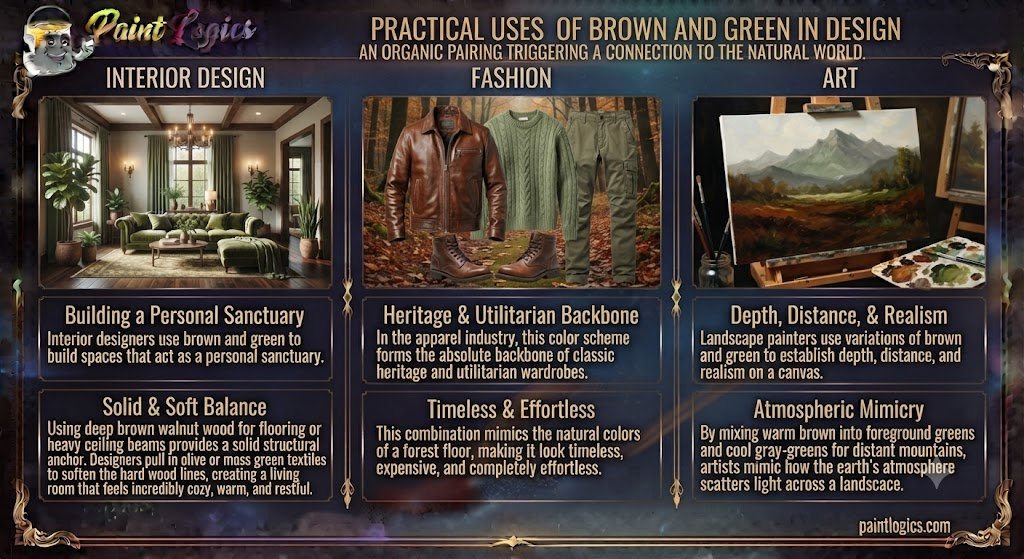
This organic pairing is heavily relied upon by professional designers because it triggers an immediate subconscious connection to the natural world.
Interior Design
Interior designers use brown and green to build spaces that act as a personal sanctuary. Using deep brown walnut wood for flooring or heavy ceiling beams provides a solid structural anchor for a room. Designers then pull in olive or moss green textiles—like velvet sofas, linen drapes, or indoor potted plants—to soften the hard wood lines, creating a living room that feels incredibly cozy, warm, and restful.
Fashion
In the apparel industry, this color scheme forms the absolute backbone of classic heritage and utilitarian wardrobes. Think of a rich brown leather jacket styled over a soft moss green knit sweater and utility cargo pants. This combination works beautifully because it mimics the natural colors of a forest floor, making it look timeless, expensive, and completely effortless.
Art
Landscape painters use variations of brown and green to establish depth, distance, and realism on a canvas. By mixing warm brown into the greens meant for the foreground, and cool gray-greens for the distant mountains, artists perfectly mimic how the earth’s atmosphere scatters light across a landscape.
Color Psychology: What Does Brown and Green Represent?
Colors carry a massive subconscious weight that alters human emotion the second they enter a room or view a corporate logo.
Brown Color Psychology
Brown represents absolute stability, reliability, comfort, and honesty. It is the color of the earth beneath our feet, which naturally makes people feel secure, grounded, and safe.
Green Color Psychology
Green is heavily associated with growth, health, peace, and renewal. It acts as a natural visual sedative that actively relaxes the nervous system and lowers stress levels.
Combined Meaning
When these two forces are locked together, they create a psychological profile centered around sustainability, wellness, and organic luxury. It communicates authenticity and eco-friendliness, which is why it is highly successful for organic grocery brands, skincare packaging, and nature retreats.
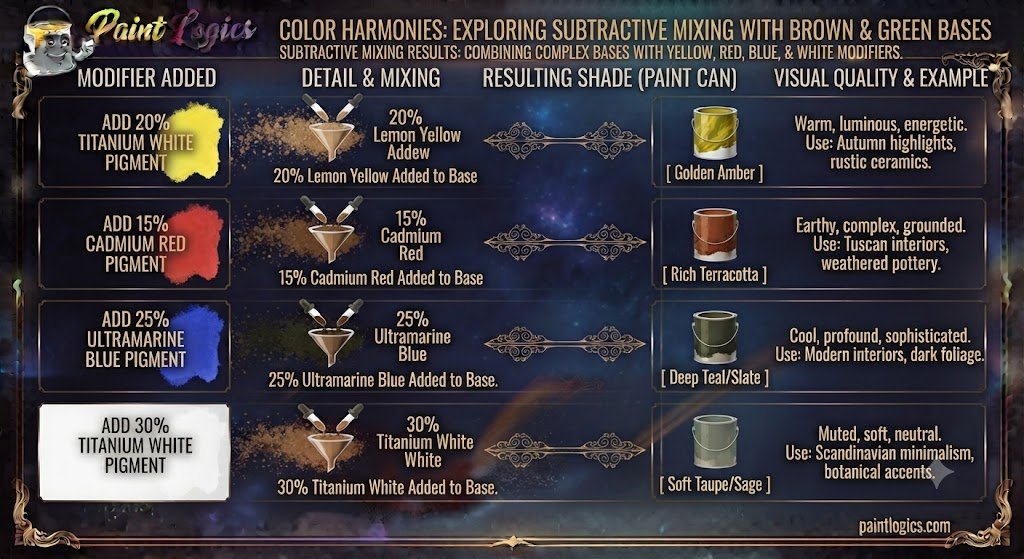
How to Adjust the Mix: Add White, Black, or Yellow
If your initial brown and green paint mixture looks a little too flat or muddy, you can easily shift its character by introducing a quick adjuster color.
That’s where many beginners get confused; you don’t need to throw away your paint pile. Just follow these simple adjustment rules:
- White: Adding a splash of white paint lifts the value instantly, transforming a heavy army khaki into a soft, sophisticated sage or dusty pastel green.
- Black: Dropping in a tiny pinprick of black paint swallows up the remaining light reflection, pulling your moss green down into a deep, intense charcoal shadow tone.
- Yellow: Folding in a generous drop of primary yellow injects immediate warmth, shifting a dull olive into a sun-kissed, vibrant forest gold.
Brown and Green with Other Colors: What Color Do They Make?
Once your core brown and green mixture is established on the palette, introducing a third color variable unlocks entirely new tonal possibilities.
Here is a quick look at how various third-party color modifiers alter your active mixture:
Brown, Green, and Yellow
The yellow infuses high-energy warmth, shifting your deep olive mix into a vibrant, sun-baked chartreuse or warm mustard-green. Think of autumn leaves turning gold in October.
Brown, Green, and Red
Because red is the direct complement to green, adding it triggers a massive desaturation process. This three-part mixture results in a highly rustic, burnt terracotta or a deep chocolate mahogany tone.
Brown, Green, and Blue
As mentioned earlier, the blue cools down the warm properties of the mix, transforming a forest khaki into a dark, rich deep teal or slate tone.
Brown, Green, and Purple
Purple brings conflicting red and blue wavelengths into the mix, creating a highly complex, smoky plum-khaki or deep twilight shadow that looks beautiful in fine art portraiture.
Brown, Green, and Orange
Orange reinforces the warm foundations of the brown base, shifting the color into a rich, autumnal spice tone or dark copper-khaki that feels incredibly cozy.
Brown, Green, and White
The white spreads the dense pigment molecules apart, opening up the color into a soft, airy sage pastel that is highly popular in modern nursery designs.
Brown, Green, and Pink
Pink introduces a delicate mixture of red warmth and white light. Adding it to your earth tones creates a beautiful, desaturated rose-granite or dusty quartz color that looks exceptionally high-end.
Conclusion
To wrap things up, brown and green make olive, moss green, or khaki. Because both elements are structurally complex, desaturated colors, blending them together simply acts as a natural harmonic extension, pulling them away from bright primaries and turning them into the ultimate organic neutral palette.
The entire secret to mastering this earthy pairing lies in starting with your green paint as your main base pile, introducing your brown pigment in small, controlled increments, and respecting whether your tools lean warm or cool. Whether you are illustrating a scenic woodland landscape, designing a modern capsule wardrobe, or picking out a calming color scheme for a home renovation, utilizing this rich mixture adds instant warmth, balance, and organic luxury to your creative work.
Love To Read More Green and White Make What Color? Light Green Mixing Guide
FAQs – Brown and Green Color Mixing
What happens when you mix brown and green?
They combine to form a desaturated, natural earth tone like olive, moss green, or dark forest khaki, depending entirely on your specific proportions.
Can brown and green create a natural eye color?
Yes. Hazel eyes are a beautiful real-life example of light brown and yellow-green melanin particles reflecting light simultaneously within the iris.
What color does brown, green, and yellow make?
The yellow supercharges the warmth of the mix, creating a vibrant, sunlit chartreuse or rich golden-olive tone.
How do you mix brown and green for a muted shade?
Start with your green paint base first, then use a palette knife to pull in a tiny corner of an iron-oxide brown like raw umber to drop the vibrancy down slowly.
What is the result of mixing brown, green, and purple?
Because purple contains red and blue light waves, it neutralizes the brightness, leaving you with a highly complex, smoky charcoal-plum shadow.
Can you mix brown and green for a soft color?
Yes, absolutely. By blending your green and brown base directly into a generous pile of titanium white paint, you get a beautiful, soft sage pastel.
What color do brown, green, and orange make?
They combine to create a warm, deep autumnal spice tone or a rich, weathered copper-khaki.
Does brown and green make a good combination for fashion?
Yes, it is a spectacular choice for heritage, outdoor, and military-inspired fashion because it looks timeless, expensive, and effortlessly grounded.
Can you make green from brown and yellow?
No. Green is a secondary color that requires blue and yellow. Because brown contains heavy red or orange pigments, mixing it with yellow will yield a golden tan or mustard brown, not a clean green.
What happens when you mix brown and green with blue?
The blue cools down the overall color temperature, shifting the organic khaki into a beautiful, moody deep teal or ocean slate.
What is the best way to mix brown and green for nature-inspired art?
Always use professional, single-pigment tubes like Burnt Sienna and Sap Green to ensure your forest shadows stay glowing and luminous rather than chalky.
How do different shades of green affect the brown and green mix?
A bright lime green pulls the mixture toward a golden, high-energy olive, while a deep forest green drags the mix straight down into a heavy, dark charcoal-khaki shadow.