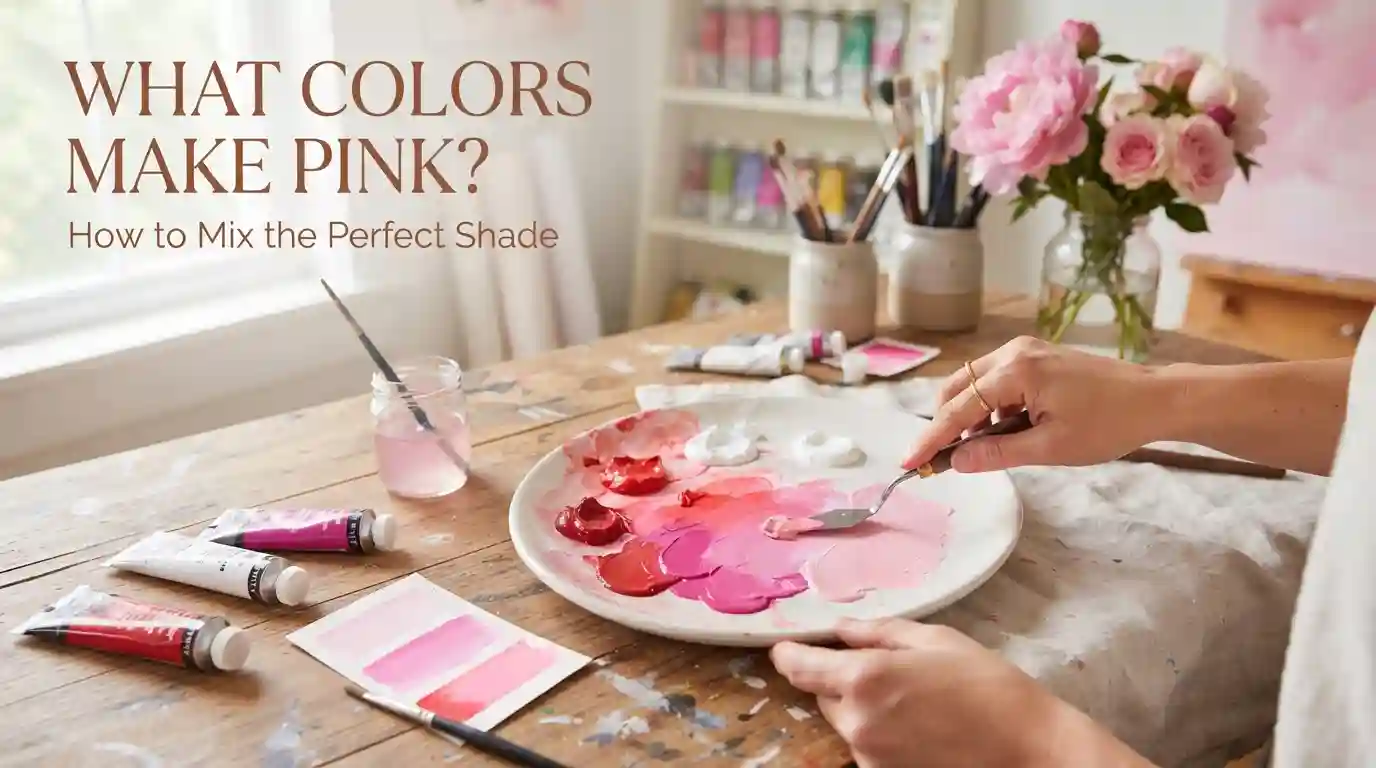
What Colors Make Pink? How to Mix the Perfect Shade
What colors make pink? The short answer: red and white. Mix them in the right ratio, and you get a soft, warm shade of pink every time. Main takeaway: Start with 1 part red to 3–4 parts white. Add more white for a pastel pink. Add more red for a bold, vivid pink. Pink is one of the easiest colors to mix. But getting the exact shade you want takes a little practice. This guide breaks it down step by step, so you never end up with a muddy or dull pink again.
What Is Pink?
Pink is a tint of red. That means it’s simply red lightened with white. It sits close to red on the color wheel, leaning slightly toward purple in some variations.
Pink can feel warm or cool, depending on what’s mixed into it:
- Warm pink leans toward orange or coral (add a touch of yellow).
- Cool pink leans toward purple or blue (add a touch of blue).
Pink is associated with softness, warmth, playfulness, and romance. It’s a color that feels gentle, no matter which shade you choose.
Image caption: Color wheel showing pink positioned as a light tint of red, between warm coral and cool magenta tones.
What Colors Make Pink?
So, what colors make pink? The core combination is simple:
- Red + White
That’s it. Red is the base hue, and white lightens it into pink. The ratio controls how light or deep the pink turns out.
A good starting ratio is 1 part red to 3 parts white. From there, you can push the shade lighter, darker, warmer, or cooler.
Image caption: Small dish showing red and white paint side by side, with a swatch of the blended pink result.
Beginner Tip 💡
Always add red to white, not white to red. Starting with white gives you more control, since it’s much easier to deepen a light color than to lighten a dark one.
Step-by-Step: How to Mix Pink in Paint
Here’s exactly how to make pink at home, whether you’re using acrylics, watercolors, or wall paint:
- Start with white. Squeeze out more white than you think you’ll need.
- Add red gradually. Mix in a small amount of red, a little at a time.
- Blend fully. Stir until the color is smooth, with no red streaks.
- Check the shade. Dab a small test swatch on paper or a test board.
- Adjust lighter. Add a touch more white if the pink looks too intense.
- Adjust darker. Add a bit more red if the pink looks too washed out.
- Adjust warmer. Mix in a tiny drop of yellow or orange for a coral-leaning pink.
- Adjust cooler. Mix in a tiny drop of blue for a soft, rosy pink.
Go slowly with every addition. A little red goes a long way, and it’s much easier to add more than to remove it.
Image caption: Step-by-step swatch showing red being gradually blended into white to form pink.
Mixing Chart: Pigment Combinations and Resulting Shades
Here’s a quick-reference chart showing how different ratios and add-ins change your pink:
| Pigment Mix | Ratio | Resulting Shade | Hex Code |
| Red + White | 1: 5 | Pale Pink | #FADADD |
| Red + White | 1: 4 | Soft Pink | #F9CEDC |
| Red + White | 1 : 3 | Classic Pink | #FFC0CB |
| Red + White | 1 2 | Rose Pink | #F4A7B9 |
| Red + White | 1: 1.5 | Bubblegum Pink | #FF91A4 |
| Red + White + Magenta (touch) | 2 : 3: 1 | Hot Pink | #FF69B4 |
| Red + White + Blue (touch) | 2 : 3: 1 | Carnation Pink | #FFA6C9 |
| Red + White + Yellow (touch) | 2 : 3: 1 | Salmon Pink | #FA8072 |
| Red + White + Black (touch) | 2 : 3: 1 | Dusty Rose | #C9A0A0 |
These are approximate starting points. Paint brands vary slightly in pigment strength, so always test on a small swatch first.
How to Make Pink With Different Starting Colors
Don’t have pure red on hand? Here’s how to make pink using other combinations:
- Magenta + White: Produces a brighter, slightly purple-leaning pink. Good for bold, vivid pinks.
- Crimson + White: Produces a cooler, more rosy pink with a hint of blue undertone.
- Orange-Red + White: Produces a warmer, coral-leaning pink.
- Red + Yellow + White: Useful if you only have primary colors. Mix red and a tiny bit of yellow first, then lighten with white for a peachy pink.
Image caption: Three paint swatches comparing pink made from magenta, crimson, and orange-red bases.
Each starting red gives pink a slightly different personality. Crimson leans cool and elegant, while orange-red leans warm and energetic.
How to Make Pink Digitally (RGB/Hex)
For digital work, you don’t need to mix anything. Just use the correct values:
- Hex Code: #FFC0CB
- RGB Values: 255, 192, 203
In Photoshop or Procreate: Open the color picker and type FFC0CB into the hex field, or enter 255 red, 192 green, and 203 blue manually.
In CSS:
css
color: #FFC0CB;
/* or */
color: rgb(255, 192, 203);
Digital pink is far more precise than paint pink, since there’s no pigment variation to account for.
Common Mistakes and How to Fix Them
Even with the right colors, pink can go wrong. Here’s why:
Pink turns out too gray or dull.
This usually happens when your red isn’t pure, or when a tiny bit of its complementary color (green) sneaks in. Fix it by starting with a fresh, clean red and clean white.
Pink turns out too purple.
Your red may have a blue undertone, or you added too much blue when cooling the shade. Fix it with a small amount of warm red or orange.
Pink turns out too orange.
This happens with warm, orange-leaning reds. Fix it by adding a touch of white and a tiny amount of blue to neutralize the warmth.
Pink looks streaky or uneven.
This is a mixing issue, not a color issue. Blend longer and more thoroughly before testing.
Image caption: Side-by-side comparison of a muddy pink mix versus a clean, properly blended pink.
Tips for Getting a Consistent, Vivid Pink
A few habits make a big difference when mixing pink:
- Use quality pigments. Cheap paints often contain fillers that dull the final color.
- Test in small batches. Mix a small amount first before committing to a large batch.
- Dry-test your swatch. Paint color often shifts slightly as it dries, especially with wall paint.
- Keep your ratios written down. If you find a shade you love, note the exact ratio so you can recreate it later.
- Mix extra. Running out mid-project almost always leads to a slightly different second batch.
Think of mixing pink like baking a cake. You can’t just eyeball the sugar and hope it tastes the same every time. A little measuring goes a long way toward consistency.
Real-Life Uses of Pink
Pink shows up everywhere, and each industry uses it a little differently:
- Fashion: Pink ranges from soft blush tones in formalwear to bold hot pink in streetwear.
- Interior Design: Pastel pink walls create a calm, airy feel, while dusty rose adds warmth to neutral rooms.
- Branding: Many beauty and lifestyle brands use pink to signal warmth, femininity, or playfulness.
If you’re choosing a pink paint for a wall, test it in natural and artificial light before committing. Pink shifts noticeably depending on lighting.
Shades and Variations of Pink
| Shade Name | Hex Code | Best Used For |
| Hot Pink | #FF69B4 | Bold accents, statement pieces, branding |
| Salmon Pink | #FA8072 | Warm interiors, summer fashion |
| Baby Pink | #F4C2C2 | Nurseries, soft pastel palettes |
| Dusty Rose | #C9A0A0 | Neutral-toned rooms, muted color schemes |
Image caption: Four paint swatches showing hot pink, salmon pink, baby pink, and dusty rose side by side.
Where Pink Sits on the Color Wheel
Pink sits right next to red on the color wheel, since it’s technically a tint of red rather than its own separate hue family.
- Complementary color: Light green (the opposite of red on the wheel).
- Analogous colors: Coral/orange-red on one side, magenta/red-violet on the other.
- Tertiary relationship: Pink shares its base with red-violet, one of the six tertiary hues.
Knowing this helps when pairing pink in a design. A touch of green creates strong contrast, while coral or magenta creates a softer, more blended look.
Conclusion
To recap: what colors make pink? Red and white, mixed at roughly a 1:3 ratio, is all it takes to get a classic pink. From there, adjust the ratio or add a touch of yellow, blue, or black to shift the warmth, depth, or softness of the shade.
The best way to get comfortable mixing pink is to simply test it. Keep notes on your ratios, and don’t be afraid to experiment with different reds and starting colors.
FAQs
What two colors make pink?
Red and white are the two colors that make pink. Mixing them lightens the red into a soft pink tone, and adjusting the ratio changes how light or deep the pink looks.
How do you make pink without white paint?
You can lighten red with a very small amount of yellow instead, though this creates a warmer, more salmon-leaning pink rather than a true pink.
What makes hot pink specifically?
Hot pink comes from mixing red and white with a touch of magenta added in. This boosts the vibrancy and gives it that bold, saturated look.
Can you make pink with primary colors only?
Yes. Red is already a primary color, so mixing it with white (a non-chromatic color) gives you pink using minimal ingredients.
Why does my pink look dull or grayish?
This usually happens when the red used isn’t pure, or a hint of green has mixed in accidentally. Starting with clean, fresh pigments usually fixes this.
What color do you mix with pink to make it darker?
Add more red to darken pink, or add a small amount of black or brown for a deeper, muted rose tone.
Is pink a warm or cool color?
Pink can be either, depending on its undertone. Pink with orange or yellow undertones feels warm, while pink with blue or purple undertones feels cool.