Red and Purple Make What Color Complete Mixing Guide
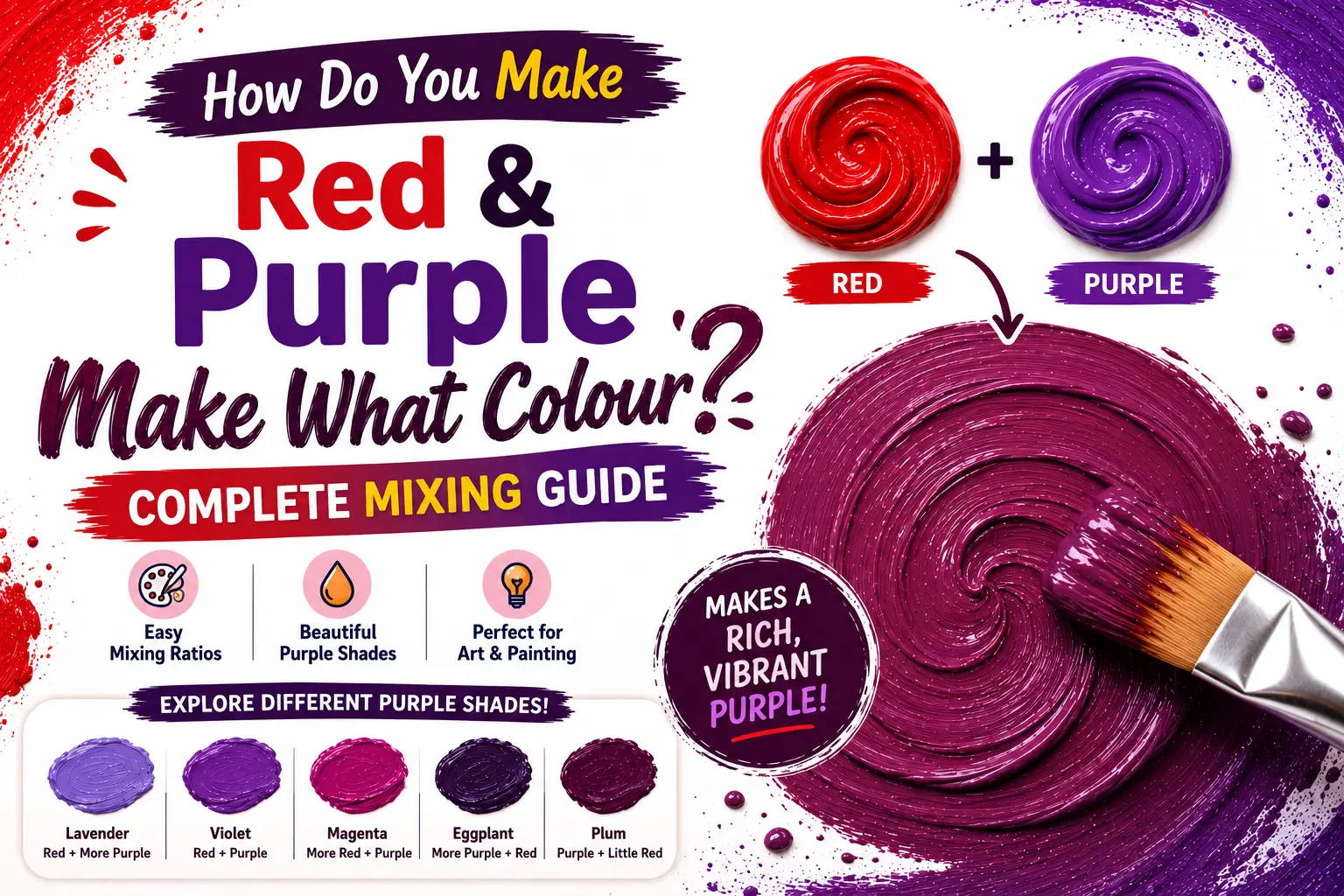
If you’ve ever wondered “red and purple make what color,” you’re not alone. The straightforward answer is that mixing red and purple creates red-violet, a warm tertiary shade that includes rich colors like magenta, reddish purple, berry, and plum. But as any painter or designer will tell you, the exact tint you end up with depends heavily on your pigment temperatures and mixing ratios.
Getting a vibrant hue instead of a dull mix requires understanding how primary red interacts with the blue undertones hiding inside purple. In this guide, you’ll learn how to control your blends, adjust values with neutral modifiers, and use warm reddish purple shades effectively across art, home decor, and digital design.
Main Takeaway: Primary Color (Red) + Secondary Color (Purple) = Tertiary Color (Red-Violet / Reddish Purple), depending on starting pigment temperature and mixing proportions.
Quick Answer: What Do Red and Purple Make When Mixed?
Mixing red and purple produces red-violet, a high-energy reddish purple hue that bridges the gap between warm reds and cool violets.
This happens because you are adding extra red pigment to an existing combination of red and blue. The additional red overwhelms the cool blue qualities of the purple, drawing the mixture into fiery magenta, ruby, or maroon territories.
Here’s a good example. Squeeze a nickel-sized puddle of bright violet paint onto your palette and stir in a small brushful of Cadmium Red. You’ll instantly see the cool purple transform into a brilliant, warm magenta-berry tone.
Beginner Tip: Purple carries strong dark values that can easily dominate your mix. Always start with your red paint as the base and blend purple into it in small, controlled increments.
Now let’s examine the optical science behind why these two shades blend so smoothly.
Why Do Red and Purple Make This Color?
The reason red and purple blend so effortlessly comes down to their shared color lineage on the visual wheel.
Purple is a secondary color created by mixing red and blue together. When you add more red to an existing purple mix, you aren’t introducing a brand-new color family—you’re simply skewing the internal balance heavily back toward red.
![[Red] (Primary)
│
├─────────► [Red-Violet / Reddish Purple] (Tertiary)
│
[Purple] (Secondary: Red + Blue)](https://paintlogics.com/wp-content/uploads/2026/07/Artist-blending-rich-red-and-violet-acrylic-paint-on-a-wooden-palette-to-create-a-reddish-purple-swatch.jpg)
Imagine painting a sunset sky in late summer. Blending pure red straight into deep violet creates that glowing, velvety transition where the sun meets the evening sky without creating dirty or desaturated tones.
That’s where many beginners get confused—they expect adding colors together to always create darker shades. Now compare that with what happens when you alter the specific shade of your starting paints.
What Happens When You Mix Different Shades of Red and Purple?
The specific variation of reddish purple you craft depends entirely on whether your starting ingredients lean warm or cool.
Color temperature plays a massive role in color mixing. A warm scarlet red contains tiny traces of yellow, whereas a cool crimson red carries blue undertones. Similarly, a warm purple leans heavy on red, while a cool violet carries extra blue.
![[Warm Crimson Red + Cool Violet] ──► Deep Mulberry / Plum
[Cool Magenta Red + Warm Purple] ──► Vivid Neon Magenta](https://paintlogics.com/wp-content/uploads/2026/07/60c93cb7-5354-47f3-be25-0e4d6bd017fc.jpg)
If you blend a warm Cadmium Red with a cool Ultramarine-based violet, the tiny hint of yellow in the red will slightly mute the mixture into a dusty plum or wine shade. However, if you combine Quinacridone Magenta (a cool red) with a bright dioxazine purple, the mix radiates as an electric, high-chroma magenta.
Pro Tip: If your goal is an ultra-bright, glowing magenta, avoid warm scarlet reds completely. Yellow undertones in scarlet act as a complementary spoiler that dulls purple’s vibrancy.
Red and Purple in Paint: RYB Color Model Results
In traditional paint mixing (the RYB model used by artists), red is a primary building block, while purple is a secondary mix.
Because tertiary colors require combining one primary color with one adjacent secondary color, red-violet fits the definition seamlessly.
![[2 Parts Red] + [1 Part Purple] ──► Bright Magenta / Reddish Purple
[1 Part Red] + [2 Parts Purple] ──► Deep Plum / Blackberry](https://paintlogics.com/wp-content/uploads/2026/07/086becf0-80f1-4a46-a610-695f94d1145c.jpg)
When working with heavy-body acrylics or oil paints, adjusting your ratios yields a dynamic gradient. A 2:1 ratio favoring red pushes the swatch toward vibrant raspberry. Flipping that ratio to 1:2 favoring purple pulls the color into deep blackberry.
Another thing worth knowing is how physical paints differ from digital pixels and print inks.
Digital vs. Traditional: Mixing in RGB & CMYK
The behavior of red and purple changes when you step away from the canvas and work on digital screens or commercial printing presses.
Computer displays rely on light emission (RGB), while commercial printers build images through light absorption using translucent inks (CMYK).
![DIGITAL SCREENS (RGB) PRINT PRESSES (CMYK)
[Red Light] + [Purple Light] [Cyan, Magenta, Yellow Inks]
│ │
▼ ▼
Bright Pinkish Violet Rich Magenta / Grape Ink](https://paintlogics.com/wp-content/uploads/2026/07/0be40244-9e73-4f11-97ca-5d7547af8d48.jpg)
On a computer monitor, boosting Red (R) to maximum strength while setting Green (G) near zero and Blue (B) to roughly 50% yields a neon magenta. In CMYK offset printing, Magenta serves as a pure primary ink—printing 100% Magenta alongside roughly 30% Cyan yields a rich, saturated red-violet.
How Red + Purple Work in Color Theory
In formal color theory, red-violet occupies a unique psychological and visual position on the traditional color wheel.
It sits directly between primary red and secondary purple, functioning as an analogous bridge that connects high-energy warm shades to calm, cool ones.
![[Warm Sector: Red] ──► [Analogous Bridge: Red-Violet] ──► [Cool Sector: Purple]](https://paintlogics.com/wp-content/uploads/2026/07/74d52df3-e475-4835-b88f-566b4b6e9462.jpg)
Why does this matter? Because red-violet contains elements of both warm and cool frequencies, it acts as a versatile balancing agent in design. It provides the visual excitement of red without feeling aggressive, balanced by the royal sophistication of purple.
So how do artists harness this dynamic balance in practice?
Artistic Uses of Red and Purple Together
Fine artists, fashion stylists, and interior decorators rely heavily on reddish purple shades to create visual interest and luxury atmospheres.
Because red and purple live right next to each other on the color wheel, using them together creates an analogous palette that feels harmonious to human eyes.
- Portraiture: Fine artists mix subtle red-purple glazes to capture natural skin shadows, particularly around eyes and cheekbones on warm skin tones.
- Interior Decor: Designers pair deep reddish purple velvet upholstery with dark wood accents and brass fixtures to give living spaces a moody, high-end feel.
- Landscape Painting: Painters use red-violet glazes on mountain ranges in distant backgrounds to simulate atmospheric warmth during sunrise or sunset.
How to Adjust the Mix: Add White, Black, or Yellow
Once you have mixed a basic reddish purple base, you can alter its value and saturation by adding small touches of neutral pigments.
Modifying your mix gives you total authority over the emotional weight of your color palette.
![[Red-Violet Base] + [White] ──► Lavender Pink / Orchid
[Red-Violet Base] + [Black] ──► Deep Maroon / Wine
[Red-Violet Base] + [Yellow] ──► Muted Russet / Warm Brick](https://paintlogics.com/wp-content/uploads/2026/07/1552779c-f393-4dff-b090-4c229fc2b97d.jpg)
- Adding Titanium White: Lightening your reddish purple with white creates soft pastel tints like orchid, pale mauve, and lavender pink.
- Adding Mars Black: Darkening the mixture with black drops its brightness, shifting bright magenta into dark maroon, burgundy, or wine.
- Adding Primary Yellow: Introducing a tiny drop of yellow neutralizes the cool blue undertones inside the purple, turning the mix into a warm russet or earthy brick red.
Common Mistake: Black paint can quickly overpower delicate reddish purple mixes and turn them muddy. Try darkening your mix with a deep brown like Burnt Umber instead for a warmer, cleaner dark value.
What Happens When Red and Purple Are Mixed with Other Colors?
Taking your red and purple blend a step further by introducing a third pigment unlocks an entirely new lineup of custom shades.
What Happens When You Mix Red, Blue, and Purple
Mixing red, blue, and purple together darkens the color value and pushes it back toward a deep, cool violet or indigo. Because you are adding extra blue to an already balanced purple mix, the warm red qualities recede, leaving a deep night-sky tone.
Quick Tip: Use a 2:1 ratio of blue to red when mixing with purple if you need to paint realistic night landscapes or heavy storm clouds.
What Color Does Red, Purple, and Pink Make?
Combining red, purple, and pink creates a bright, cheerful magenta-pink or bubblegum raspberry. Pink introduces white and light red into the mix, which brightens the heavy purple and elevates the entire swatch into an energetic pastel-neon hybrid.
What Color Does Red, Purple, and Orange Make?
Blending red, purple, and orange produces a muted, warm reddish brown or deep terracotta. Orange introduces yellow into the mix. Because yellow acts as the direct complementary opposite to purple, it neutralizes the purple’s intensity and turns the combination into a warm earth tone.
What Color Does Red, Purple, and Yellow Make?
Adding yellow to red and purple causes a subtle color cancellation that yields muted russet, chestnut, or warm burnt-sienna browns. The yellow cancels out the blue component inside the purple, leaving behind a rich, organic brown that works brilliantly for fall foliage.
Red + Purple Color Mixing Chart (Visual)
To help you calculate precise paint combinations at your easel, refer to this handy mixing proportion guide.
| Red Ratio | Purple Ratio | Optional Modifier | Resulting Color | Hex Code |
| 75% Red | 25% Purple | None | Crimson Magenta | #C71585 |
| 5% Red | 50% Purple | None | Balanced Red-Violet | #C71585 |
| 25% Red | 75% Purple | None | Deep Plum / Berry | #8B008B |
| 40% Red | 40% Purple | 20% White | Soft Orchid / Mauve | #DA70D6 |
| 45% Red | 45% Purple | 10% Black | Burgundy / Wine | #800020 |
| 30% Red | 30% Purple | 40% Pink | Bright Bubblegum Raspberry | #FF1493 |
| 33% Red | 33% Purple | 33% Yellow | Earthy Warm Chestnut | #954535 |
Conclusion: So, What Does Red and Purple Make?
When asking “red and purple make what color,” the clear answer is red-violet—a striking tertiary family that spans from fiery magenta and reddish purple to rich plum and wine. By adjusting your paint ratios, picking warm or cool starting bases, and modifying with white or earth tones, you can craft a stunning spectrum of custom shades for any project. Keep experimenting on your palette, test your glazes as they dry, and enjoy bringing these rich, vibrant tones to life.
You Might Also Like
- What Colors Make Blue? Mixing Guide + 18 Blue Shades
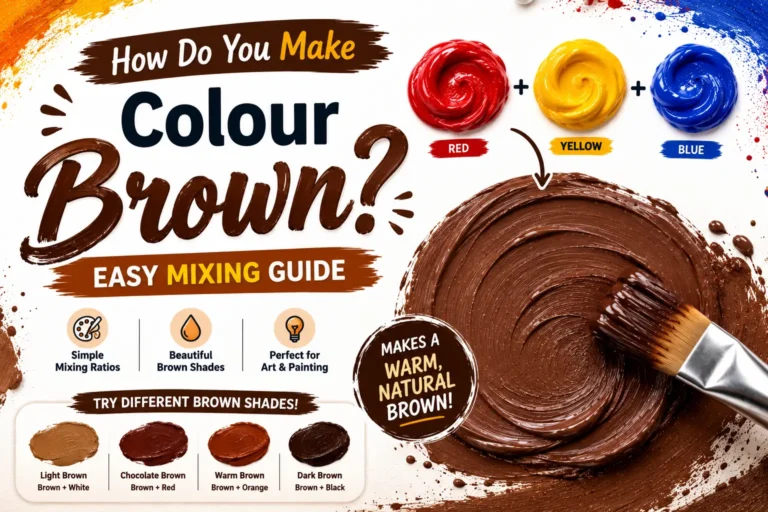
- How Do You Make Colour Brown? Easy Mixing Guide
FAQs – Red and Purple Color Mixing
Does red and purple make maroon?
Yes, red and purple can make maroon if you mix a warm, deep red with a small amount of purple and add a tiny touch of black or dark brown paint to drop the overall color value.
Is burgundy made from red and purple?
Burgundy is traditionally made by combining a cool red base (like crimson) with purple and a microscopic touch of brown or black. The purple gives burgundy its characteristic cool, wine-like undertone.
Can I mix red and purple to make violet?
Not quite. Mixing red into purple pushes the color away from violet toward reddish purple or magenta. To get a true cool violet, you must add more blue to purple rather than red.
What happens if I mix pink with purple and red?
Mixing pink with purple and red lightens the heavy value of the purple while boosting the overall red intensity, yielding a vivid, high-energy shade of raspberry pink or bright orchid.
What if I mix red, purple, and yellow?
Adding yellow to a red and purple blend introduces all three primary colors into the pile, which neutralizes the vivid chroma and creates an earthy russet brown or burnt chestnut shade.
Can you make purple by adding red to blue?
Yes. Purple is a secondary color created by mixing primary red and primary blue together in roughly equal proportions.
What are examples of red-purple shades in real life?
Common real-life examples of red-purple shades include ripe raspberries, plum skins, magenta bougainvillea flowers, red wine, and amethysts.
What’s the difference between magenta and red-violet?
Red-violet is the broad color theory term for any tertiary color between red and purple. Magenta is a specific, ultra-vivid shade within the red-violet family that features high saturation and a bright pinkish profile.
Is red-violet a warm or cool color?
Red-violet is generally considered a warm-leaning color because its dominant parent is red. However, it sits right on the boundary line between warm and cool on the color wheel, making it a flexible bridge shade.