How Do You Make Colour Brown? Easy Mixing Guide
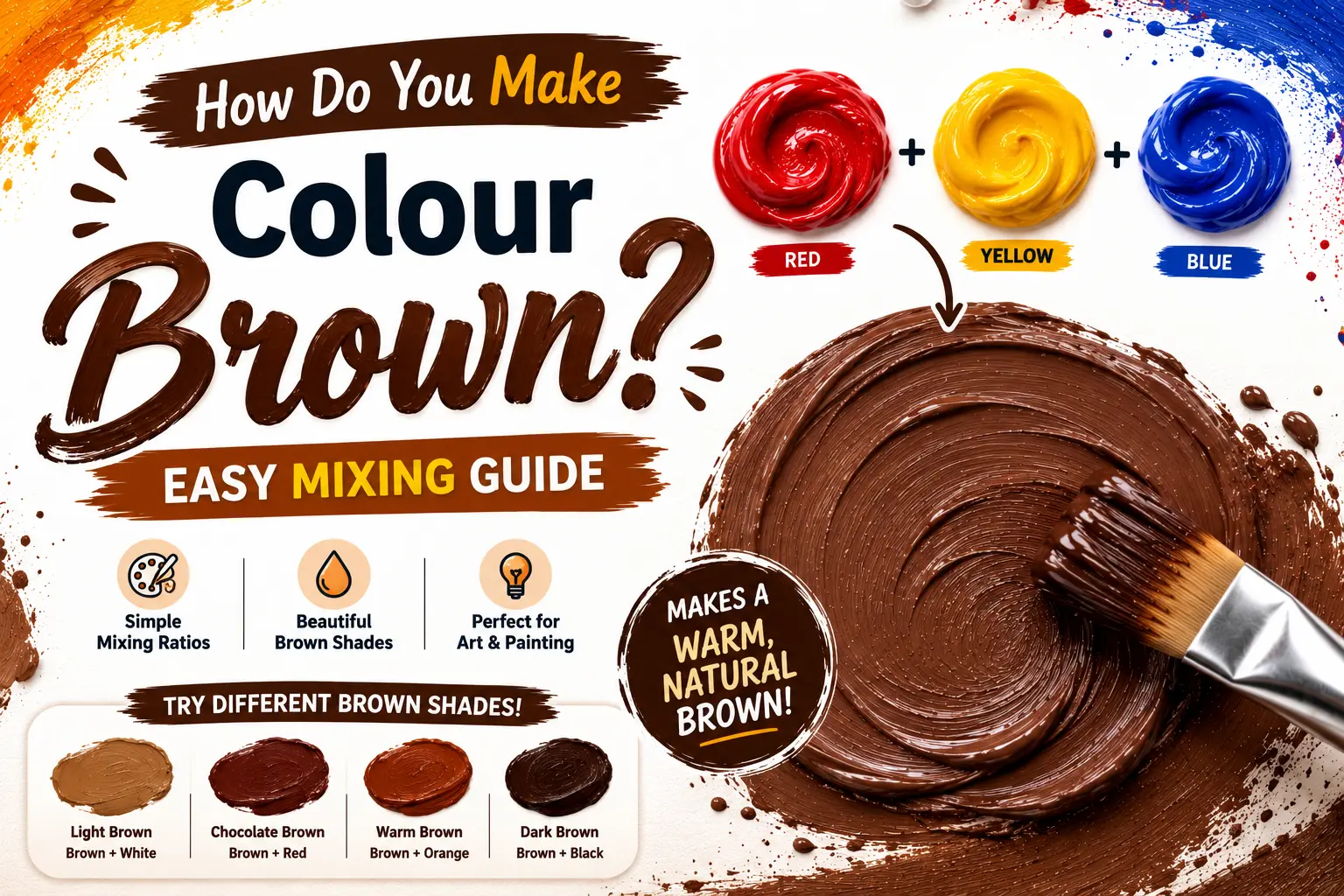
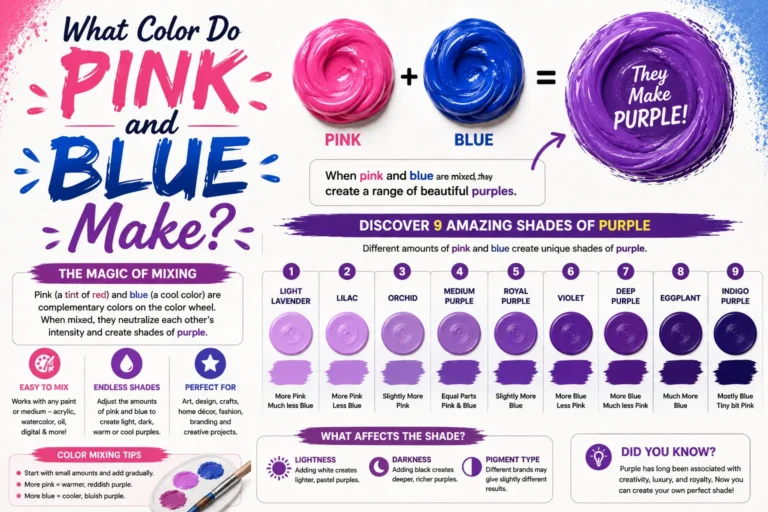
If you’ve ever wondered how to make brown, you’re not alone. The simple answer is that you can mix brown by combining all three primary colors—red, yellow, and blue—or by pairing a primary color with its complementary secondary color. But if you have ever stood at a painting palette with messy brushes, you know that getting the exact shade of chocolate, tan, or espresso isn’t always that effortless.
Creating a rich, natural shade depends on managing pigment ratios and understanding color warmth. In this guide, you’ll discover 12 practical recipes to mix brown using paint, food coloring, dry mediums, and digital design tools.
Main Takeaway: Primary + Primary + Primary = Brown (depending on the value and warmth of your starting pigments).
What Is Brown? Understanding the Basics
Brown is a composite color, which means it isn’t a single wavelength on the visible light spectrum.
This happens because brown is essentially a dark or desaturated shade of orange, red, or yellow-green. When light reflects off a surface that contains pigments absorbing multiple colors, your eyes perceive a rich, earthy neutral instead of a bright hue.
Here’s a good example. Take a bright orange paint patch and add a microscopic dot of dark blue. The orange instantly loses its intense pop, collapsing into a warm, natural terracotta brown.
Beginner Tip: Think of brown as a spectrum of warm dark tones rather than a fixed color out of a tube. Adjusting the warmth of your red or yellow instantly shifts your brown from cold mud to warm mahogany.
Now let’s look at how to blend physical paints on your palette.
How do you make brown colour with paint?
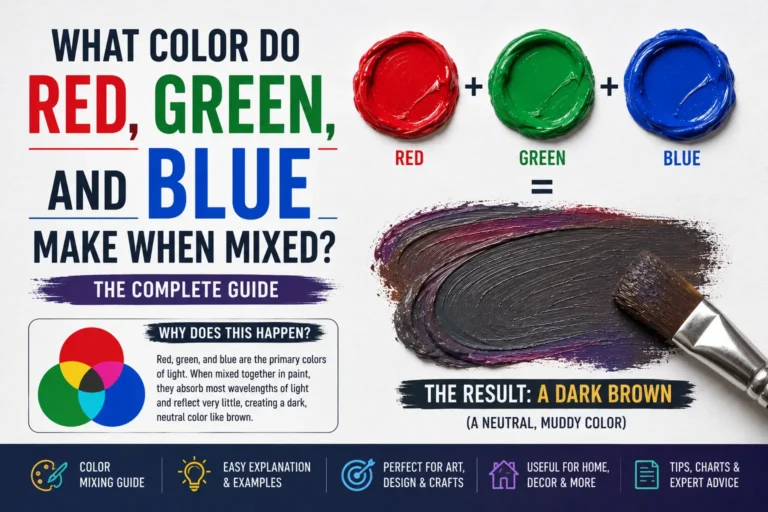
Mixing brown paint requires balancing three fundamental primary pigments to cancel out pure chroma.
The reason this works is subtractive color mixing. When red, yellow, and blue combine, they absorb almost all visible light waves, leaving a neutral brown behind.
To start, squeeze equal dollops of red, yellow, and blue paint onto a palette. Blend them together with a palette knife, and watch the vibrant colors convert into a neutral medium brown.
That’s where many beginners get confused—they add equal amounts right away and wonder why it looks slightly off. Now compare that with two-color shortcuts that speed up the process.
How to make dark brown colour by mixing two colours? Simple Combos That Work
You don’t always need to mix three separate paint tubes to get a great result. Combining a primary color with a secondary color offers a fast track to rich, moody dark browns.
This happens because every secondary color already contains two primary colors. Adding the missing third primary completes the formula automatically.
Try these easy combos:
- Red + Green: Combining red with green gives you a rich, warm mahogany or deep chocolate brown. Because green contains blue and yellow, adding red fulfills the three-primary requirement effortlessly.
- Blue + Orange: Mixing blue into bright orange yields a dark, cool chestnut shade. Orange brings heavy red and yellow properties, which the dark blue neutralizes into a moody dark tone.
- Yellow + Purple: Blending yellow with purple creates a muted, earthy tone resembling raw umber. Purple carries deep red and blue waves, which yellow quickly warms into a soft natural brown.
How to Make Brown Colour with Primary Colours
Mixing from pure primary colors gives you total control over the tone, temperature, and value of your brown mix.
![[Red] + [Yellow] ──► (Orange)
│
▼
(Orange) + [Blue] ──► Custom Brown](https://paintlogics.com/wp-content/uploads/2026/07/2df0dfa8-8b2e-493f-9a90-3378763a6df7.jpg)
Basic RYB Method (Red + Yellow + Blue):
To build a classic brown, start by mixing equal parts red and yellow on your palette to create a bright orange base. Next, slowly feed microscopic dots of blue paint into that orange mix. As the blue absorbs the bright orange light, the mixture shifts toward a balanced, natural wood tone.
When to Use This Method:
Use this method whenever you need an exact shade that pre-made tube paints cannot match. It gives you complete freedom to lean toward warm reddish-browns or cool greenish-browns without making your paint chalky.
Artist’s Tip:
Pro Tip: Always build your orange base first before introducing blue. It is far easier to adjust a warm orange with small drops of dark blue than it is to rescue a dark blue blob by dumping in half a tube of yellow paint.
The Science Behind Brown: Understanding the Colour Wheel
Understanding the color wheel helps you predict exactly how your brown mix will react when you add new colors.
Complementary colors sit directly across from each other on the traditional color wheel. When you mix complementary pairs, they neutralize each other’s brightness, pulling the hue toward the dead center of the wheel where neutrals live.
![[Red] ◄────────────────────────► [Green]
│ │
└───────────────► [BROWN] ◄───────────┘
┌───────────────► (Center) ◄──────────┐
│ │
[Blue] ◄────────────────────────► [Orange]](https://paintlogics.com/wp-content/uploads/2026/07/1abcf249-ffc7-466d-8341-26a5f7b42efd.jpg)
Imagine you’re painting a sunset landscape. If your orange sky looks uncomfortably neon, adding a tiny touch of its wheel opposite—blue—instantly tones it down into a believable, hazy evening bronze.
Now let’s look at how to shift your brown shade lighter or darker.
How to Make Light Brown or Dark Brown Colours
Once you know how to mix a basic brown, you need to know how to adjust its light value for specific painting needs.
Modifying value isn’t just about dumping white or black paint into your pile. Using white can make your brown look chalky, while black can turn it into dead gray.
How to Make Dark Brown
To darken brown without losing its warm, organic depth, introduce dark pigments that carry warm or cool undertones.
Try These Methods:
- Add Dioxazine Purple: Adding purple drops the value while keeping the brown rich and warm.
- Add Prussian Blue or Ultramarine: Adding deep blue darkens the mix while pushing it into a cool, espresso-like tone.
- Add Burnt Umber: Mixing in a dark earth pigment deepens the brown naturally without adding chalkiness.
How to Make Light Brown
To lighten brown, you need to raise its value while maintaining its warm, pleasant undertone.
Try These Methods:
- Add Titanium White: White lightens the value quickly, creating soft tan or beige tones. Use it sparingly to avoid a milky, washed-out look.
- Add Naples Yellow or Yellow Ochre: Adding warm yellow lightens the mix while keeping it golden and rich, perfect for sandy textures.
- Add Peach or Warm Flesh Tones: Adding a light warm tone creates soft, buttery light browns that look great in portrait painting.
How to Make Gray-Brown (Muted Browns)
Gray-browns (or taupes) feel sophisticated, modern, and quiet. You can create them by adding a small touch of gray or a cool blue like Cerulean directly into a warm brown base. This breaks the warmth, producing a slate-brown shade ideal for painting winter trees or stone surfaces.
Quick Reference: Additives to Shift Brown Tones
| Target Result | Starting Brown | Additive Color | Expected Shade |
| Warm Chestnut | Basic Brown | Cadmium Red | Deep Auburn / Mahogany |
| Golden Tan | Basic Brown | Yellow Ochre + White | Warm Beige / Camel |
| Cool Espresso | Basic Brown | Ultramarine Blue | Dark Coffee / Chocolate |
| Muted Taupe | Basic Brown | Medium Gray | Cool Gray-Brown / Slate |
| Soft Sand | Basic Brown | Naples Yellow + White | Light Biscuit / Beach Sand |
How to Make Brown Food Coloring for Baking and Icing
Decorating cakes or cookies requires mixing liquid or gel food dyes to make brown frosting from scratch.
Food coloring uses highly concentrated dyes that spread rapidly through butter, sugar, and water.
![[Drop of Red] + [Drop of Yellow] + [Tiny Drop of Blue] ──► Chocolate Icing Dye](https://paintlogics.com/wp-content/uploads/2026/07/437efbc0-14ea-45ec-8942-b6a04ac5287e.jpg)
3 Easy Ways:
- The Three-Drop Method: Add 2 drops of red dye, 2 drops of yellow dye, and 1 drop of blue dye into white frosting. Stir thoroughly to get a balanced chocolate brown.
- The Complementary Method: Add 3 drops of red food coloring and 2 drops of green food coloring directly into your icing base for a quick warm brown.
- Natural Cocoa Powder Method: Stir pure unsweetened cocoa powder directly into buttercream. This creates a natural light brown base that tastes great, which you can fine-tune with a single drop of red dye if needed.
Expert Advice: Gel food colors are much more potent than liquid drops. Add gel coloring using a toothpick, stirring completely before adding more, as icing color darkens slightly as it sits.
How to Make Brown Colour with Crayons, Markers & Pencils
When working with dry mediums like colored pencils, crayons, or markers, you can’t blend liquids together on a palette.
Instead, you rely on layering, cross-hatching, and optical color mixing directly on paper.
Here’s how:
- Layering Colored Pencils: Lightly shade a layer of dark red over your paper, overlay a layer of grass green, and finish with a light wash of warm yellow to bind the layers into an earthy brown.
- Marker Cross-Hatching: Draw fine parallel lines with a red marker, cross them at an angle with a green marker, and fill the gaps with yellow to trick the eye into seeing brown from a distance.
- Crayon Blending: Press firmly with a yellow crayon, layer dark blue over it with medium pressure, and smooth a warm red crayon over top to blend the wax layers together.
Easy Brown Color Mixing for Artists and DIYers
Whether you are restoring vintage furniture, painting a wall accent, or working on canvas, picking the right mixing technique makes your project easier.
DIYers working with house paint or wood stains should always record exact mixing ratios before starting large applications.
For art projects, mixing small batches on a glass palette lets you test colors on scrap paper before applying them to your canvas. When working on home renovation projects, test your custom mixed paint on an inconspicuous corner of the wall to see how it looks once fully dry.
Brown in Digital Design (Hex Codes)
Digital artists and web developers don’t mix physical pigments; they adjust digital light values using RGB or Hexadecimal color codes.
In the RGB model, brown is produced by combining a high intensity of Red light with a medium intensity of Green light and a very low intensity of Blue light.
![[Red Light: High] + [Green Light: Medium] + [Blue Light: Low] ──► Digital Brown](https://paintlogics.com/wp-content/uploads/2026/07/b8bfa4b7-b7ea-41e1-a396-915b0e5af3a0.jpg)
- Standard Brown: #8B4513 (RGB: 139, 69, 19)
- Saddle Brown: #8B4513 (RGB: 139, 69, 19)
- Chocolate: #D2691E (RGB: 210, 105, 30)
- Dark Coffee: #3B2F2F (RGB: 59, 47, 47)
- Warm Taupe: #B38B6D (RGB: 179, 139, 109)
Brown Paints from the Tube
While mixing your own brown gives you total control, commercial paint manufacturers offer convenient pre-mixed earth tones straight from the tube.
These pigments are crafted from natural iron oxides or synthetic minerals that provide excellent tinting strength.
- Raw Umber: A cool, greenish-brown pigment ideal for painting natural underbrush and shadow areas.
- Burnt Umber: A rich, dark brown with strong reddish undertones, perfect for deep hair or wood textures.
- Raw Sienna: A warm, golden yellow-brown that excels at creating sunlit earth surfaces.
- Burnt Sienna: A rich, glowing reddish-orange brown frequently used in portraiture and landscape art.
Pro Tips for Mixing Better Browns
To consistently mix clean, vibrant browns that don’t look like dull sludge, keep these practical studio rules in mind.
- Keep Your Brushes Clean: Rinsing your brush thoroughly prevents dirty wash water from graying out your warm brown mixes.
- Use Warm and Cool Primary Pairs: If your brown looks flat, try pairing a warm red (Cadmium Red) with a cool green (Phthalo Green) to increase color richness.
- Mix with a Palette Knife: Avoid using your paintbrushes to mix large piles of paint; palette knives blend pigments cleanly without trapping air or ruining brush bristles.
Real-Life Examples of Brown Mixing in Art, Decor, and Baking
Seeing how color mixing applies across different industries helps bring these rules to life.
1. Art Projects:
Landscape painters rarely use black paint for tree trunks or forest shadows. Instead, they blend Ultramarine Blue with Burnt Sienna to create deep, translucent dark browns that make foliage look vibrant and three-dimensional.
2. Home Decor:
Interior designers often pair muted taupe wall paint (mixed with brown and gray) alongside natural oak wood furniture. The gray-brown walls act as a warm neutral background that makes indoor greenery pop.
3. Baking & Food Design:
Pastry chefs tinting gingerbread icing mix cocoa powder directly into royal icing, then add a single drop of red gel food color to give the icing a warm, baked appearance.
Common Mistakes When Mixing Brown (and How to Fix Them)
Even experienced creators occasionally run into issues when mixing custom neutrals. Here’s how to fix common brown mixing mistakes fast:
- The Brown Looks Too Gray: This happens because you introduced too much blue or black into the mix. The Fix: Stir in a warm orange or a combination of red and yellow to restore color warmth.
- The Brown Looks Like Bright Orange: You didn’t add enough complementary blue to cancel out the warm base. The Fix: Feed tiny dots of dark blue into the pile until the orange brightness drops.
- The Brown Looks Chalky and Muddy: You added too much white paint too early in the mixing process. The Fix: Add a tiny drop of pure Cadmium Red and Yellow Ochre to restore pigment saturation.
Conclusions
When asking how to make brown, remember that combining all three primary colors—or pairing complementary tones like red and green—gives you complete control over your shade. By adjusting warmth with red and yellow or deepening values with blue and purple, you can craft 12 distinct brown recipes for paint, baking, and digital design. Keep experimenting with your pigment ratios, test your mixes as they dry, and enjoy creating custom earth tones for all your creative projects.
You May Also Like
- What Colors Make Green? Easy Color Mixing Guide for Every Shade
- What Color Do Pink and Purple Make? Best Results
- What Do Purple and Yellow Make When mixed? Mixing Guide
You Might Also Like
- What Colors Make Green? Easy Mixing Guide for Every Shade
- Pink and Green Make What Color? Color Mixing Explained
FAQs
Q: How do I make brown if I only have two colors?
You can make brown with two colors if one is a primary color and the other is its complementary secondary color. For example, mixing red and green, blue and orange, or yellow and purple will quickly yield brown.
Q: Why does my brown look gray?
Your brown looks gray because it contains too much cool blue, black, or white pigment. To fix it, add small amounts of warm red and yellow to bring back its rich, natural warmth.
Q: Can I use food to color frosting brown?
Yes. You can use unsweetened cocoa powder, instant coffee dissolved in a tiny splash of hot water, or melted dark chocolate to naturally color and flavor your frosting brown.
Q: What’s the best way to make brown for skin tones?
To mix natural skin tones, start with a base of white and yellow ochre, add a small touch of cadmium red to build a flesh warm base, and then gradually stir in tiny bits of burnt umber or ultramarine blue to adjust depth.
Q: Can I make brown digitally (RGB or HEX)?
Yes. In digital RGB space, brown is made by setting Red to a high value (like 139), Green to a medium value (like 69), and Blue to a low value (like 19). A standard hex code for brown is #8B4513.